Division of Cardiac Surgery, Department of Surgery, Johns Hopkins Hospital, Baltimore, MD.
Division of Cardiac Anesthesiology, Department of Anesthesiology and Critical Care Medicine, Johns Hopkins University School of Medicine, Baltimore, MD.
Crit Care Explor. 2024 Oct 18;6(10):e1169. doi: 10.1097/CCE.0000000000001169. eCollection 2024 Oct 1.
Conventional MRI is incompatible with extracorporeal membrane oxygenation (ECMO) cannulas and pumps. Ultra-low-field portable MRI (ULF-pMRI) with 0.064 Tesla may provide a solution, but its safety and compatibility is unknown.
ULF-pMRI does not cause significant displacement and heating of ECMO cannulas and does not affect ECMO pump function.
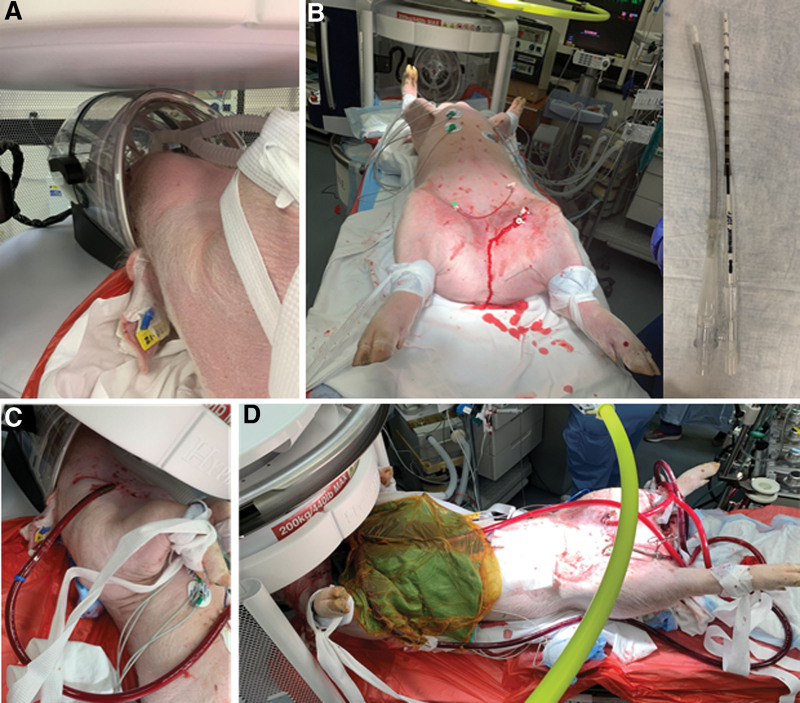
ECMO cannulas in various sizes were tested ex vivo using phantom models to assess displacement force and heating according to the American Society for Testing and Materials criteria. ECMO pump function was assessed by pump flow and power consumption. In vivo studies involved five female domestic pigs (20-42 kg) undergoing different ECMO configurations (peripheral and central cannulation) and types of cannulas with an imaging protocol consisting of T2-weighted, T1-weighted, FLuid-Attenuated Inversion Recovery, and diffusion-weighted imaging sequences.
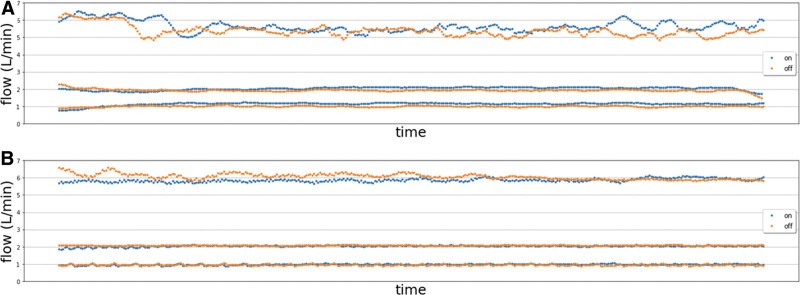
Phantom models demonstrated that ECMO cannulas, both single lumen with various sizes (15-24-Fr) and double lumen cannula, had average displacement force less than gravitational force within 5 gauss safety line of ULF-pMRI and temperature changes less than 1°C over 15 minutes of scanning and ECMO pump maintained stable flow and power consumption immediately outside of the 5 gauss line. All pig models showed no visible motion due to displacement force or heating of the cannulas. ECMO flow and the animals' hemodynamic status maintained stability, with no changes greater than 10%, respectively.
ULF-pMRI is safe and feasible for use with standard ECMO configurations, supporting its clinical application as a neuroimaging modality in ECMO patients.
传统磁共振成像(MRI)与体外膜肺氧合(ECMO)插管和泵不兼容。超低磁场便携式 MRI(ULF-pMRI),场强 0.064 特斯拉,可能是一种解决方案,但它的安全性和兼容性尚不清楚。
ULF-pMRI 不会导致 ECMO 插管显著移位和加热,也不会影响 ECMO 泵的功能。
使用体外模型对各种尺寸的 ECMO 插管进行了测试,以根据美国测试与材料协会(ASTM)标准评估位移力和加热。通过泵流量和功耗评估 ECMO 泵的功能。在体内研究中,有五头雌性家猪(20-42kg)接受了不同的 ECMO 配置(外周和中央插管)和不同类型的插管,成像方案包括 T2 加权、T1 加权、FLuid-Attenuated Inversion Recovery 和弥散加权成像序列。
在 ULF-pMRI 的 5 高斯安全线内,单腔(15-24Fr)和双腔插管的 ECMO 插管的平均位移力均小于重力,扫描 15 分钟内的温度变化小于 1°C,并且 ECMO 泵在 5 高斯线外的流量和功耗保持稳定。所有猪模型均未因插管的位移力或加热而出现可见运动。ECMO 流量和动物的血液动力学状态保持稳定,分别没有大于 10%的变化。
ULF-pMRI 对于标准 ECMO 配置是安全且可行的,支持其在 ECMO 患者中作为神经影像学方法的临床应用。