Institute for Mental Health Policy Research, Centre for Addiction and Mental Health (CAMH), 250 College St., Toronto, ON, M5T 1R8, Canada.
Ontario Node, Canadian Research Initiative in Substance Matters (CRISM), 250 College St., Toronto, ON, M5T 1R8, Canada.
BMC Public Health. 2024 Oct 18;24(1):2879. doi: 10.1186/s12889-024-20336-9.
On January 31st, 2023, the province of British Columbia (BC), Canada, was granted a federal exemption allowing adults (aged 18 +) to possess up to 2.5 g of select illicit drugs. The exemption will be in place for three years (2023-2026), marking the first formal decriminalization of illicit drug policy reform in Canada. BC's decriminalization initiative is premised on several goals. This project seeks to evaluate each of these goals and their individual and combined contributions to determine the overall success of this policy.
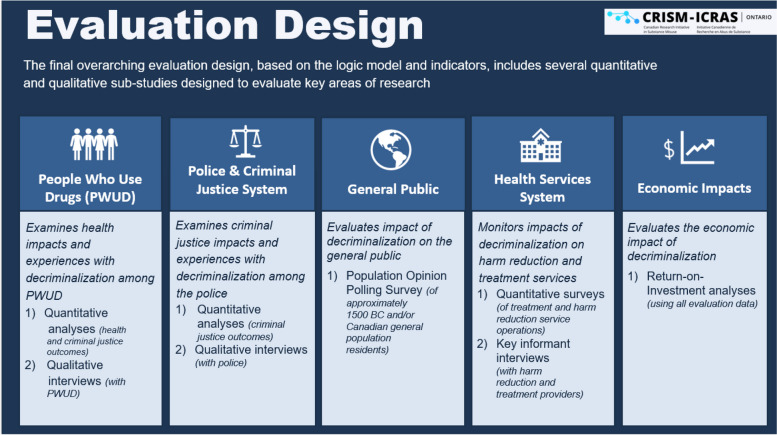
The following protocol paper provides a detailed outline of a five-year (2022-2027) national evaluation of BC's decriminalization initiative, as well as the specific objectives, methodologies, and planned analyses for eight interrelated sub-studies that comprise the evaluation. These sub-studies fall under the following five topical areas of research: 1) people who use drugs (PWUD), 2) the police and the criminal justice system, 3) the general public, 4) the health services system, and 5) an economic analysis. Additional research activities may also be explored.
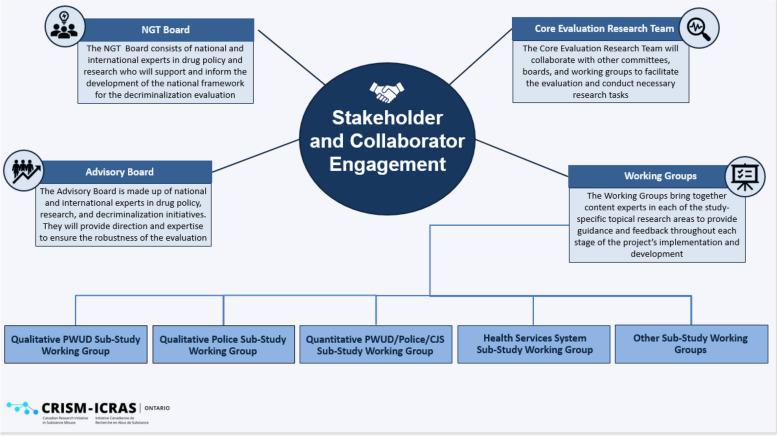
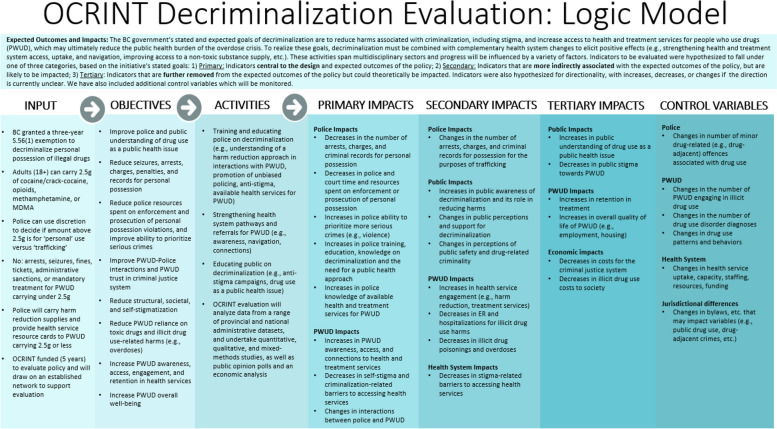
The overall evaluation and specific sub-study designs were informed by intensive stakeholder engagement. The evaluation was developed in collaboration with an international expert committee who came together to undertake a nominal group technique to decide on the final evaluation design and corresponding logic model. The evaluation will also employ an advisory board and individual sub-study working groups comprised of experts and PWUD who will oversee the development and implementation of the overall evaluation as well as each sub-study.
This evaluation will draw on implementation science research practices to evaluate and understand the full impacts of this novel drug policy experiment. Results will be widely disseminated through manuscripts, reports, presentations, and infographics, which will be adapted and tailored for specific audiences. The protocol identifies several anticipated challenges and limitations. This evaluation's evidence-based findings will be poised to offer pivotal insights that can shape and refine the discourse on drug policy and will serve as a critical resource for understanding the multifaceted impacts of decriminalization.
2023 年 1 月 31 日,加拿大不列颠哥伦比亚省(BC)获得联邦豁免权,允许成年人(18 岁以上)拥有最多 2.5 克选定的非法药物。该豁免将持续三年(2023-2026 年),标志着加拿大首次正式将非法药物政策改革合法化。BC 的非刑罪化倡议基于几个目标。本项目旨在评估这些目标及其各自和共同的贡献,以确定该政策的整体成功。
本协议文件详细概述了对不列颠哥伦比亚省非刑罪化倡议进行为期五年(2022-2027 年)的国家评估,以及构成评估的八个相互关联的子研究的具体目标、方法和计划分析。这些子研究属于以下五个研究领域:1)吸毒者(PWUD),2)警察和刑事司法系统,3)公众,4)卫生服务系统,5)经济分析。可能还会探索其他研究活动。
整个评估和具体子研究设计都得到了利益相关者的积极参与。该评估是与一个国际专家委员会合作开发的,他们共同采用名义群体技术来决定最终的评估设计和相应的逻辑模型。该评估还将聘请一个咨询委员会和个人子研究工作组,由专家和吸毒者组成,他们将监督整个评估以及每个子研究的制定和实施。
这项评估将借鉴实施科学研究实践来评估和了解这一新的药物政策实验的全面影响。结果将通过手稿、报告、演示和信息图表广泛传播,这些内容将根据特定受众进行改编和定制。该方案确定了一些预期的挑战和限制。这项评估的循证发现将为塑造和完善有关药物政策的讨论提供关键见解,并成为理解非刑罪化多方面影响的重要资源。