School of Rehabilitation Science, McMaster University, Hamilton, ON, Canada.
Department of Kinesiology, McMaster University, Hamilton, ON, Canada.
Womens Health (Lond). 2024 Jan-Dec;20:17455057241290889. doi: 10.1177/17455057241290889.
After menopause, reductions in ovarian hormones increase the risk of cardiovascular disease. Aerobic exercise training has been shown to reduce cardiovascular risk in older adults, but its effectiveness in postmenopausal females is less definitive.
The objectives of this study were to examine the: (1) effects of aerobic training, and (2) association between aerobic training intensity and cardiometabolic health outcomes in postmenopausal females.
Systematic review and meta-analysis of randomized controlled trials.
Six electronic databases were searched from inception to July 21, 2023 for aerobic training interventions reporting cardiometabolic outcomes in postmenopausal females. Data were synthesized qualitatively and random-effects meta-analyses and subgroup analyses (light, moderate, and vigorous intensity) were performed. Grading of Recommendations, Assessment, Development and Evaluation was used to assess the certainty of evidence.
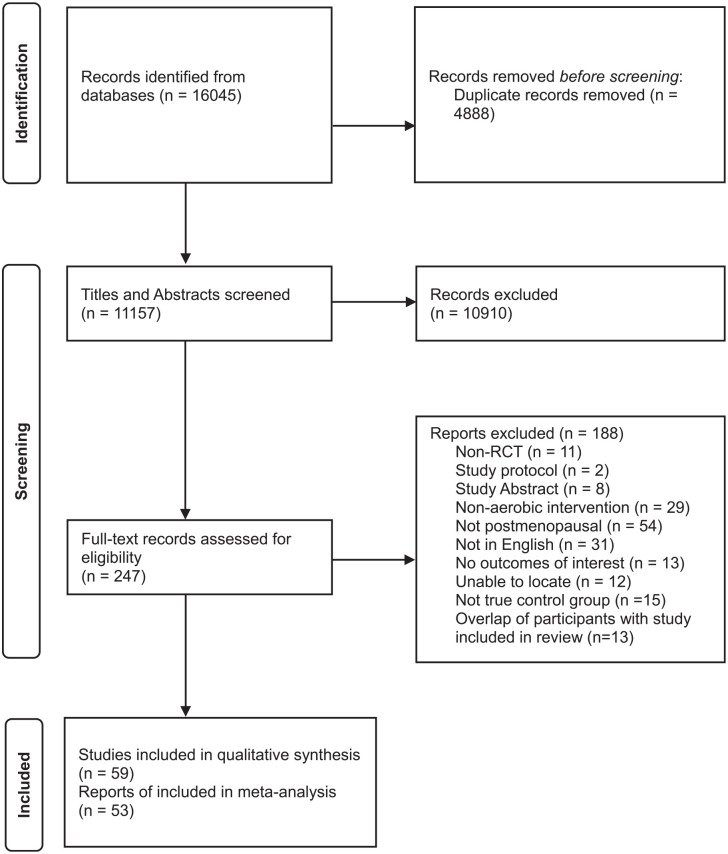
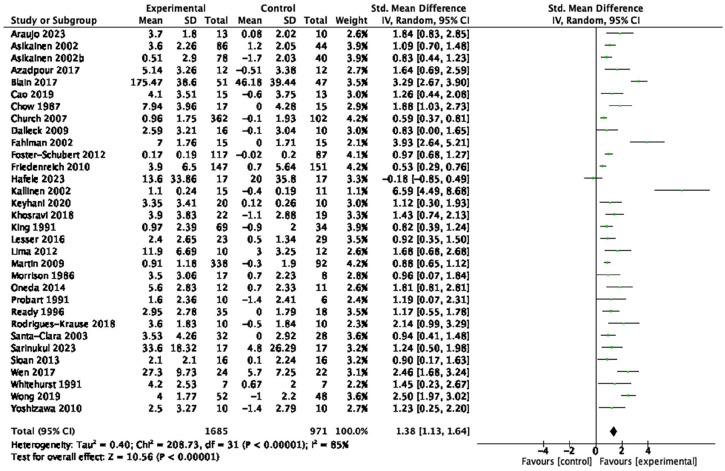
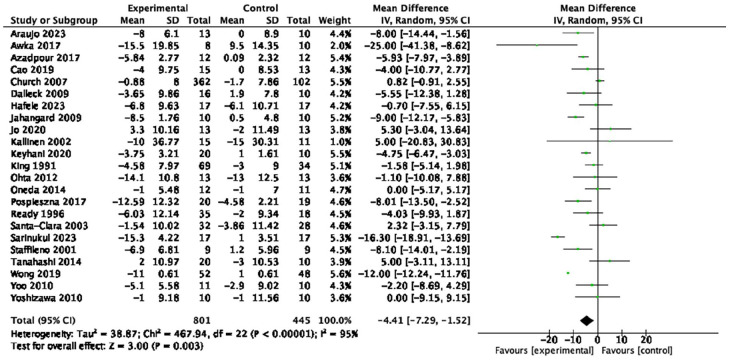
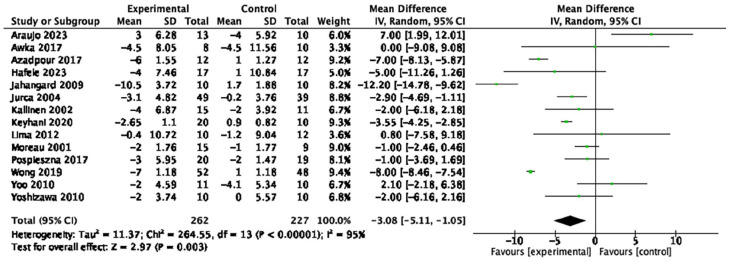
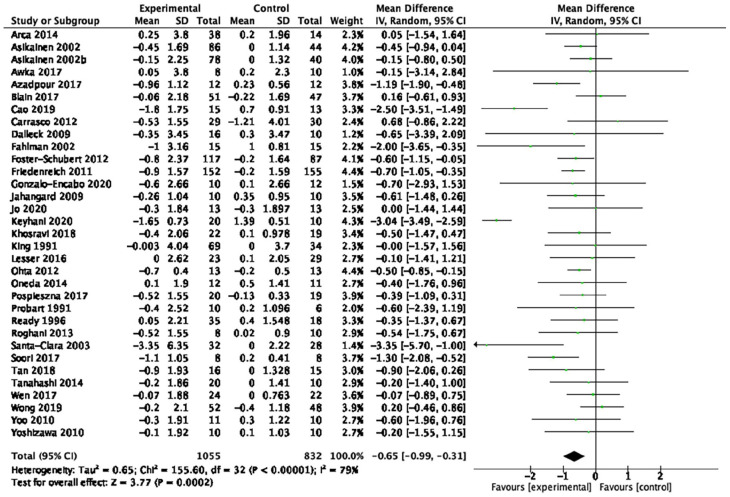
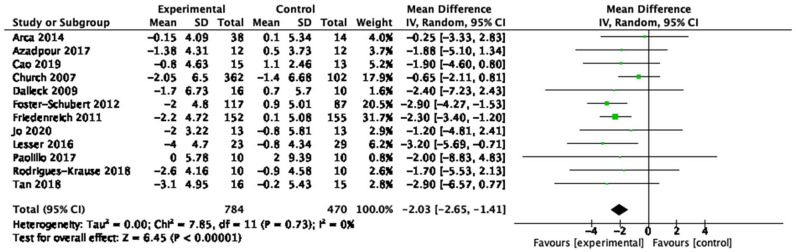
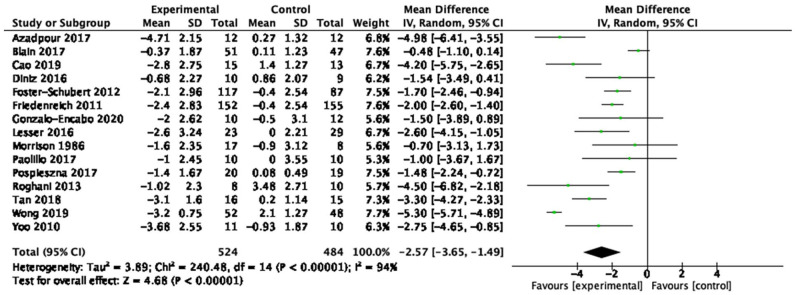
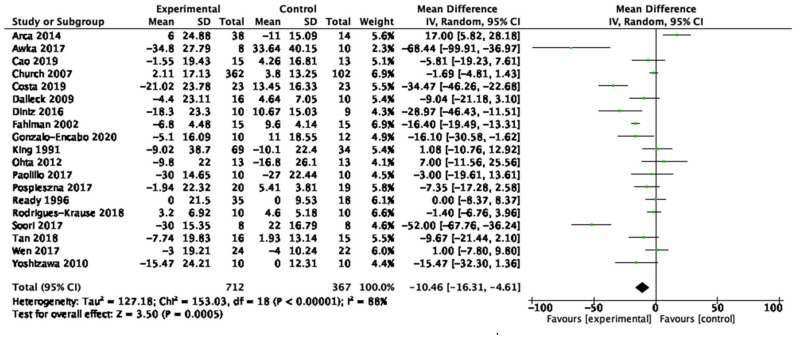
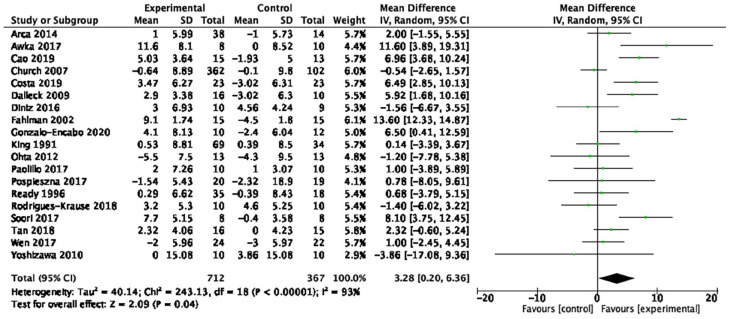
Fifty-nine studies ( = 4,225; 45-78 years old) were identified, 53 ( = 3,821) were included in the quantitative analyses. Aerobic training interventions varied in frequency (3-21×/week), intensity, type, time (8-60 min/session), and duration (3-52 weeks). Aerobic training improved systolic blood pressure (mean difference (MD) = -4.41 mmHg, 95% confidence interval (95%CI) [-7.29, -1.52], = 0.01), resting heart rate (MD = -3.08 bpm, 95%CI [-5.11, -1.05], < 0.01), body mass index (BMI, MD = -0.65 kg/m, 95%CI [-0.99, -0.31], < 0.01), waist circumference (MD = -2.03 cm, 95%CI [-2.65, -1.41], < 0.01), body fat (MD = -2.57 kg, 95%CI [-3.65, -1.49], < 0.01), low-density lipoprotein cholesterol (MD = -10.46 mg/dL, 95%CI [-16.31, -4.61], < 0.01), high-density lipoprotein cholesterol (MD = 3.28 mg/dL, 95%CI [0.20, 6.36], = 0.04) and cardiorespiratory fitness (standardized MD = 1.38, 95%CI [1.13, 1.64], < 0.01). There was a very low certainty of evidence for all outcomes. In subgroup analyses, light- and vigorous intensities were beneficial for BMI with no effect for moderate-intensity exercise ( < 0.01). Light intensity showed a beneficial effect ( = 0.02) for glucose levels ( < 0.01) and triglycerides; there was no effect with moderate or vigorous intensities.
Aerobic training may improve cardiometabolic health outcomes in postmenopausal females. There may be differential effects of exercise intensity on BMI, blood triglycerides, and blood glucose; however, this warrants further investigation.
PROSPERO-CRD42022313350.
绝经后,卵巢激素的减少会增加心血管疾病的风险。有氧运动训练已被证明可以降低老年人的心血管风险,但它对绝经后女性的有效性还不太确定。
本研究旨在探讨:(1)有氧运动训练的效果,以及(2)有氧运动训练强度与绝经后女性心血管代谢健康结果的关系。
系统评价和随机对照试验的荟萃分析。
从成立到 2023 年 7 月 21 日,六个电子数据库被搜索,以寻找报告绝经后女性心血管代谢结果的有氧运动干预措施。使用定性综合和随机效应荟萃分析以及亚组分析(轻度、中度和剧烈强度)进行数据分析。使用 Grading of Recommendations, Assessment, Development and Evaluation 评估证据的确定性。
确定了 59 项研究( = 4225;年龄 45-78 岁),其中 53 项( = 3821)纳入了定量分析。有氧运动干预措施在频率(3-21 次/周)、强度、类型、时间(8-60 分钟/次)和持续时间(3-52 周)上有所不同。有氧运动训练可改善收缩压(平均差异(MD) = -4.41mmHg,95%置信区间(95%CI)[-7.29,-1.52], = 0.01)、静息心率(MD = -3.08 bpm,95%CI [-5.11,-1.05], < 0.01)、体重指数(MD = -0.65 kg/m,95%CI [-0.99,-0.31], < 0.01)、腰围(MD = -2.03 cm,95%CI [-2.65,-1.41], < 0.01)、体脂肪(MD = -2.57 kg,95%CI [-3.65,-1.49], < 0.01)、低密度脂蛋白胆固醇(MD = -10.46 mg/dL,95%CI [-16.31,-4.61], < 0.01)、高密度脂蛋白胆固醇(MD = 3.28 mg/dL,95%CI [0.20,6.36], = 0.04)和心肺功能(标准化 MD = 1.38,95%CI [1.13,1.64], < 0.01)。所有结果的证据确定性都非常低。在亚组分析中,低强度和高强度对 BMI 有益,而中等强度运动对 BMI 没有影响( < 0.01)。低强度运动对血糖水平( = 0.02)和甘油三酯水平有有益影响( < 0.01);中等强度或高强度运动没有效果。
有氧运动训练可能改善绝经后女性的心血管代谢健康结果。运动强度对 BMI、血液甘油三酯和血糖可能有不同的影响;但这需要进一步的研究。
PROSPERO-CRD42022313350。