Chi Jingwei, Chen Ying, Li Changgui, Liu Shiguo, Che Kui, Kong Zili, Guo Ziheng, Chu Yanchen, Huang Yajing, Yang Libo, Sun Cunwei, Wang Yunyang, Lv Wenshan, Zhang Qing, Guo Hui, Zhao Han, Yang Zhitao, Xu Lili, Wang Ping, Dong Bingzi, Hu Jianxia, Liu Shihai, Wang Fei, Zhao Yanyun, Qi Mengmeng, Xin Yu, Nan Huiqi, Zhao Xiangzhong, Zhang Wei, Xiao Min, Si Ke, Wang Yangang, Cao Yihai
Department of Endocrinology and Metabolism, The Affiliated Hospital of Qingdao University, Qingdao, Shandong, China.
Medical Research Center, The Affiliated Hospital of Qingdao University, Qingdao, Shandong, China.
Cell Discov. 2024 Oct 22;10(1):106. doi: 10.1038/s41421-024-00708-6.
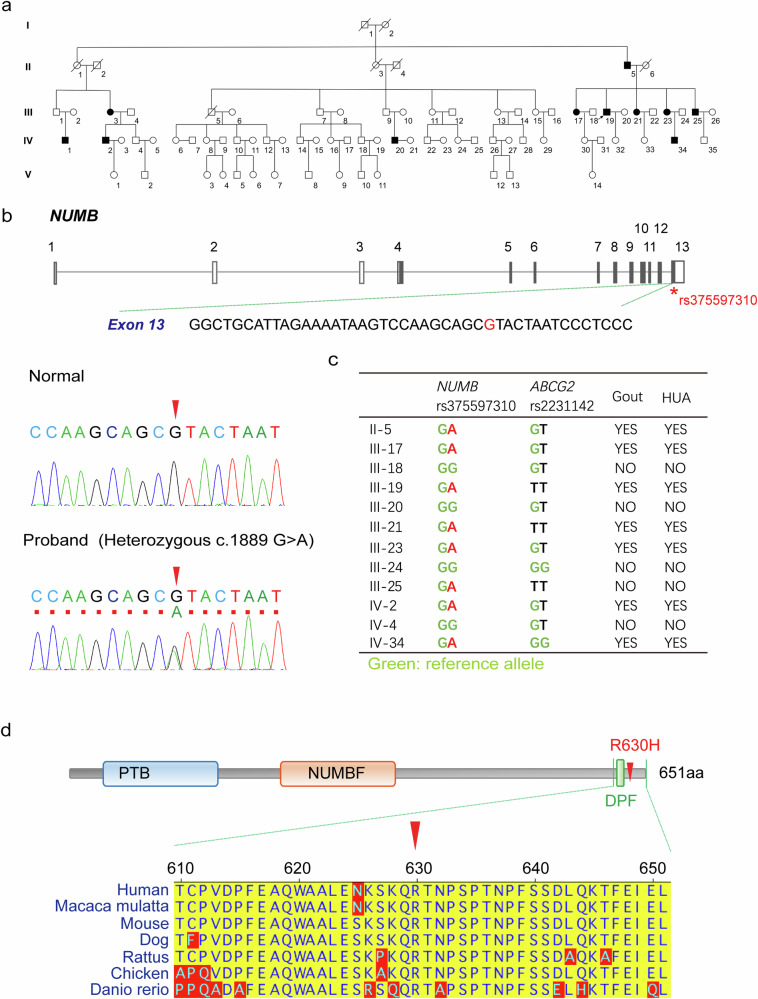
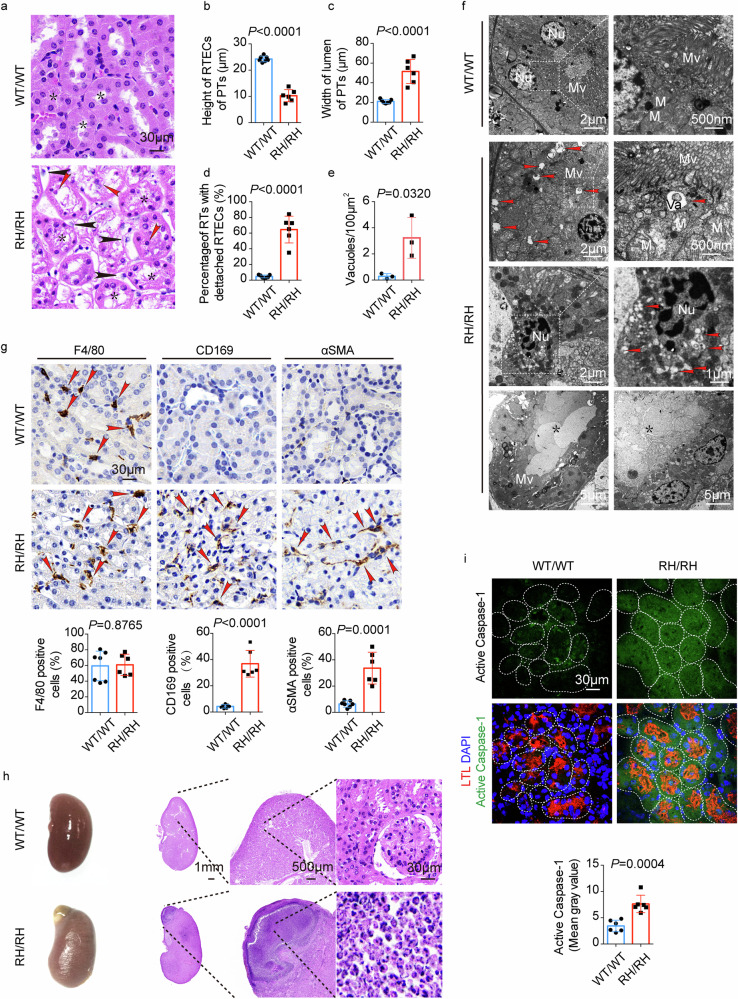
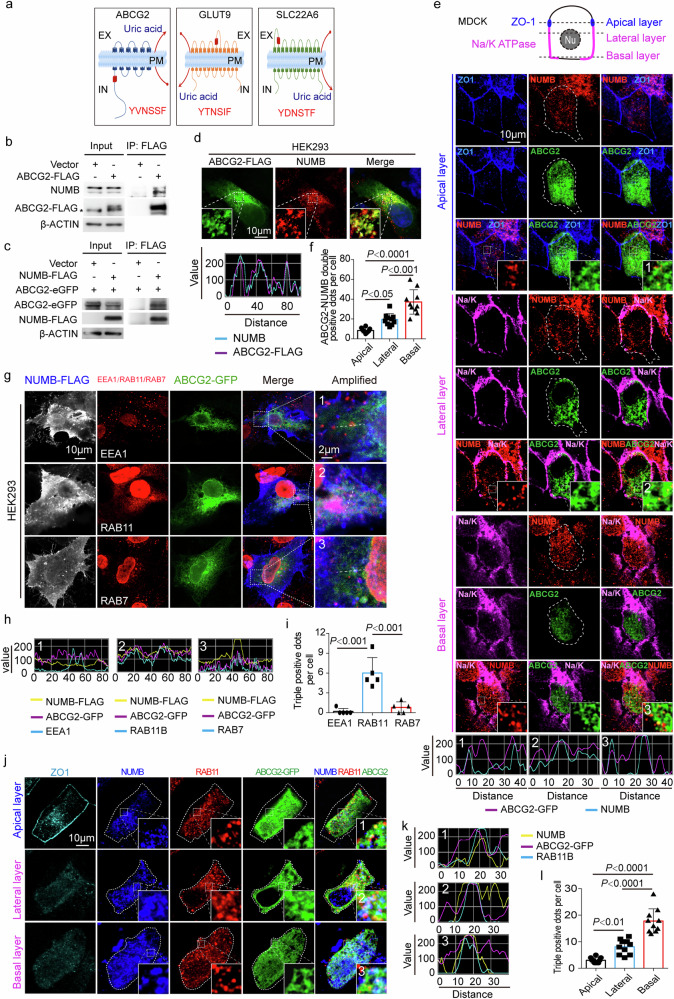
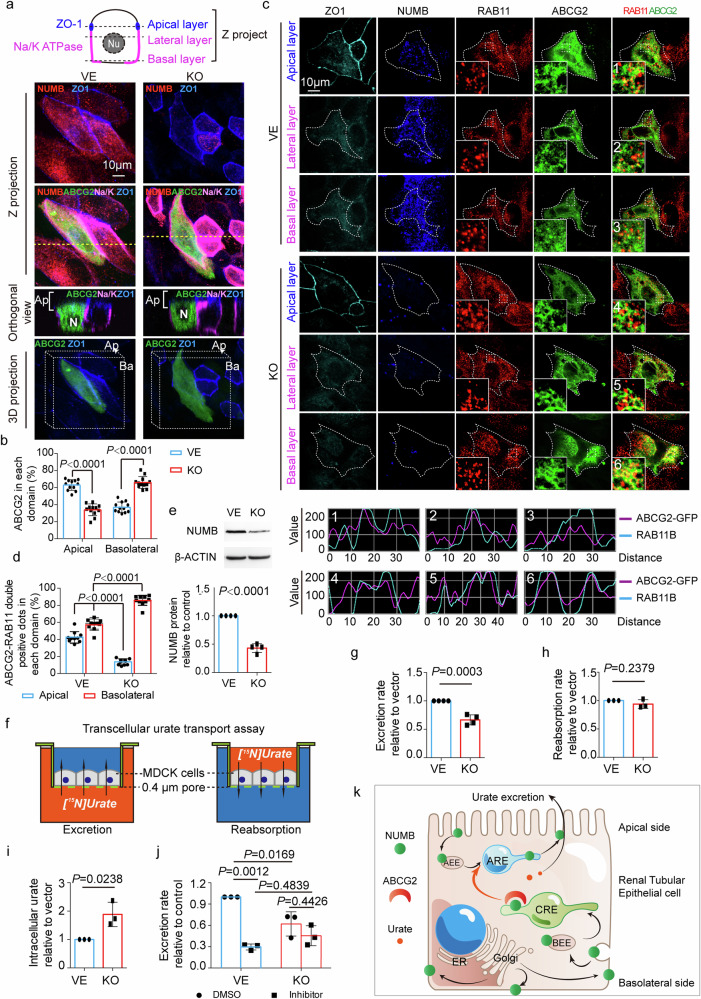
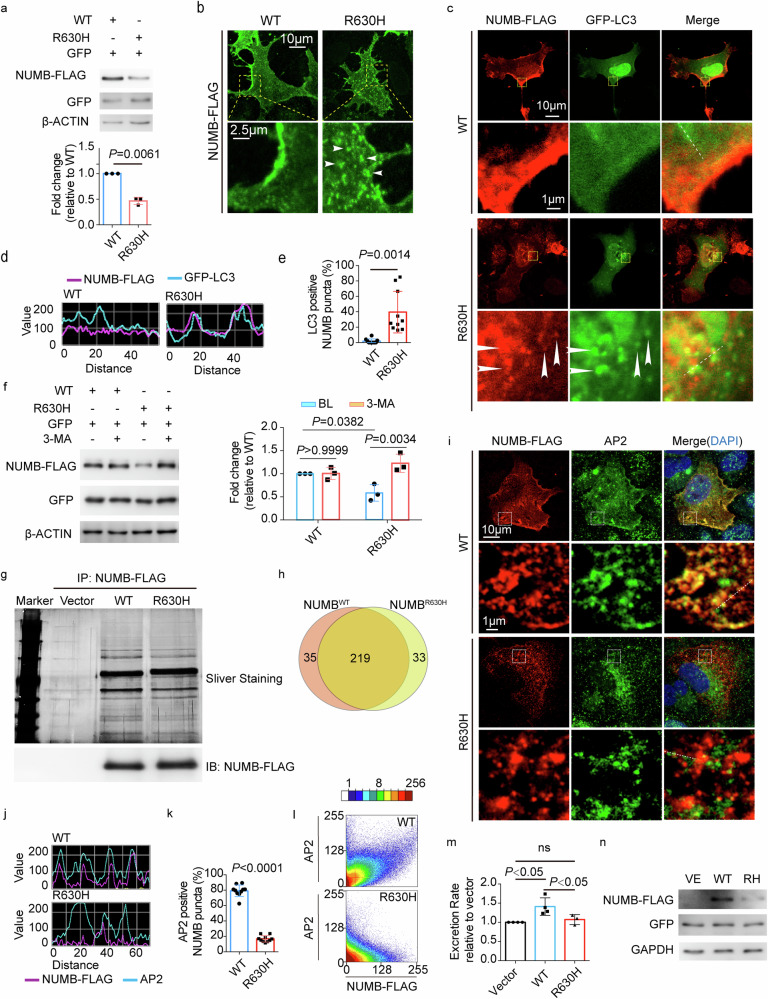
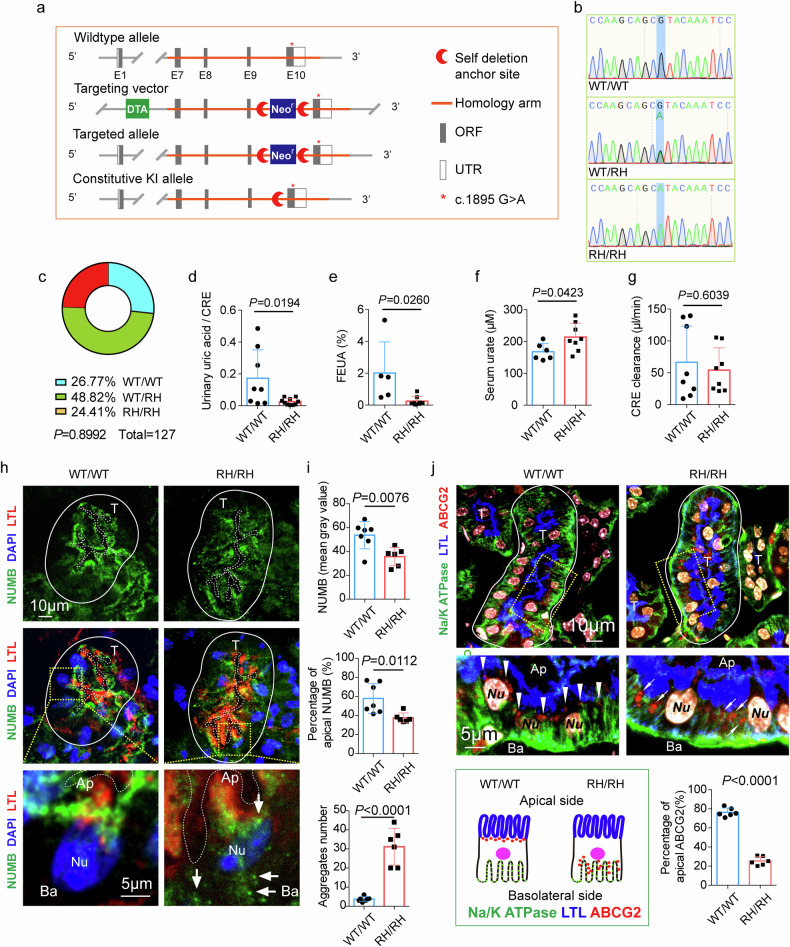
Defective renal excretion and increased production of uric acid engender hyperuricemia that predisposes to gout. However, molecular mechanisms underlying defective uric acid excretion remain largely unknown. Here, we report a rare genetic variant of gout-unprecedented NUMB gene within a hereditary human gout family, which was identified by an unbiased genome-wide sequencing approach. This dysfunctional missense variant within the conserved region of the NUMB gene (NUMB) underwent intracellular redistribution and degradation through an autophagy-dependent mechanism. Mechanistically, we identified the uric acid transporter, ATP Binding Cassette Subfamily G Member 2 (ABCG2), as a novel NUMB-binding protein through its intracellular YxNxxF motif. In polarized renal tubular epithelial cells (RTECs), NUMB promoted ABCG2 trafficking towards the apical plasma membrane. Genetic loss-of-function of NUMB resulted in redistribution of ABCG2 in the basolateral domain and ultimately defective excretion of uric acid. To recapitulate the clinical situation in human gout patients, we generated a NUMB knock-in mouse strain, which showed marked increases of serum urate and decreased uric acid excretion. The NUMB knock-in mice exhibited clinically relevant hyperuricemia. In summary, we have uncovered a novel NUMB-mediated mechanism of uric acid excretion and a functional missense variant of NUMB in humans, which causes hyperuricemia and gout.
肾脏尿酸排泄功能缺陷以及尿酸生成增加会导致高尿酸血症,进而引发痛风。然而,尿酸排泄功能缺陷背后的分子机制在很大程度上仍不清楚。在此,我们报告了一个遗传性人类痛风家族中一种罕见的痛风相关基因变异——前所未有的NUMB基因,该变异是通过无偏全基因组测序方法鉴定出来的。NUMB基因(NUMB)保守区域内的这种功能失调的错义变异通过自噬依赖机制发生细胞内重新分布和降解。从机制上讲,我们通过尿酸转运蛋白ATP结合盒亚家族G成员2(ABCG2)细胞内的YxNxxF基序,鉴定出它是一种新的NUMB结合蛋白。在极化的肾小管上皮细胞(RTECs)中,NUMB促进ABCG2向顶端质膜运输。NUMB基因功能丧失导致ABCG2在基底外侧结构域重新分布,最终导致尿酸排泄功能缺陷。为了重现人类痛风患者的临床情况,我们构建了一种NUMB基因敲入小鼠品系,该品系表现出血清尿酸显著升高和尿酸排泄减少。NUMB基因敲入小鼠表现出与临床相关的高尿酸血症。总之,我们发现了一种新的NUMB介导的尿酸排泄机制以及人类NUMB基因的一个功能性错义变异,该变异会导致高尿酸血症和痛风。