Department of Neurosurgery, Johns Hopkins University, Baltimore, USA.
Children's Brain Tumour Research Centre, School of Medicine, Biodiscovery Institute, University of Nottingham, Nottingham, UK.
Br J Cancer. 2024 Dec;131(11):1858-1868. doi: 10.1038/s41416-024-02878-2. Epub 2024 Oct 22.
There is increased pan-cancer specific interest in repurposing the poly adenosine diphosphate-ribose polymerase-1 (PARP-1) inhibitor, olaparib, for newly diagnosed or recurrent isocitrate dehydrogenase wild type glioblastoma. We explore whether intra-cavity delivery of olaparib confers a survival benefit in a pre-clinical high-grade glioma model.
Primary tumor RNA sequencing data was used to determine PARP-1 as a target in the glioblastoma infiltrative margin. We assessed radiosensitization conferred by olaparib alone and concomitant to genotoxic insults in vitro using clonal growth assays, cell cycle analysis and immunocytochemistry, and in vivo upon post-surgical delivery from a temperature-sensitive polymeric paste.
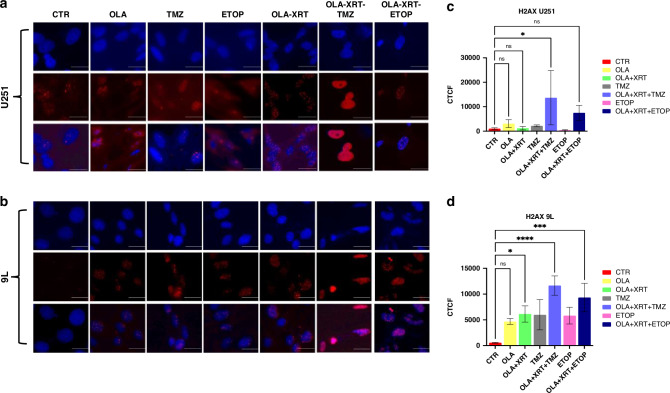
RNA-sequencing confirmed PARP-1 as a viable therapy target in glioblastoma infiltrative disease. Acute exposure of glioma cells to olaparib impaired proliferation and induced late-stage apoptosis associated with DNA damage in vitro, potentiated by radiation. Using high-grade glioma orthotopic allografts, a long-term overall survival benefit was observed upon interstitial olaparib delivery concomitant with radiotherapy, compared to systemic olaparib and standard glioblastoma treatment. Combined delivery of olaparib with either temozolomide or etoposide increased long-term survival, suggestive of olaparib functioning as DNA damage sensitizer.
Collectively, our data support a rationale for localized olaparib delivery concomitant with the current clinical regimen for malignant glioma treatment.
人们对重新利用聚腺苷二磷酸核糖聚合酶 1(PARP-1)抑制剂奥拉帕利治疗新诊断或复发性异柠檬酸脱氢酶野生型胶质母细胞瘤产生了浓厚的兴趣。我们探索了腔内递送达拉唑对临床前高级别神经胶质瘤模型的生存获益。
利用原发性肿瘤 RNA 测序数据确定 PARP-1 作为胶质母细胞瘤浸润边缘的靶标。我们评估了奥拉帕利单独和与遗传毒性损伤同时使用时在体外的放射增敏作用,方法是使用克隆生长测定、细胞周期分析和免疫细胞化学进行检测,并在手术后通过热敏聚合物糊剂进行腔内递送达拉唑时在体内进行检测。
RNA 测序证实 PARP-1 是胶质母细胞瘤浸润性疾病的可行治疗靶标。体外急性暴露于奥拉帕利会损害胶质瘤细胞的增殖,并诱导晚期与 DNA 损伤相关的凋亡,这与放射增敏作用有关。利用高级别神经胶质瘤异体移植模型,与全身性奥拉帕利和标准胶质母细胞瘤治疗相比,在放疗的同时进行间质奥拉帕利递送达拉唑可观察到长期总体生存获益。奥拉帕利与替莫唑胺或依托泊苷联合递送达拉唑可提高长期生存率,提示奥拉帕利作为 DNA 损伤敏化剂发挥作用。
总的来说,我们的数据支持了在当前恶性胶质瘤治疗的临床方案中同时进行局部奥拉帕利递送达拉唑的合理性。