Institute of General Practice and Family Medicine, University Hospital, LMU Munich, Munich, Germany.
DZPG (German Center for Mental Health), partner site Munich/Augsburg, Munich, Germany.
Eur J Gen Pract. 2024 Dec;30(1):2418299. doi: 10.1080/13814788.2024.2418299. Epub 2024 Oct 23.
To better manage patients with a wide range of mental health problems, general practitioners would benefit from diagnostically accurate and time-efficient screening tools that comprehensively assess mental illness. Therefore, the aim of this systematic review was to identify screening tools that either take a multiple-mental disorder or a transdiagnostic approach. As primary and secondary outcomes, diagnostic accuracy and time efficiency were investigated.
The data bases MEDLINE, Embase, Cochrane Library, Psyndex and PsycINFO were searched. Studies reporting on multiple-mental disorder or transdiagnostic screening tools used in primary care with adult patients were included. Sensitivity, specificity, positive and negative predictive value served as measures of diagnostic accuracy. Time efficiency was evaluated by the number of items of a screening tool and the time required for its completion and evaluation.
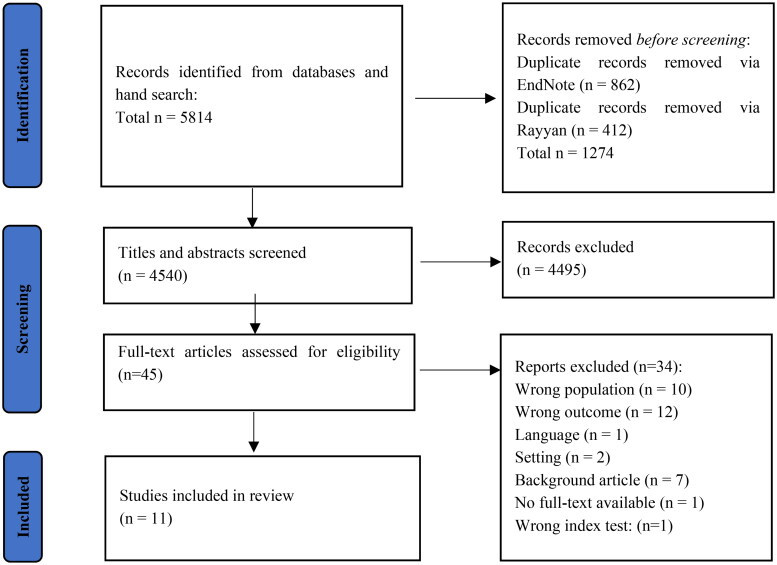
Eleven studies met the inclusion criteria. The majority of screening tools assessed multiple mental disorders separately. A sub-group of screening tools took a transdiagnostic approach by examining the spectrum of mood, anxiety and stress-related disorders. One screening tool used internalised, cognitive/somatic and externalised dysfunction as transdiagnostic domains of mental illness. Mostly, a sufficient sensitivity and specificity was reported. All screening tools were found to be time efficient.
The eleven identified screening tools can support general practitioners to identify patients with mental health problems. However, there was great heterogeneity concerning their diagnostic scope of psychopathology. Further screening tools for primary care are needed that target broad constructs of mental illness, such as transdiagnostic factors or personality dysfunction.
为了更好地管理各种心理健康问题的患者,全科医生将受益于诊断准确且省时的筛选工具,这些工具可全面评估精神疾病。因此,本系统评价的目的是确定采用多种精神障碍或跨诊断方法的筛选工具。作为主要和次要结果,调查了诊断准确性和时间效率。
搜索了 MEDLINE、Embase、Cochrane 图书馆、Psyndex 和 PsycINFO 数据库。纳入了报告在初级保健中使用、针对成年患者的多种精神障碍或跨诊断筛选工具的研究。灵敏度、特异性、阳性和阴性预测值用作诊断准确性的度量。通过筛选工具的项目数量和完成及评估所需的时间来评估时间效率。
符合纳入标准的研究有 11 项。大多数筛选工具分别评估多种精神障碍。一组筛选工具采用跨诊断方法,检查情绪、焦虑和压力相关障碍的范围。一种筛选工具将内化、认知/躯体和外化功能障碍用作精神疾病的跨诊断领域。报告的灵敏度和特异性大多足够。所有筛选工具均被认为是节省时间的。
确定的 11 种筛选工具可以帮助全科医生识别有心理健康问题的患者。但是,它们的精神病理学诊断范围存在很大的异质性。需要进一步开发针对初级保健的筛选工具,以针对精神疾病的广泛结构,如跨诊断因素或人格功能障碍。