Bone Physiopathology Research Unit, Translational Pediatrics e Clinical Genetics Research Division, Bambino Gesù Children's Hospital, IRCCS, Rome, Italy.
Center for Hemorrhagic and Thrombotic Diseases, Foundation University Hospital "A. Gemelli", IRCCS, Catholic University of the Sacred Heart, Largo Agostino Gemelli 8, 00168, Rome, Italy.
Sci Rep. 2024 Oct 23;14(1):25001. doi: 10.1038/s41598-024-75747-w.
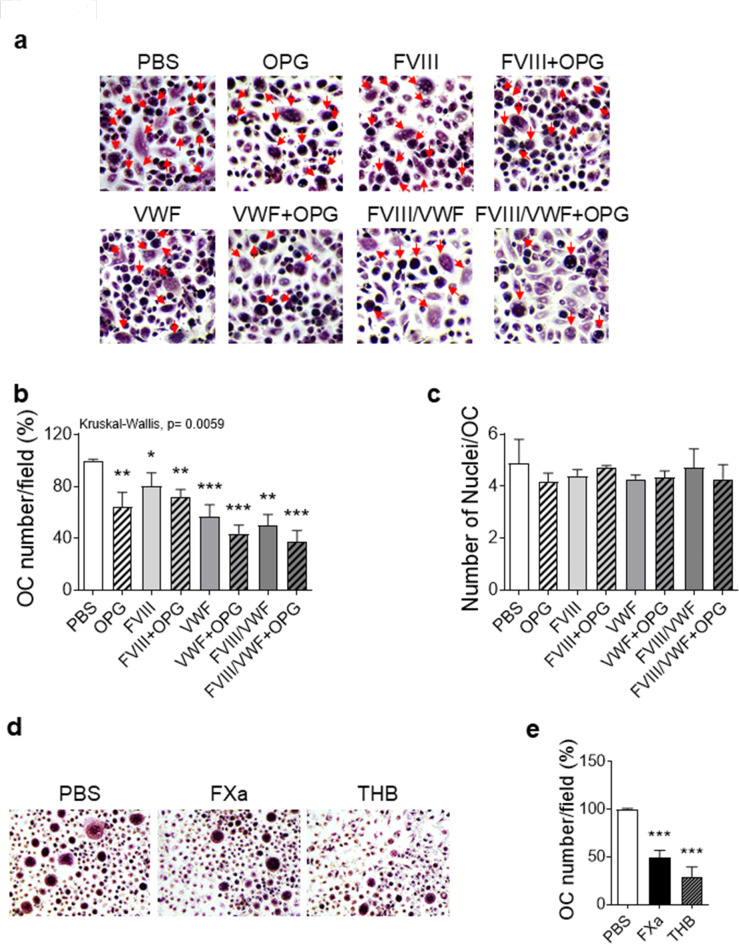
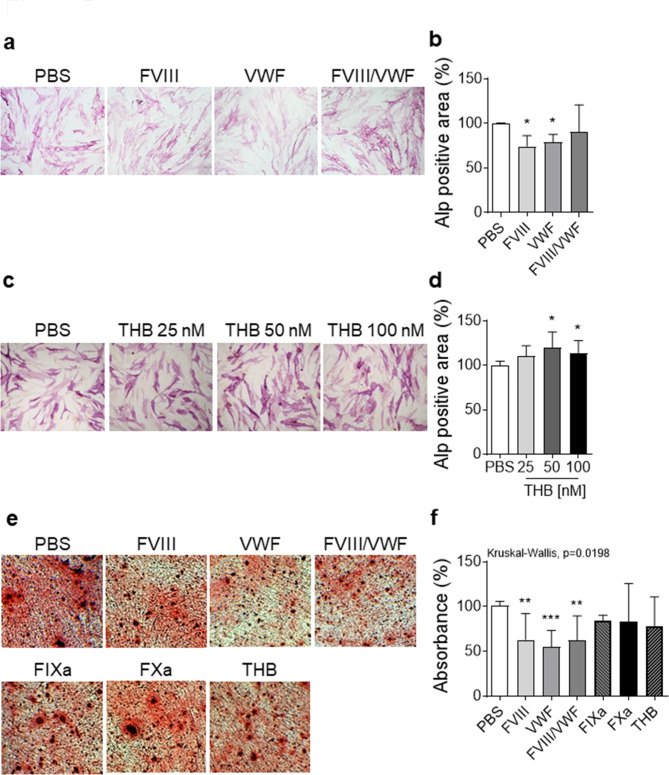
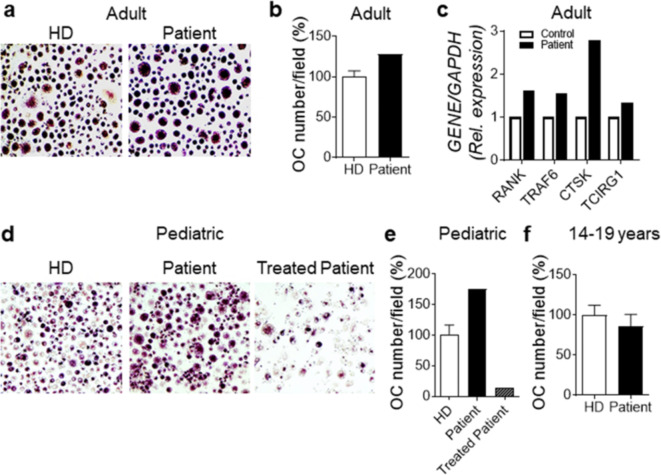
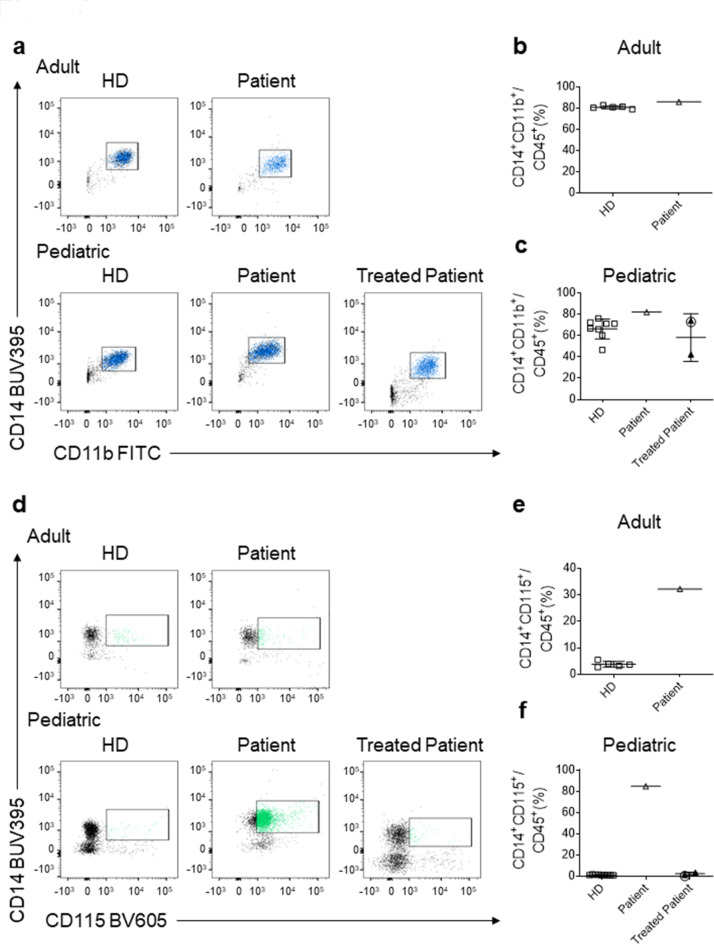
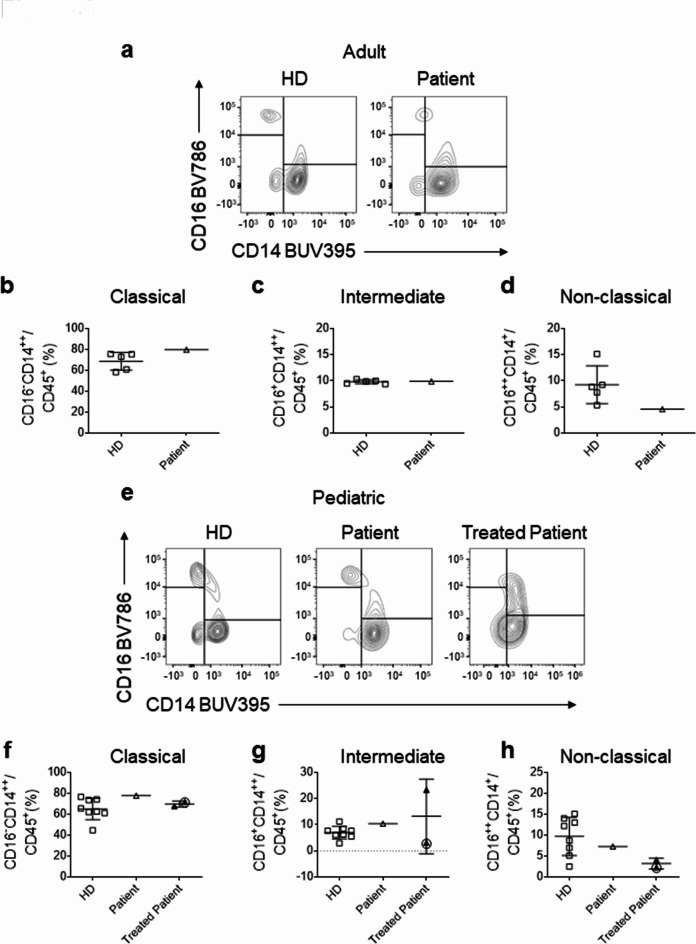
Haemophilia is associated with reduced bone mass and mineral density. Due to the rarity of the disease and the heterogeneity among the studies, the pathogenesis of bone loss is still under investigation. We studied the effects of coagulation factors on bone cells and characterized in a pilot study the osteoclastogenic potential of patients' osteoclast precursors. To evaluate the effect of coagulation factors on osteoclasts, we treated Healthy Donor-Peripheral Blood Mononuclear Cells (HD-PBMC) with Factor VIII (FVIII), von Willebrand Factor (VWF), FVIII/VWF complex, activated Factor IX (FIXa), activated Factor X (FXa) and Thrombin (THB). FVIII, VWF, FVIII/VWF, FXa and THB treatments reduced osteoclast differentiation of HD-PBMC and VWF affected also bone resorption. Interestingly, PBMC isolated from patients with moderate/severe haemophilia showed an increased osteoclastogenic potential due to the alteration of osteoclast precursors. Moreover, increased expression of genes involved in osteoclast differentiation/activity was revealed in osteoclasts of an adult patient with moderate haemophilia. Control osteoblasts treated with the coagulation factors showed that FVIII and VWF reduced ALP positivity; the opposite effect was observed following THB treatment. Moreover, FVIII, VWF and FVIII/VWF reduced mineralization ability. These results could be important to understand how coagulation factors deficiency influences bone remodeling activity in haemophilia.
血友病与骨量和矿物质密度降低有关。由于疾病的罕见性和研究之间的异质性,骨质流失的发病机制仍在研究中。我们研究了凝血因子对骨细胞的影响,并在一项初步研究中对患者的破骨细胞前体的破骨细胞生成潜力进行了特征描述。为了评估凝血因子对破骨细胞的影响,我们用凝血因子 VIII(FVIII)、血管性血友病因子(VWF)、FVIII/VWF 复合物、激活的凝血因子 IX(FIXa)、激活的凝血因子 X(FXa)和凝血酶(THB)处理健康供体外周血单核细胞(HD-PBMC)。FVIII、VWF、FVIII/VWF、FXa 和 THB 处理均减少了 HD-PBMC 的破骨细胞分化,VWF 还影响了骨吸收。有趣的是,从中度/重度血友病患者中分离出的 PBMC 由于破骨细胞前体的改变而表现出增强的破骨细胞生成潜力。此外,在一名中度血友病成年患者的破骨细胞中,发现与破骨细胞分化/活性相关的基因表达增加。用凝血因子处理对照成骨细胞表明,FVIII 和 VWF 降低了碱性磷酸酶阳性率;THB 处理则产生相反的效果。此外,FVIII、VWF 和 FVIII/VWF 降低了矿化能力。这些结果对于理解凝血因子缺乏如何影响血友病患者的骨重塑活动可能很重要。