Cresswell-Boyes Alexander J, Davis Graham R, Barber Asa H, Krishnamoorthy Mahentha, Nehete Swati R
Dental Physical Sciences Unit, Centre for Oral Bioengineering, Institute of Dentistry, Barts and the London School of Medicine and Dentistry, Queen Mary University of London, London, UK.
Peninsula Dental School, Faculty of Health, University of Plymouth, Plymouth, UK.
J Dent Educ. 2025 Apr;89(4):567-577. doi: 10.1002/jdd.13749. Epub 2024 Oct 23.
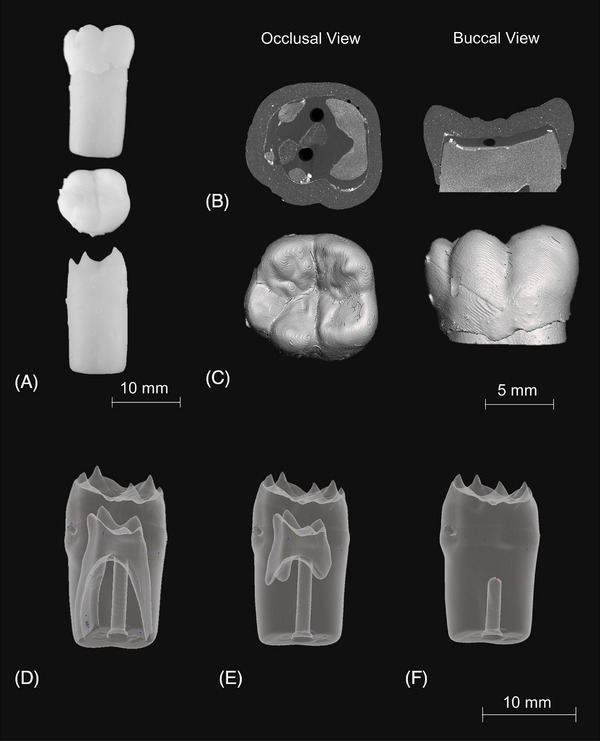
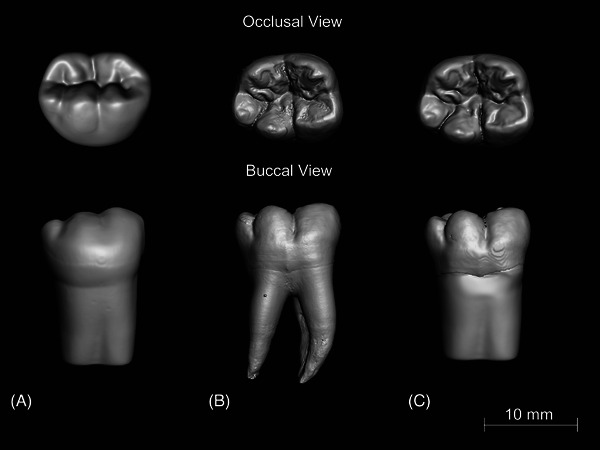
This study aimed to compare the haptic perception of clinicians to the cutting response of 3D-printed typodont teeth and commercial typodont teeth and human extracted teeth.
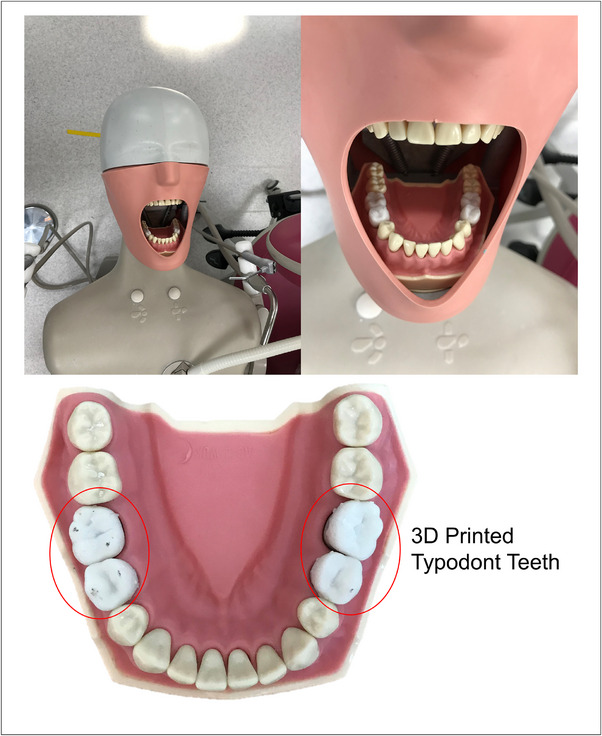
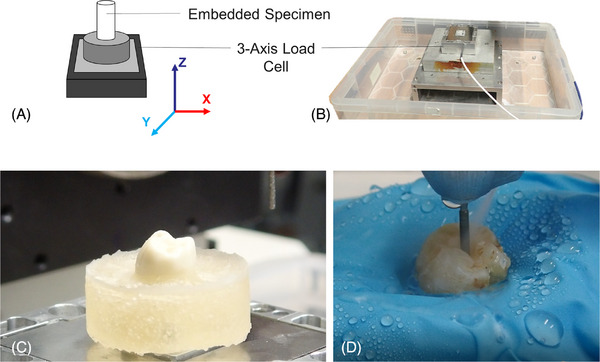
Twenty clinicians were asked to perform a Class I cavity preparation on commercial typodont teeth, 3D-printed typodont teeth, and human extracted teeth, while the forces were recorded via a three-axis load cell. The haptic perception of clinicians was also evaluated through a response questionnaire comparing commercial and 3D-printed typodont teeth.
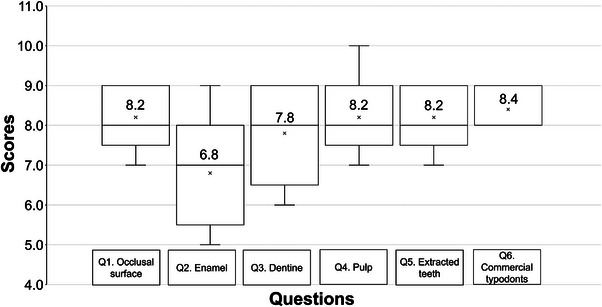
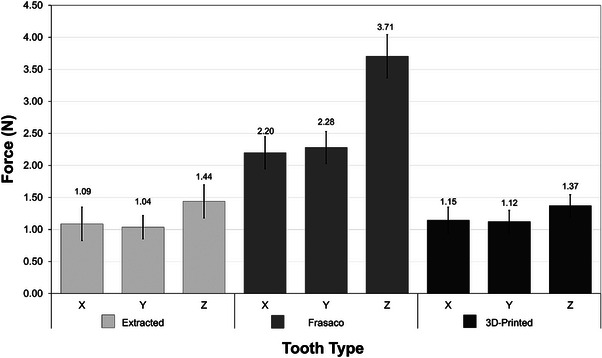
The study found that clinicians used similar forces (p = 0.53) to cut both the 3D-printed typodont teeth (1.37 N) and the human extracted teeth (1.44 N), but more force was needed to cut the commercial typodont teeth (3.71 N). The response questionnaire indicated that clinicians rated the 3D-printed typodont teeth highly compared to the commercial teeth. The 3D-printed dentine received favorable feedback from clinicians, and the 3D-printed enamel was rated higher compared to the commercial equivalents.
The results of the study suggest that 3D-printed typodont teeth offer a comparable haptic perception to human extracted teeth and can be used as an effective tool for preclinical dental learning. Moreover, the study highlights the advantages of 3D-printed typodont teeth over commercial typodont teeth in terms of haptic perception.
本研究旨在比较临床医生对3D打印的模型牙、商用模型牙和人类拔除牙的触觉感知与切割反应。
邀请20名临床医生在商用模型牙、3D打印的模型牙和人类拔除牙上进行I类洞制备,同时通过三轴测力传感器记录力的大小。还通过一份比较商用和3D打印模型牙的反应问卷对临床医生的触觉感知进行评估。
研究发现,临床医生切割3D打印的模型牙(1.37 N)和人类拔除牙(1.44 N)时使用的力相似(p = 0.53),但切割商用模型牙需要更大的力(3.71 N)。反应问卷表明,与商用牙相比,临床医生对3D打印的模型牙评价较高。3D打印的牙本质得到了临床医生的良好反馈,与商用同类产品相比,3D打印的牙釉质评分更高。
研究结果表明,3D打印的模型牙与人类拔除牙具有可比的触觉感知,可作为临床前牙科学习的有效工具。此外,该研究突出了3D打印的模型牙在触觉感知方面优于商用模型牙的优势。