Department of Intensive Care Unit, The Second Hospital of Nanjing, Affiliated to Nanjing University of Chinese Medicine, Nanjing, Jiangsu, China.
PLoS One. 2024 Oct 24;19(10):e0311924. doi: 10.1371/journal.pone.0311924. eCollection 2024.
Several scoring systems have been proposed to predict the risk of death due to severe fever with thrombocytopenia syndrome (STFS), but they have limitations. We developed a new prognostic nomogram for STFS-related death and compared its performance with previous scoring systems and the Acute Physiology and Chronic Health Evaluation score (APACHE II Score).
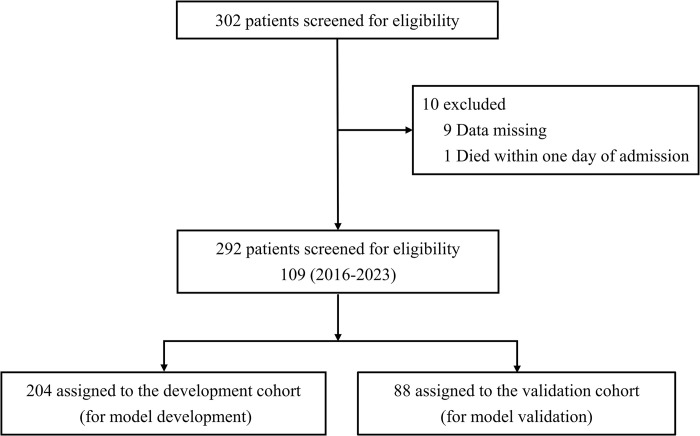
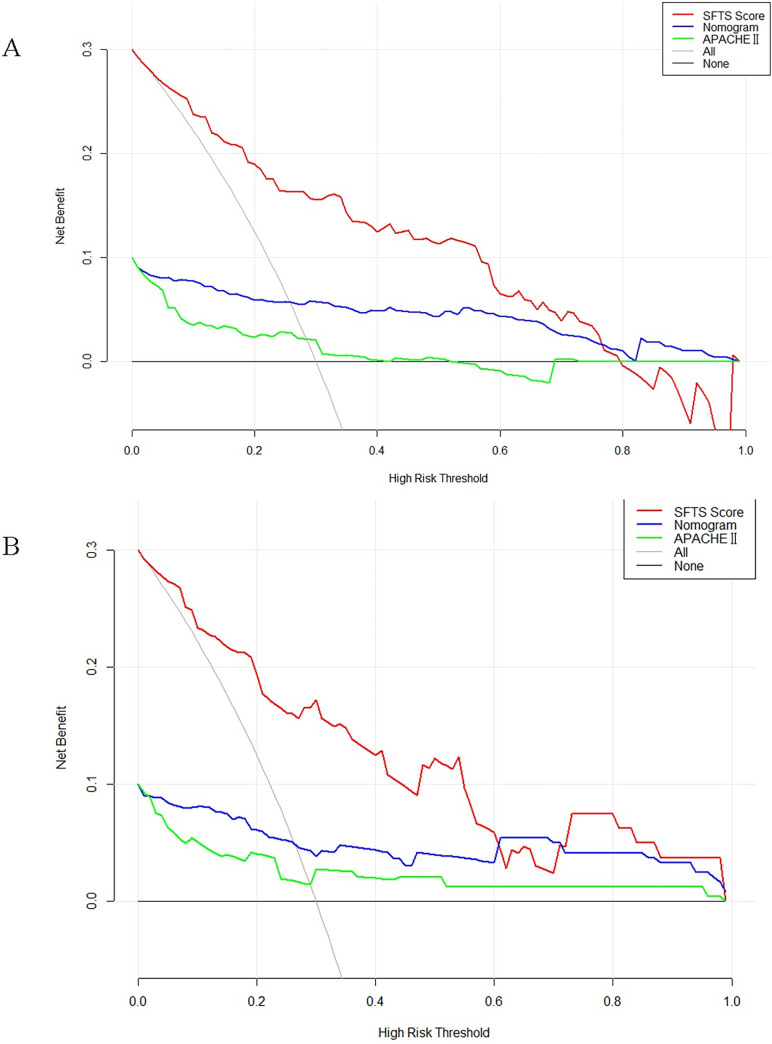
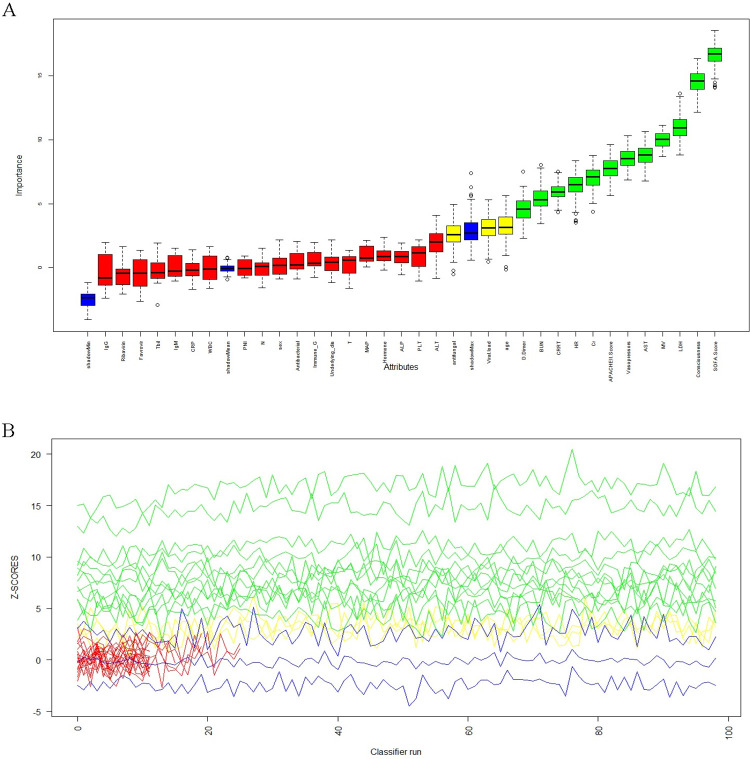
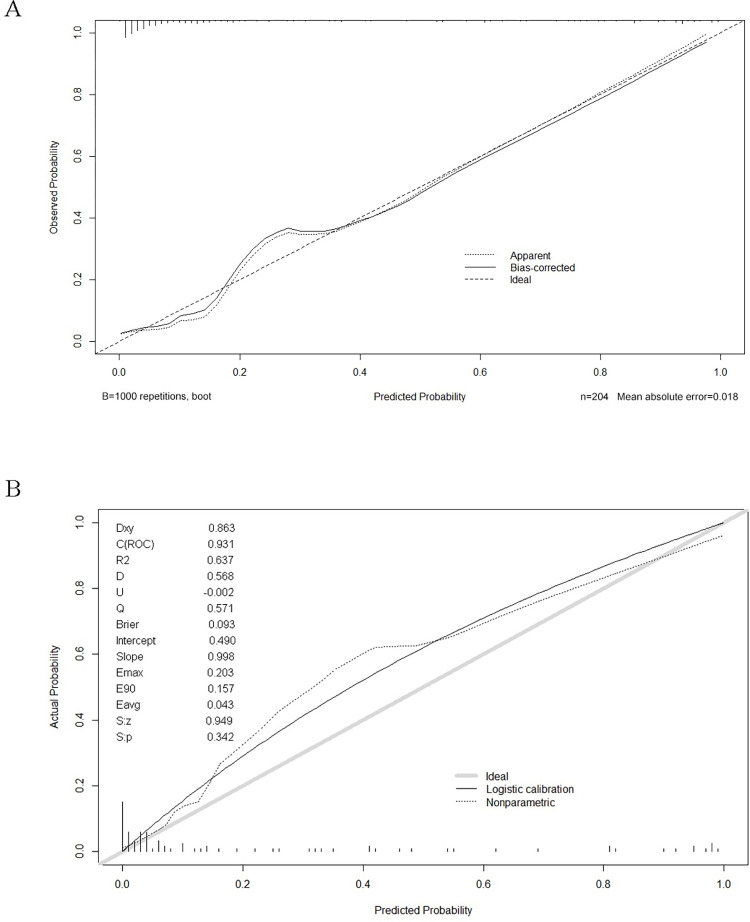
A total of 292 STFS patients were retrospectively enrolled between January 2016 and March 2023. Boruta's algorithm and backward stepwise regression were used to select variables for constructing the nomogram. Time-dependent receiver operating characteristic (ROC) curves and clinical decision curves were generated to compare the strengths of the nomogram with others.
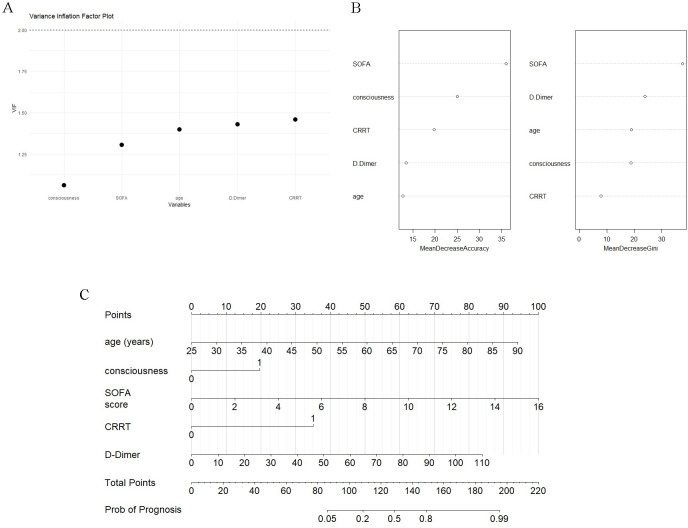
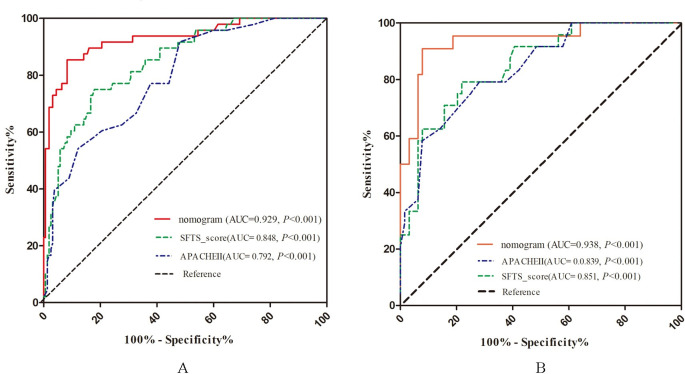
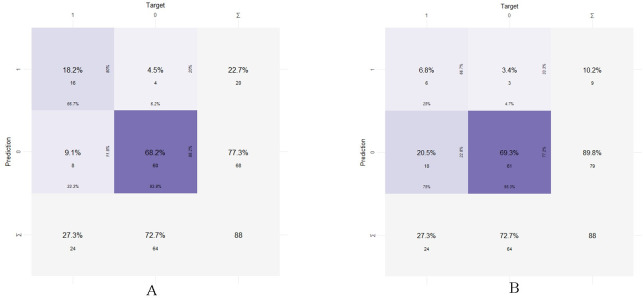
Age, Sequential Organ Failure Assessment Score (SOFA score), state of consciousness, continuous renal replacement therapy (CRRT), and D-dimer were significantly correlated with mortality in both univariate and multivariate analyses (P<0.05). We developed a nomogram using these variables to predict mortality risk, which outperformed the SFTS and APACHE II scores (Training ROC: 0.929 vs. 0.848 vs. 0.792; Validation ROC: 0.938 vs. 0.839 vs. 0.851; P<0.001). In the validation set, the SFTS model achieved an accuracy of 76.14%, a sensitivity of 95.31%, a specificity of 25.00%, a precision of 77.22%, and an F1 score of 85.32%. The nomogram showed a superior performance with an accuracy of 86.36%, a precision of 88.24%, a recall of 93.75%, and an F1 score of 90.91%.
Age, consciousness, SOFA Score, CRRT, and D-Dimer are independent risk factors for STFS-related death. The nomogram based on these factors has an excellent performance in predicting STFS-related death and is recommended for clinical practice.
已经提出了几种评分系统来预测因严重发热伴血小板减少综合征(STFS)导致死亡的风险,但它们都存在局限性。我们开发了一种新的 STFS 相关死亡预后列线图,并将其与以前的评分系统和急性生理学和慢性健康评估评分(APACHE II 评分)进行了比较。
回顾性纳入了 2016 年 1 月至 2023 年 3 月间的 292 例 STFS 患者。使用 Boruta 算法和向后逐步回归来选择变量以构建列线图。生成时间依赖性接受者操作特征(ROC)曲线和临床决策曲线,以比较列线图与其他方法的优势。
年龄、序贯器官衰竭评估评分(SOFA 评分)、意识状态、连续肾脏替代治疗(CRRT)和 D-二聚体在单因素和多因素分析中均与死亡率显著相关(P<0.05)。我们使用这些变量开发了一个预测死亡率风险的列线图,其表现优于 SFTS 和 APACHE II 评分(训练 ROC:0.929 比 0.848 比 0.792;验证 ROC:0.938 比 0.839 比 0.851;P<0.001)。在验证集中,SFTS 模型的准确率为 76.14%,灵敏度为 95.31%,特异性为 25.00%,精准率为 77.22%,F1 评分为 85.32%。列线图的表现更优,准确率为 86.36%,精准率为 88.24%,召回率为 93.75%,F1 评分为 90.91%。
年龄、意识状态、SOFA 评分、CRRT 和 D-二聚体是 STFS 相关死亡的独立危险因素。基于这些因素的列线图在预测 STFS 相关死亡方面具有出色的性能,推荐用于临床实践。