Luo Ning, Li Mengdie, Xu Ming, Shi Chuanchuan, Shi Xinge, Ni Rong, Chen Yu, Zheng Liang, Tu Yuling, Hu Dan, Yu Chunlin, Li Qingying, Lu Yibin
General ICU, Xinyang Central Hospital, Xinyang Key Laboratory of Critical Care Medicine, Xinyang, 464000 Henan China.
Intensive Care Res. 2023 Mar 23:1-10. doi: 10.1007/s44231-023-00035-6.
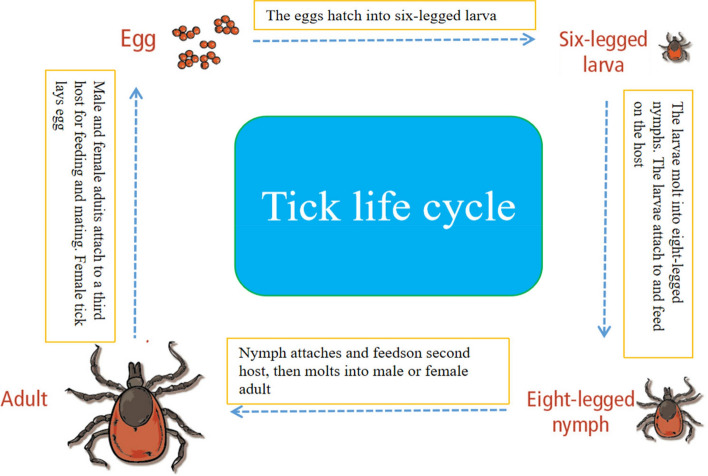
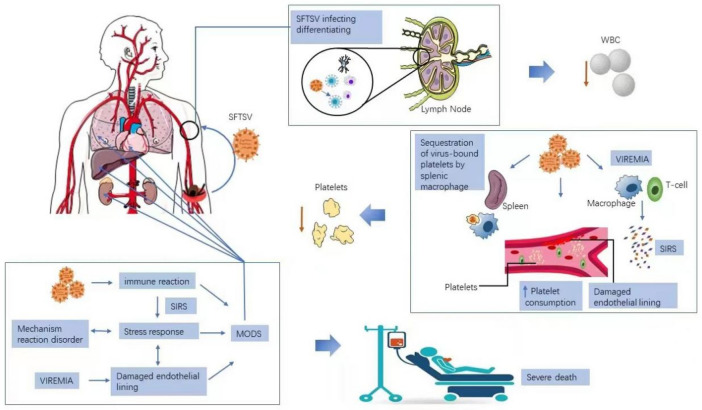
Severe fever with thrombocytopenia syndrome (SFTS) is a new infectious disease first discovered in Ta-pieh Mountains in central China in 2009. It is caused by a novel bunyavirus infection (SFTSV). Since the first discovery of SFTSV, there have been case reports and epidemiological studies on SFTS in several East Asian countries, such as South Korea, Japan, Vietnam and so on. With the rising incidence of SFTS and the rapid spread of the novel bunyavirus around the world, it is clear that the virus has a pandemic potential and may pose a threat to global public health in the future. Early studies have suggested that ticks are an important medium for the transmission of SFTSV to humans; in recent years, it has been reported that there is also human-to-human transmission. In endemic areas, potential hosts include a variety of livestock and wildlife. When people are infected with SFTV, the main clinical manifestations are high fever, thrombocytopenia, leukocytopenia, gastrointestinal symptoms, liver and kidney function damage, and even MODS, with a mortality rate of about 10-30%. This article reviews the latest progress of novel bunyavirus, including virus transmission vector, virus genotypic diversity and epidemiology, pathogenesis, clinical manifestation and treatment.
发热伴血小板减少综合征(SFTS)是2009年在中国中部大别山区首次发现的一种新型传染病。它由一种新型布尼亚病毒感染(SFTSV)引起。自首次发现SFTSV以来,在韩国、日本、越南等几个东亚国家已有关于SFTS的病例报告和流行病学研究。随着SFTS发病率的上升以及这种新型布尼亚病毒在全球的迅速传播,很明显该病毒具有大流行的潜力,未来可能对全球公共卫生构成威胁。早期研究表明,蜱是SFTSV传播给人类的重要媒介;近年来,有报道称也存在人传人现象。在流行地区,潜在宿主包括多种家畜和野生动物。人感染SFTV后,主要临床表现为高热、血小板减少、白细胞减少、胃肠道症状、肝肾功能损害,甚至多器官功能障碍综合征(MODS),死亡率约为10% - 30%。本文综述了新型布尼亚病毒的最新研究进展,包括病毒传播媒介、病毒基因分型多样性与流行病学、发病机制、临床表现及治疗。