Department of Physical Therapy, Faculty of Allied Health Sciences, Chulalongkorn University, Bangkok, 10330, Thailand.
Arbo Unie, Occupational Health Service, Nieuwegein, The Netherlands.
BMC Musculoskelet Disord. 2024 Oct 25;25(1):850. doi: 10.1186/s12891-024-07947-4.
Neck and low back pain are prevalent issues among office workers due to prolonged sitting, necessitating effective interventions. Dynamic seat cushion, designed to promote postural shifts, have emerged as promising solutions to address this concern. This study aims to evaluate the effectiveness of a dynamic seat cushion on recovery and recurrence of neck and/or low back pain in office workers.
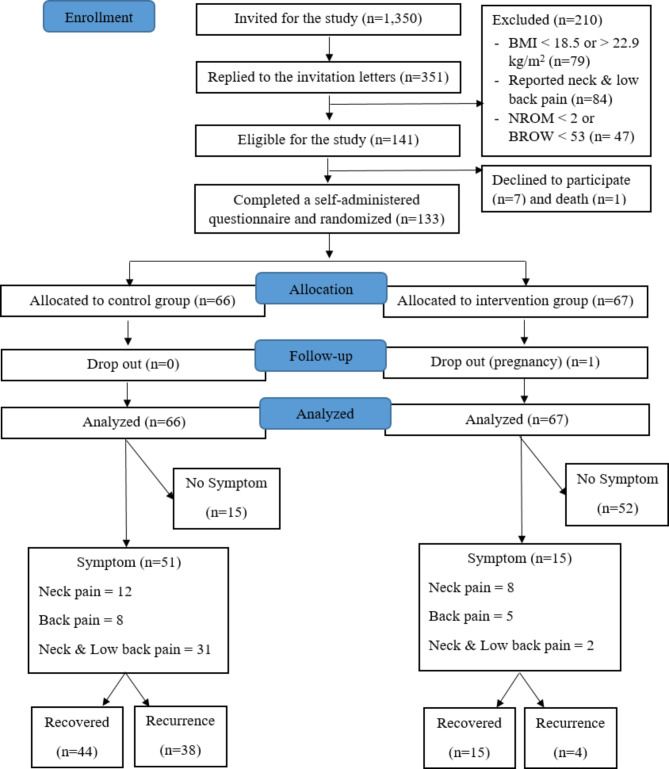
This study used 6-month follow-up data of a randomized controlled trial, involving 66 office workers who reported neck and/or low back pain during the trial. At baseline, participants were cluster-randomized into an intervention group, which received a dynamic seat cushion designed to encourage postural shifts, or a control group, which received a placebo seat pad. Health outcomes included recovery duration and recurrence of pain. Analyses utilized log rank test and Cox proportional hazard models.
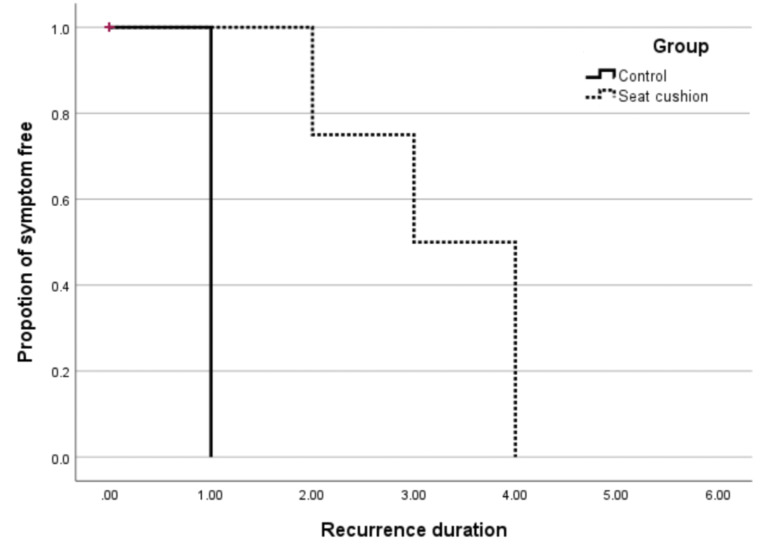
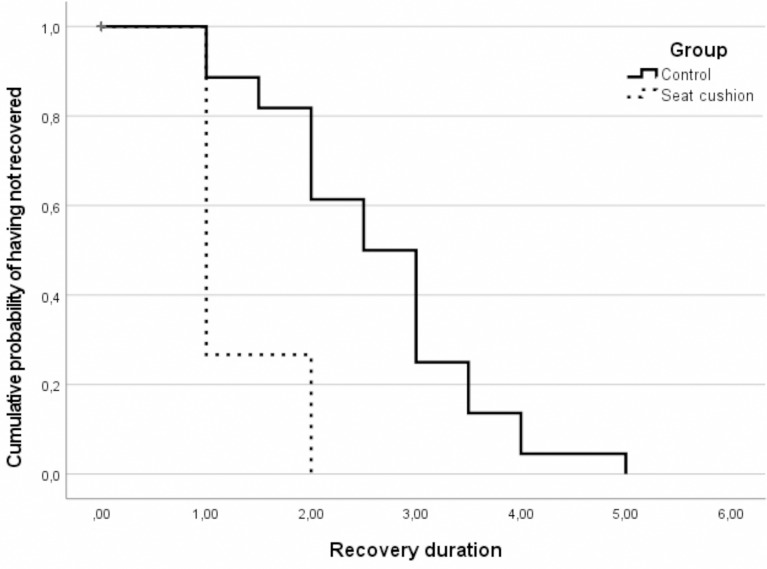
The recovery rate from neck and/or low back pain was 100% for the intervention group, and 86% for the control group. The median recovery duration of participants who reported pain during the 6-month period was 1 month in the intervention group and 3 months in the control group. The intervention group had a higher probability of recovery compared to the control group (HR 4.35, 95% CI 1.87-10.11; p < 0.01). The recurrence rate of neck and low back pain was 27% in the intervention group, which was 75% in the control group. The Hazard Ratio, after adjustment, for the intervention group compared to the control group was 0.50 (95% CI = 0.11-2.12).
A dynamic seat cushion that encourages postural shifts shortened recovery duration of neck and low back pain among office workers. Due to small numbers, a potentially relevant reduction in the recurrence of neck and low back pain could not be statistically confirmed. A power analysis was not conducted for this secondary analysis, and future studies should be designed with adequate sample sizes to explore the recurrence of pain with greater statistical power.
This trial is retrospectively registered under the Thai Clinical Trials Registry: TCTR20230623002 (23/06/2023).
由于长时间久坐,颈部和下背部疼痛是办公室工作人员中普遍存在的问题,因此需要有效的干预措施。设计用于促进姿势变化的动态坐垫已成为解决此问题的有前途的解决方案。本研究旨在评估动态坐垫对办公室工作人员颈部和/或下背部疼痛的恢复和复发的效果。
本研究使用了一项随机对照试验的 6 个月随访数据,涉及 66 名在试验期间报告颈部和/或下背部疼痛的办公室工作人员。在基线时,参与者被聚类随机分为干预组,该组接受旨在鼓励姿势变化的动态坐垫,或对照组,该组接受安慰剂座垫。健康结果包括恢复持续时间和疼痛复发。分析采用对数秩检验和 Cox 比例风险模型。
干预组颈部和/或下背部疼痛的恢复率为 100%,对照组为 86%。在 6 个月期间报告疼痛的参与者中,中位数的恢复持续时间为干预组 1 个月,对照组 3 个月。与对照组相比,干预组恢复的可能性更高(HR 4.35,95%CI 1.87-10.11;p<0.01)。干预组颈部和下背部疼痛的复发率为 27%,对照组为 75%。调整后的干预组与对照组的风险比为 0.50(95%CI=0.11-2.12)。
鼓励姿势变化的动态坐垫缩短了办公室工作人员颈部和下背部疼痛的恢复时间。由于样本数量较少,因此无法通过统计学确认颈部和下背部疼痛复发率的潜在降低。本次二次分析未进行功效分析,未来的研究应设计足够的样本量,以更大的统计功效探讨疼痛的复发情况。
本试验在泰国临床试验注册中心进行了回顾性注册:TCTR20230623002(2023 年 6 月 23 日)。