
针对预防青少年电子烟使用的公共卫生干预措施:一项范围综述。
Public Health Interventions Targeting the Prevention of Adolescent Vaping: A Scoping Review.
作者信息
DiCasmirro Jamie, Tranmer Joan, Davison Colleen, Woo Kevin, Toon Danielle, Hubeny Michael, Ross-White Amanda, Goldie Catherine
机构信息
School of Nursing, Faculty of Health Sciences, Queens' University, Kingston, ON, Canada.
School of Nursing, Faculty of Health and Behavioural Sciences, Lakehead University, Thunder Bay, ON, Canada.
出版信息
Public Health Nurs. 2025 Jan-Feb;42(1):604-614. doi: 10.1111/phn.13464. Epub 2024 Oct 24.
OBJECTIVE
Despite a brief decline during the COVID-19 pandemic, vaping behaviors among adolescents continue to be an international public health concern because of associated health risks and harms. A thorough investigation of existing interventions preventing adolescent vaping is needed to help address this public health crisis and reduce serious and avoidable vaping-related health risks. We reviewed the literature to identify public health interventions aimed at preventing adolescent vaping and summarized their key components and outcome measures.
DESIGN
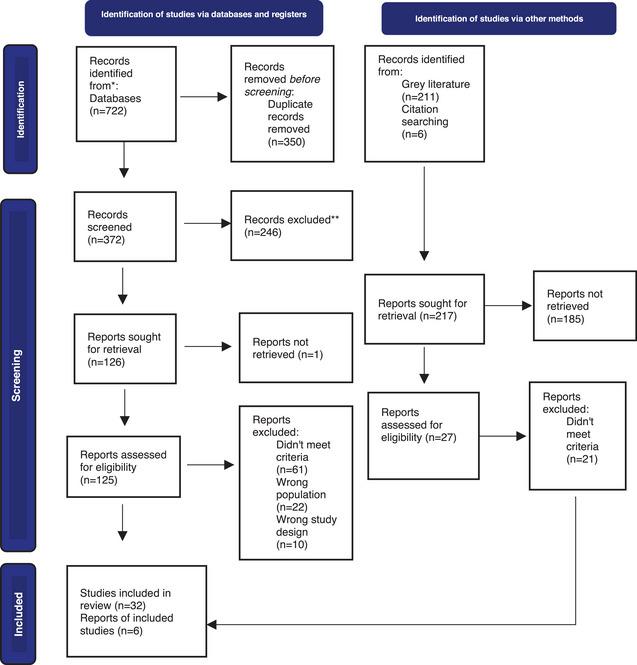
We conducted a scoping review of the literature using the Joanna Briggs Institute methodology searching in MEDLINE, CINAHL, Embase, PubMed, PsycINFO, ProQuest, and Web of Science. Two reviewers screened 589 records for relevance. Studies from any location, reported in English, and described vaping prevention interventions targeting adolescents were included. Records were excluded if they were reported in other languages, published outside the review timeframe, lacked an evaluation, focused on cessation-based interventions, or were review articles. Data extracted included intervention type, key components, and outcome measures.
RESULTS
Thirty-eight included articles were identified and categorized into three intervention categories: school-based, public education/risk communication campaigns, and public policies/government regulations. Key components of the interventions included format, duration, and topics. Formats varied from single to multi-sessions. Prominent topics covered included risks and harms associated with vaping, and the most frequently reported outcome measures used were knowledge, attitudes, and beliefs.
CONCLUSION
Our findings summarize existing public health interventions found in the literature and insights into approaches used to address the global adolescent vaping crisis.
目的
尽管在新冠疫情期间青少年吸电子烟行为曾短暂下降,但由于相关健康风险和危害,其仍是一个国际公共卫生问题。需要对现有的预防青少年吸电子烟的干预措施进行全面调查,以帮助应对这一公共卫生危机,并减少与吸电子烟相关的严重且可避免的健康风险。我们回顾了文献,以确定旨在预防青少年吸电子烟的公共卫生干预措施,并总结了其关键组成部分和结果指标。
设计
我们采用乔安娜·布里格斯研究所的方法对文献进行了范围综述,在医学文献数据库(MEDLINE)、护理学与健康领域数据库(CINAHL)、荷兰医学文摘数据库(Embase)、美国国立医学图书馆医学期刊数据库(PubMed)、心理学文摘数据库(PsycINFO)、ProQuest数据库和科学引文索引数据库(Web of Science)中进行检索。两名评审员筛选了589条记录以确定其相关性。纳入的研究来自任何地区,以英文报道,并描述了针对青少年的吸电子烟预防干预措施。如果记录以其他语言报道、在综述时间范围之外发表、缺乏评估、侧重于基于戒烟的干预措施或为综述文章,则予以排除。提取的数据包括干预类型、关键组成部分和结果指标。
结果
共确定了38篇纳入文章,并分为三类干预措施:学校干预、公共教育/风险沟通活动以及公共政策/政府法规。干预措施的关键组成部分包括形式、持续时间和主题。形式从单次课程到多节课程不等。涵盖的突出主题包括与吸电子烟相关的风险和危害,最常报告的结果指标是知识、态度和信念。
结论
我们的研究结果总结了文献中现有的公共卫生干预措施,以及对用于应对全球青少年吸电子烟危机的方法的见解。
 Zotero 插件