Pérez-Lucas Gabriel, Navarro Simón
Department of Agricultural Chemistry, Geology and Pedology, School of Chemistry, University of Murcia, Campus Universitario de Espinardo, E-30100 Murcia, Spain.
J Xenobiot. 2024 Oct 1;14(4):1343-1377. doi: 10.3390/jox14040076.
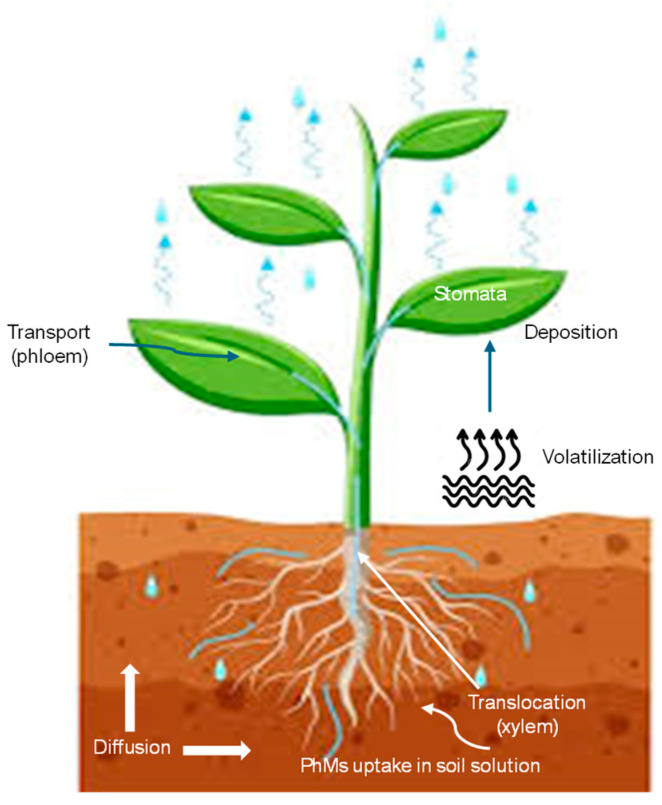
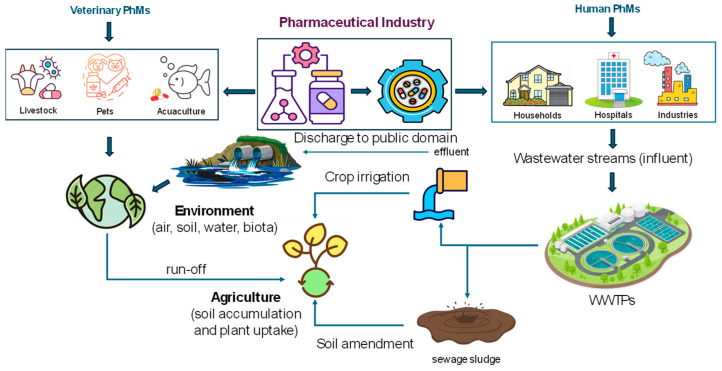
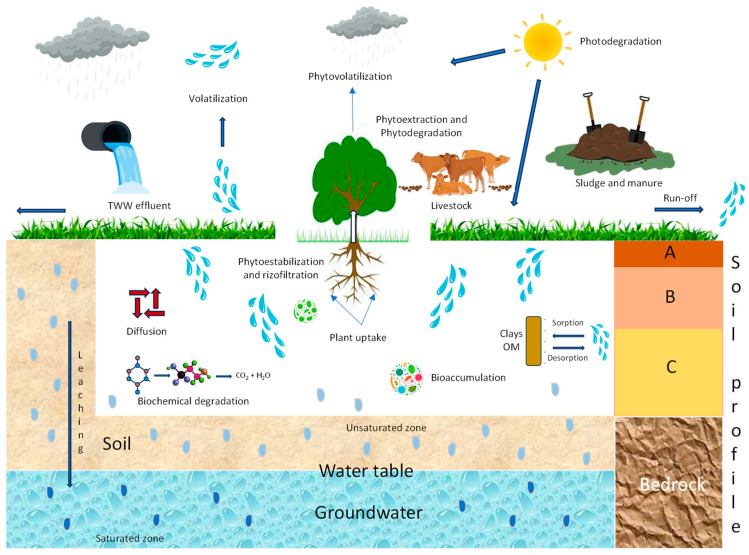
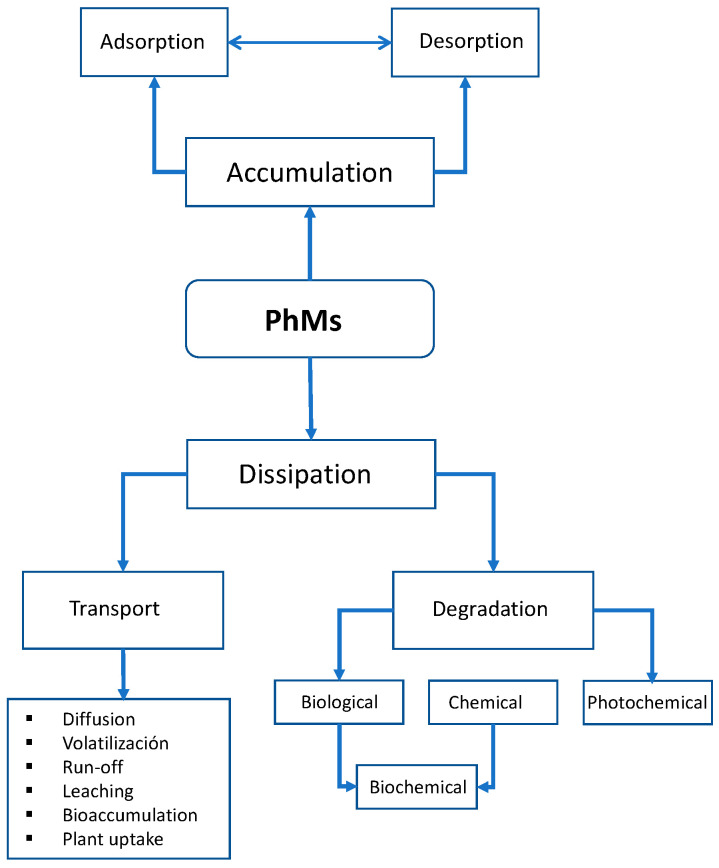
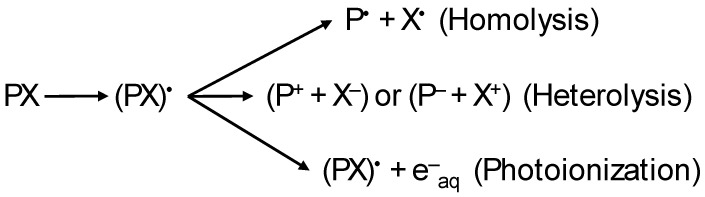
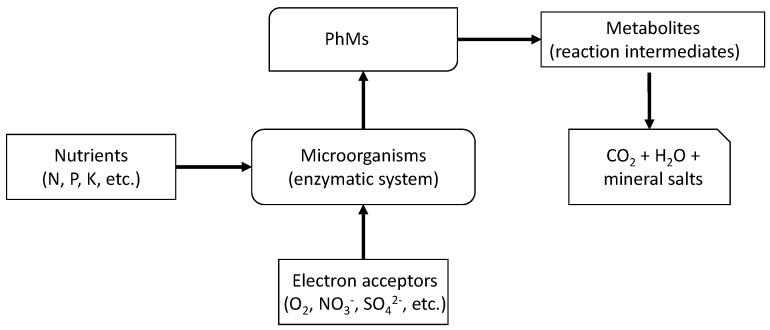
Many pharmaceuticals (PhMs), compounds for the treatment or prevention of diseases in humans and animals, have been identified as pollutants of emerging concern (PECs) due to their wide environmental distribution and potential adverse impact on nontarget organisms and populations. They are often found at significant levels in soils due to the continuous release of effluent and sludge from wastewater treatment plants (WWTPs), the release of which occurs much faster than the removal of PhMs. Although they are generally present at low environmental concentrations, conventional wastewater treatment cannot successfully remove PhMs from influent streams or biosolids. In addition, the soil application of animal manure can result in the pollution of soil, surface water, and groundwater with PhMs through surface runoff and leaching. In arid and semiarid regions, irrigation with reclaimed wastewater and the soil application of biosolids are usual agricultural practices, resulting in the distribution of a wide number of PhMs in agricultural soils. The ability to accurately study the fate of PhMs in soils is critical for careful risk evaluation associated with wastewater reuse or biosolid return to the environment. The behavior and fate of PhMs in soils are determined by a number of processes, including adsorption/desorption (accumulation) to soil colloids, biotic (biodegradation) and abiotic (chemical and photochemical degradation) degradation, and transfer (movement) through the soil profile. The sorption/desorption of PhMs in soils is the main determinant of the amount of organic chemicals taken up by plant roots. The magnitude of this process depends on several factors, such as crop type, the physicochemical properties of the compound, environmental properties, and soil-plant characteristics. PhMs are assumed to be readily bioavailable in soil solutions for uptake by plants, and such solutions act as carriers to transport PhMs into plants. Determining microbial responses under exposure conditions can assist in elucidating the impact of PhMs on soil microbial activity and community size. For all of the above reasons, soil remediation is critical when soil pollutants threaten the environment.
许多药物(PhMs),即用于治疗或预防人类和动物疾病的化合物,由于其在环境中的广泛分布以及对非目标生物和种群的潜在不利影响,已被确定为新兴关注污染物(PECs)。由于污水处理厂(WWTPs)持续排放废水和污泥,它们经常在土壤中以显著水平被发现,而这些药物的释放速度比其去除速度快得多。尽管它们在环境中的浓度通常较低,但传统的废水处理无法成功地从进水水流或生物固体中去除PhMs。此外,施用动物粪便会通过地表径流和淋溶导致土壤、地表水和地下水被PhMs污染。在干旱和半干旱地区,使用再生废水灌溉以及在土壤中施用生物固体是常见的农业做法,这导致大量PhMs在农业土壤中分布。准确研究PhMs在土壤中的归宿对于与废水回用或生物固体回归环境相关的仔细风险评估至关重要。PhMs在土壤中的行为和归宿由许多过程决定,包括对土壤胶体的吸附/解吸(积累)、生物(生物降解)和非生物(化学和光化学降解)降解以及通过土壤剖面的迁移(移动)。PhMs在土壤中的吸附/解吸是植物根系吸收有机化学物质数量的主要决定因素。这个过程的程度取决于几个因素,如作物类型、化合物的物理化学性质、环境性质以及土壤-植物特性。PhMs被认为在土壤溶液中易于被植物吸收利用,并且这些溶液充当载体将PhMs输送到植物中。确定暴露条件下的微生物反应有助于阐明PhMs对土壤微生物活性和群落规模的影响。基于上述所有原因,当土壤污染物威胁环境时,土壤修复至关重要。