Haque Mazharul, Shyanti Ritis K, Mishra Manoj K
Cancer Research Center, Department of Biological Sciences, Alabama State University, Montgomery, AL, United States.
Front Oncol. 2024 Oct 10;14:1431418. doi: 10.3389/fonc.2024.1431418. eCollection 2024.
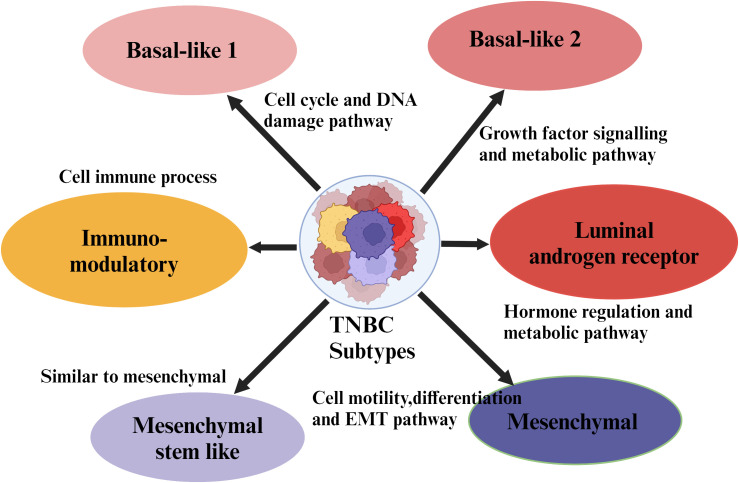
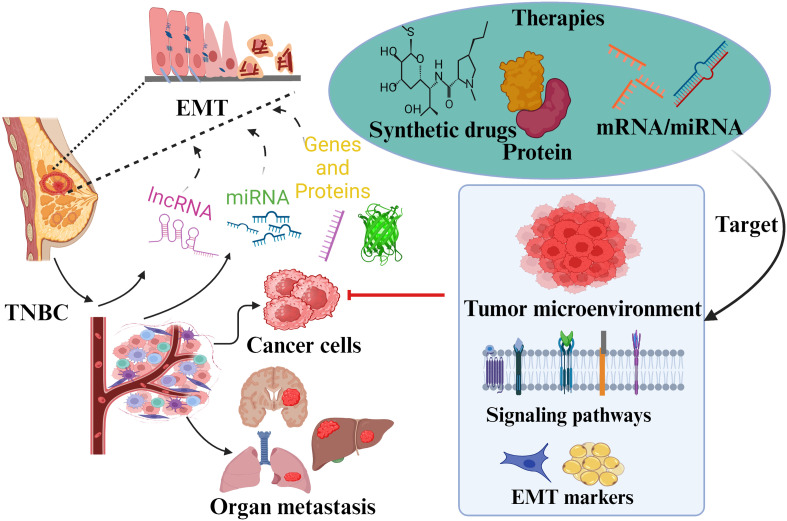
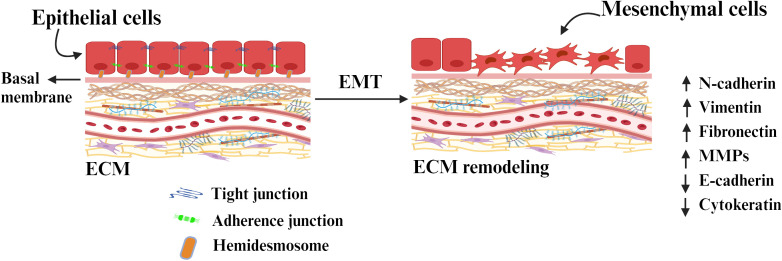
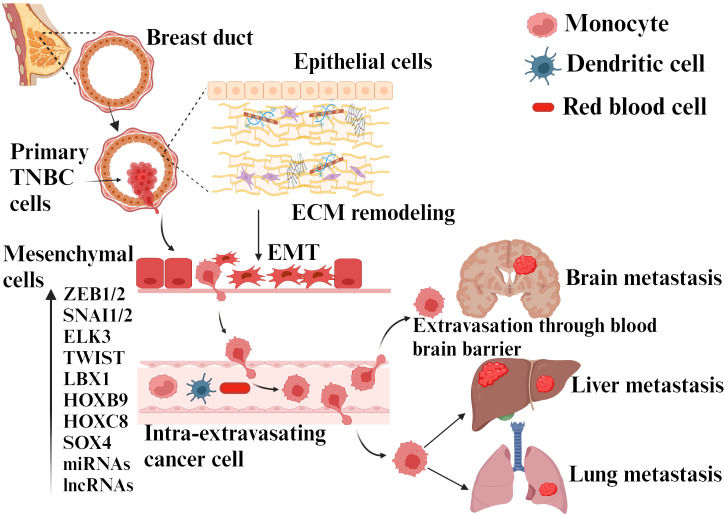
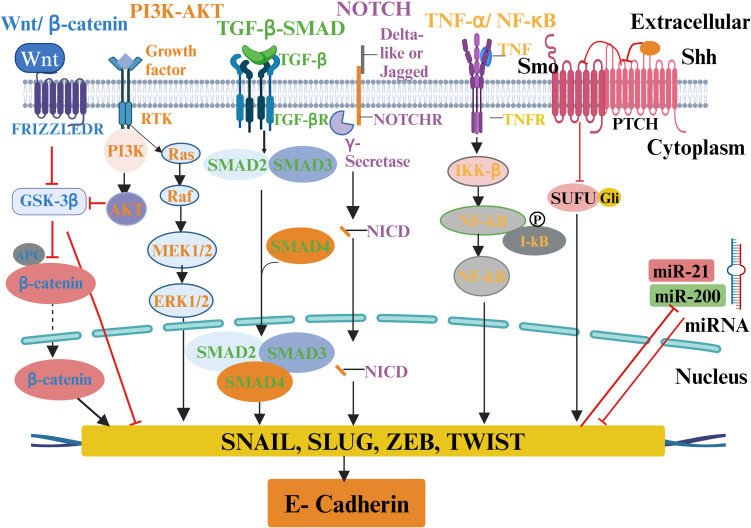
Triple-negative breast cancer (TNBC) is distinguished by negative expression of estrogen receptor (ER), progesterone receptor (PR), and human epidermal growth factor receptor 2 (HER2), making it an aggressive subtype of breast cancer and contributes to 15-20% of the total incidence. TNBC is a diverse disease with various genetic variations and molecular subtypes. The tumor microenvironment involves multiple cells, including immune cells, fibroblast cells, extracellular matrix (ECM), and blood vessels that constantly interact with tumor cells and influence each other. The ECM undergoes significant structural changes, leading to induced cell proliferation, migration, adhesion, invasion, and epithelial-to-mesenchymal transition (EMT). The involvement of EMT in the occurrence and development of tumors through invasion and metastasis in TNBC has been a matter of concern. Therefore, EMT markers could be prognostic predictors and potential therapeutic targets in TNBC. Chemotherapy has been one of the primary options for treating patients with TNBC, but its efficacy against TNBC is still limited. Targeted therapy is a critical emerging option with enhanced efficacy and less adverse effects on patients. Various targeted therapy approaches have been developed based on the specific molecules and the signaling pathways involved in TNBC. These include inhibitors of signaling pathways such as TGF-β, Wnt/β-catenin, Notch, TNF-α/NF-κB and EGFR, as well as immune checkpoint inhibitors, such as pembrolizumab, 2laparib, and talazoparib have been widely explored. This article reviews recent developments in EMT in TNBC invasion and metastasis and potential targeted therapy strategies.
三阴性乳腺癌(TNBC)的特征是雌激素受体(ER)、孕激素受体(PR)和人表皮生长因子受体2(HER2)呈阴性表达,使其成为一种侵袭性乳腺癌亚型,占乳腺癌总发病率的15%-20%。TNBC是一种具有多种基因变异和分子亚型的异质性疾病。肿瘤微环境涉及多种细胞,包括免疫细胞、成纤维细胞、细胞外基质(ECM)和血管,它们不断与肿瘤细胞相互作用并相互影响。ECM会发生显著的结构变化,导致细胞增殖、迁移、黏附、侵袭以及上皮-间质转化(EMT)的诱导。EMT通过在TNBC中的侵袭和转移参与肿瘤的发生和发展,这一直是人们关注的问题。因此,EMT标志物可能是TNBC的预后预测指标和潜在治疗靶点。化疗一直是治疗TNBC患者的主要选择之一,但其对TNBC的疗效仍然有限。靶向治疗是一种重要的新兴选择,对患者的疗效更高且不良反应更少。基于TNBC中涉及的特定分子和信号通路,已经开发了各种靶向治疗方法。这些包括TGF-β、Wnt/β-连环蛋白、Notch、TNF-α/NF-κB和EGFR等信号通路的抑制剂,以及免疫检查点抑制剂,如帕博利珠单抗、拉帕替尼和他拉唑帕尼等,都已得到广泛研究。本文综述了TNBC侵袭和转移中EMT的最新进展以及潜在的靶向治疗策略。