Korea Research Institute of Bioscience and Biotechnology, Daejeon 34141, Republic of Korea.
Biosensors (Basel). 2024 Sep 26;14(10):460. doi: 10.3390/bios14100460.
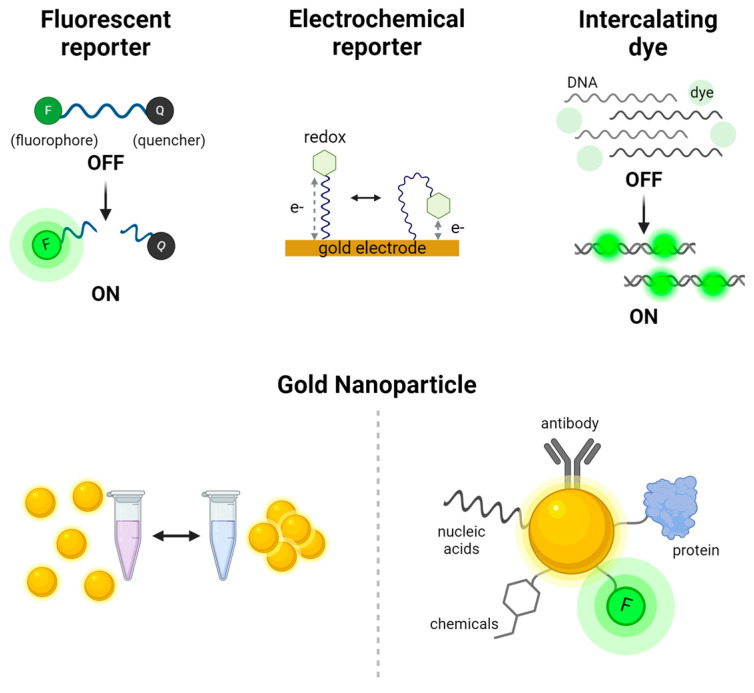
The emergence of CRISPR/Cas systems has revolutionized the field of molecular diagnostics with their high specificity and sensitivity. This review provides a comprehensive overview of the principles and recent advancements in harnessing CRISPR/Cas systems for detecting DNA and RNA. Beginning with an exploration of the molecular mechanisms of key Cas proteins underpinning CRISPR/Cas systems, the review navigates the detection of both pathogenic and non-pathogenic nucleic acids, emphasizing the pivotal role of CRISPR in identifying diverse genetic materials. The discussion extends to the integration of CRISPR/Cas systems with various signal-readout techniques, including fluorescence, electrochemical, and colorimetric, as well as imaging and biosensing methods, highlighting their advantages and limitations in practical applications. Furthermore, a critical analysis of challenges in the field, such as target amplification, multiplexing, and quantitative detection, underscores areas requiring further refinement. Finally, the review concludes with insights into the future directions of CRISPR-based nucleic acid detection, emphasizing the potential of these systems to continue driving innovation in diagnostics, with broad implications for research, clinical practice, and biotechnology.
CRISPR/Cas 系统的出现以其高特异性和灵敏度彻底改变了分子诊断领域。本综述全面概述了利用 CRISPR/Cas 系统检测 DNA 和 RNA 的原理和最新进展。首先探讨了 CRISPR/Cas 系统中关键 Cas 蛋白的分子机制,然后讨论了对致病和非致病核酸的检测,强调了 CRISPR 在识别各种遗传物质方面的关键作用。接着介绍了 CRISPR/Cas 系统与各种信号读出技术(包括荧光、电化学和比色法以及成像和生物传感方法)的整合,突出了它们在实际应用中的优缺点。此外,还对该领域中的一些挑战(如靶扩增、多重检测和定量检测)进行了批判性分析,强调了需要进一步改进的领域。最后,对基于 CRISPR 的核酸检测的未来方向进行了展望,强调了这些系统在诊断方面继续推动创新的潜力,对研究、临床实践和生物技术具有广泛的影响。