Kasanga Maisa, Gajdács Márió, Muleya Walter, Ikhimiukor Odion O, Mudenda Steward, Kasanga Maika, Chizimu Joseph, Shempela Doreen Mainza, Solochi Benjamin Bisesa, Mwikisa Mark John, Yamba Kaunda, Andam Cheryl P, Chanda Raphael, Chanda Duncan, Kwenda Geoffrey
Department of Pathology and Microbiology, University Teaching Hospitals, Lusaka 15101, Zambia.
Department of Oral Biology and Experimental Dental Research, Faculty of Dentistry, University of Szeged, 6720 Szeged, Hungary.
Antibiotics (Basel). 2024 Oct 10;13(10):951. doi: 10.3390/antibiotics13100951.
Extended-spectrum β-lactamases (ESBL) in are a serious concern due to their role in developing multidrug resistance (MDR) and difficult-to-treat infections.
This study aimed to identify ESBL-carrying strains from both clinical and environmental sources in Lusaka District, Zambia.
This cross-sectional study included 58 ESBL-producing strains from hospital inpatients, outpatients, and non-hospital environments. Antimicrobial susceptibility was assessed using the Kirby-Bauer disk diffusion method and the VITEK 2 Compact System, while genotypic analyses utilised the Illumina NextSeq 2000 sequencing platform.
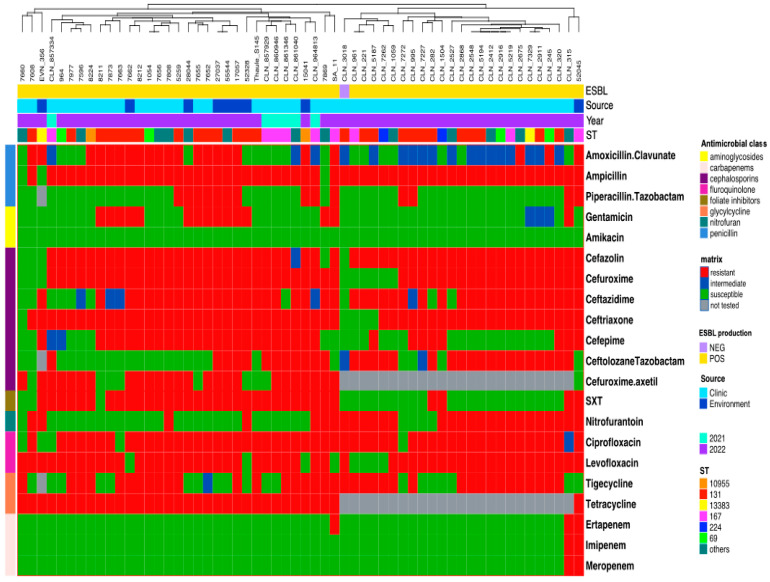
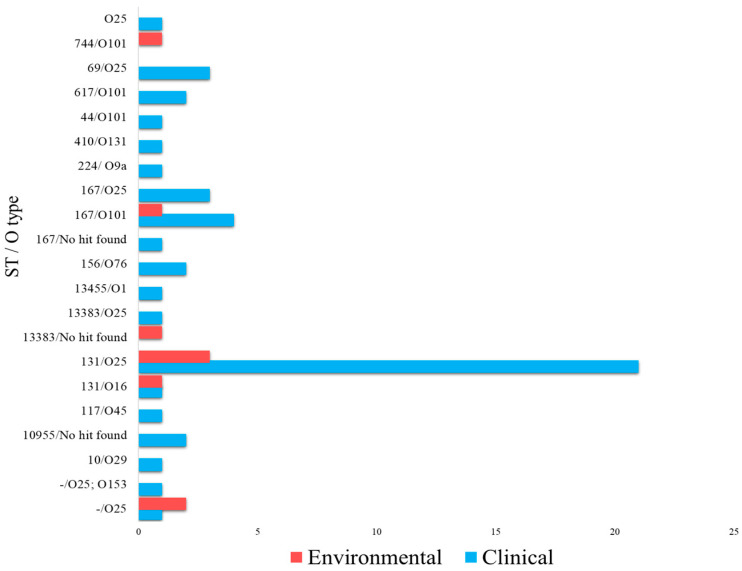
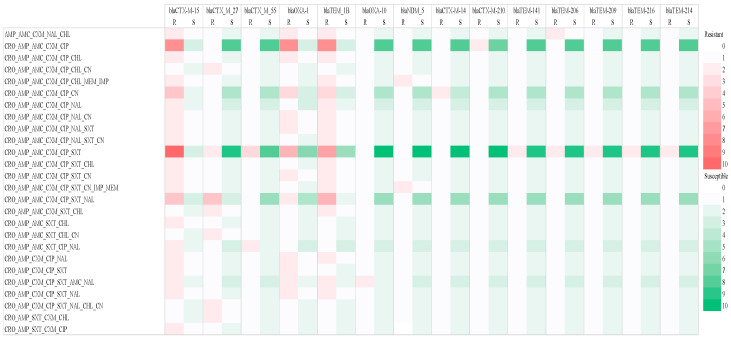
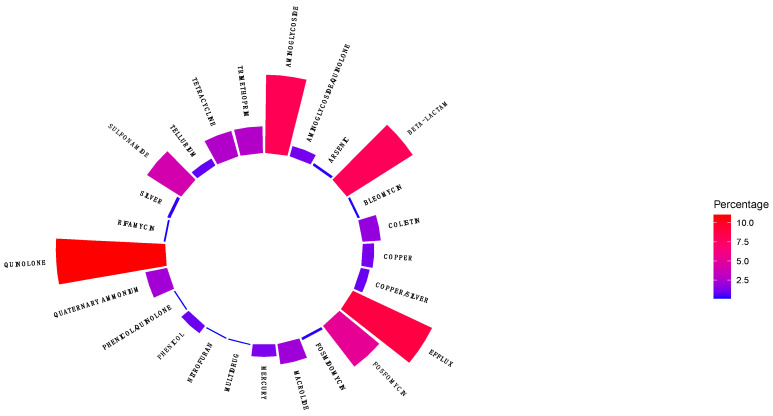
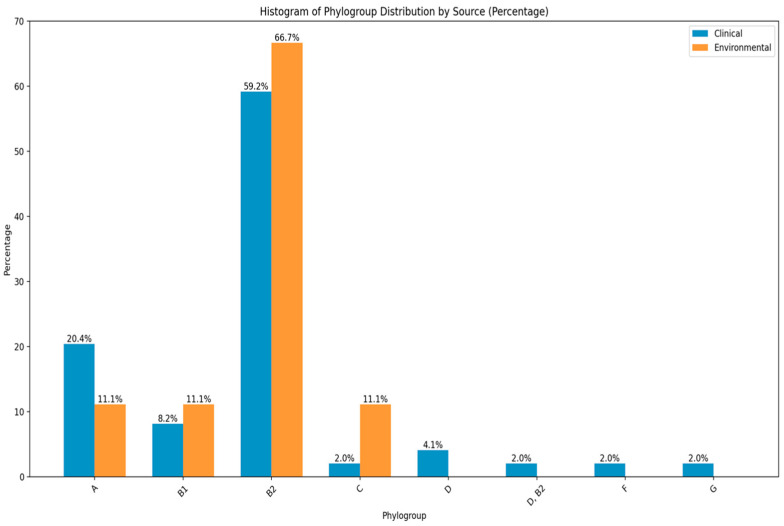
Among the strains isolated strains, phylogroup B2 was the most common, with resistant MLST sequence types including ST131, ST167, ST156, and ST69. ESBL genes such as , , , and were identified, with ST131 and ST410 being the most common. ST131 exhibited a high prevalence of and resistance to fluoroquinolones. Clinical and environmental isolates carried (3.4%), with clinical isolates showing a higher risk of carbapenemase resistance genes and the frequent occurrence of and variants, especially in ST131.
This study underscores the public health risks of - and -carrying . The strengthening antimicrobial stewardship programmes and the continuous surveillance of AMR in clinical and environmental settings are recommended to mitigate the spread of resistant pathogens.
由于超广谱β-内酰胺酶(ESBL)在多重耐药(MDR)和难治性感染的发展中所起的作用,它们成为一个严重问题。
本研究旨在从赞比亚卢萨卡区的临床和环境来源中鉴定携带ESBL的菌株。
这项横断面研究纳入了来自医院住院患者、门诊患者和非医院环境的58株产ESBL菌株。使用 Kirby-Bauer 纸片扩散法和VITEK 2 Compact系统评估抗菌药物敏感性,而基因分型分析则利用Illumina NextSeq 2000测序平台。
在分离出的菌株中,B2菌群最为常见,耐药多位点序列类型包括ST131、ST167、ST156和ST69。鉴定出了如、、和等ESBL基因,其中ST131和ST410最为常见。ST131对氟喹诺酮类药物表现出较高的流行率和耐药性。临床和环境分离株携带(3.4%),临床分离株显示出更高的碳青霉烯酶耐药基因风险以及和变体的频繁出现,尤其是在ST131中。
本研究强调了携带和的公共卫生风险。建议加强抗菌药物管理计划,并持续监测临床和环境环境中的抗菌药物耐药性,以减轻耐药病原体的传播。