Swiatek Vanessa M, Amini Amir, Marinescu Michelle, Dumitru Claudia A, Spitz Lena, Stein Klaus-Peter, Saalfeld Sylvia, Rashidi Ali, Sandalcioglu I Erol, Neyazi Belal
Department of Neurosurgery, Otto-von-Guericke University, 39120 Magdeburg, Germany.
Department of Simulation and Graphics, Otto-von-Guericke University, 39106 Magdeburg, Germany.
J Pers Med. 2024 Sep 28;14(10):1038. doi: 10.3390/jpm14101038.
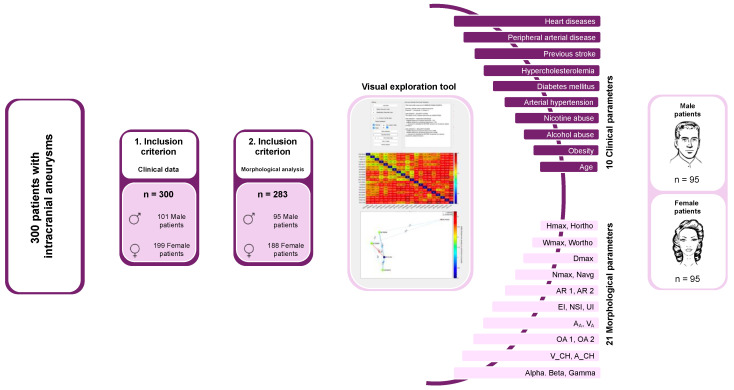
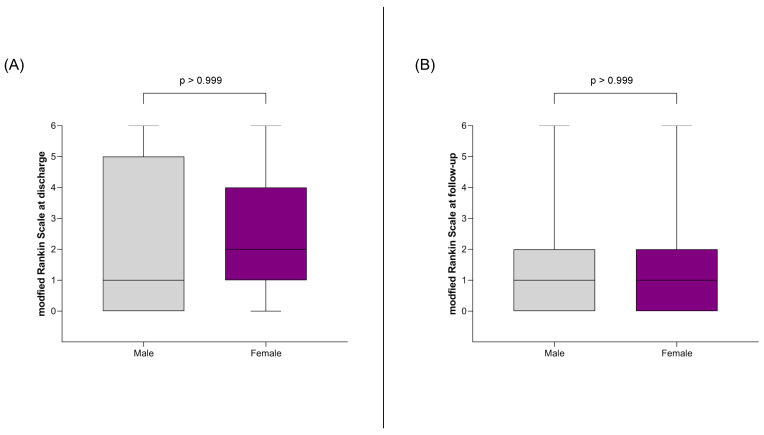
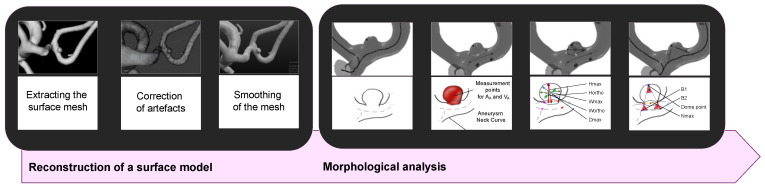
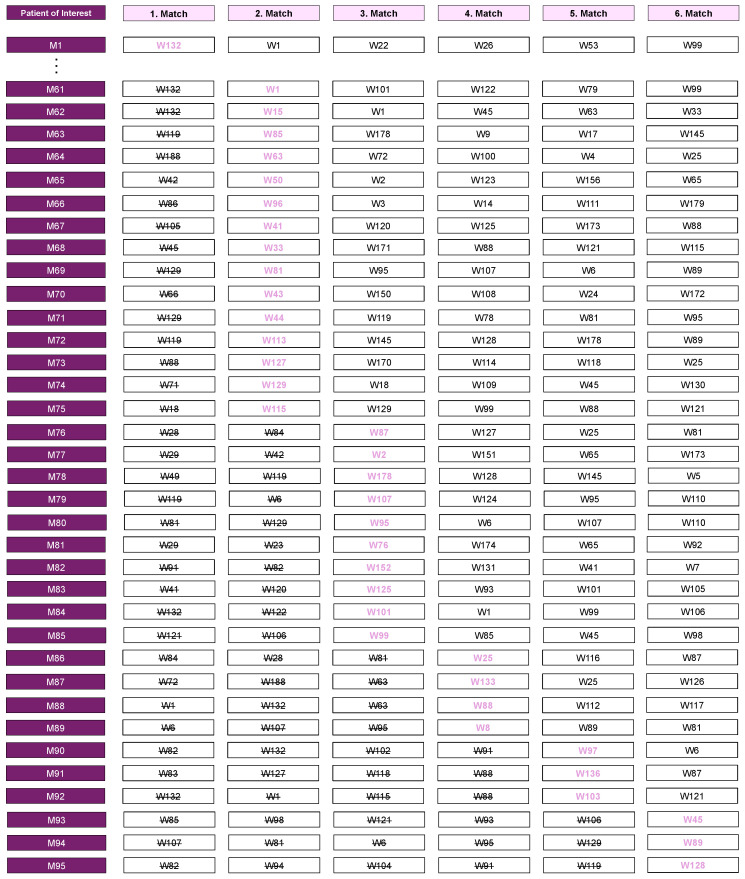
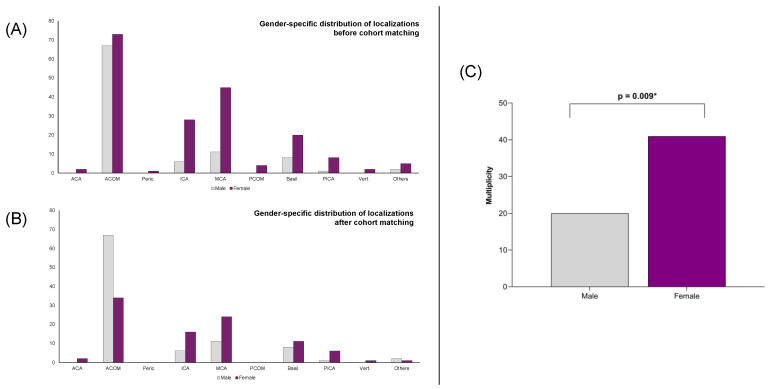
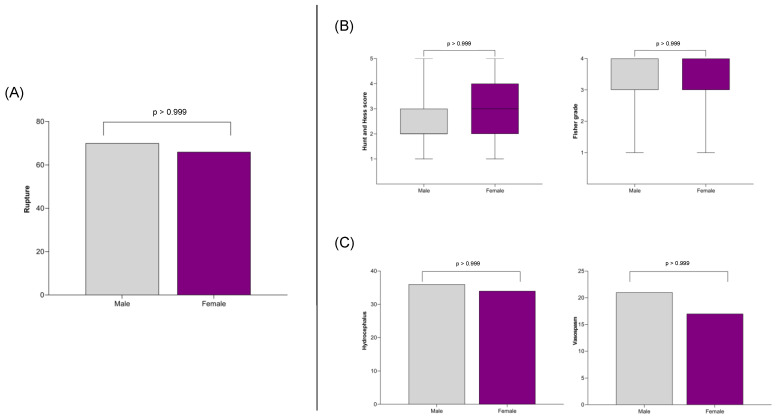
Aneurysmal subarachnoid hemorrhage (SAH) predominantly affects women, accounting for 65% of cases. Women have a 1.3 times higher relative risk than men, with the incidence rising particularly in women aged 55-85 years. Women also have a higher prevalence of unruptured intracranial aneurysms (IAs), especially after the age of 50 years, and are at greater risk of aneurysm growth and rupture. This study aimed to isolate the influence of sex on rupture rate, bleeding severity, functional outcomes, and complications by using a matched cohort, while also examining the impact of sex on aneurysm localization and multiplicity. We utilized a retrospectively collected database of 300 patients with 511 IAs. Inclusion criteria included the availability of clinical data and 3D angiography for semi-automatic reconstruction of IA morphology. Female patients and their IA were matched with male patients according to clinical parameters and 21 morphological characteristics using an interactive visual exploration tool for multidimensional matching. Contrary to previously published results, our study found no significant sex differences in rupture rates or vasospasm rates between male and female patients. The severity of SAH, functional outcomes, and complications such as hydrocephalus were also similar in women and men. However, women exhibited a higher prevalence of multiple aneurysms and distinct localization patterns. This study underscores the complex role of sex in IA development and rupture. Although sex-specific biological factors influence aneurysm characteristics, they do not necessarily translate into differences in clinical outcomes. Further research is needed to explore these factors and their impact on aneurysm development and management.
动脉瘤性蛛网膜下腔出血(SAH)主要影响女性,占病例的65%。女性的相对风险比男性高1.3倍,发病率在55 - 85岁的女性中尤其上升。女性未破裂颅内动脉瘤(IA)的患病率也较高,特别是在50岁以后,并且动脉瘤生长和破裂的风险更大。本研究旨在通过使用匹配队列来分离性别对破裂率、出血严重程度、功能结局和并发症的影响,同时还研究性别对动脉瘤定位和多发性的影响。我们利用了一个回顾性收集的包含300例患者和511个IA的数据库。纳入标准包括临床数据的可用性以及用于IA形态半自动重建的3D血管造影。使用交互式视觉探索工具进行多维匹配,根据临床参数和21个形态特征将女性患者及其IA与男性患者进行匹配。与先前发表的结果相反,我们的研究发现男性和女性患者在破裂率或血管痉挛率方面没有显著的性别差异。SAH的严重程度、功能结局以及诸如脑积水等并发症在女性和男性中也相似。然而,女性表现出更高的多发性动脉瘤患病率和不同的定位模式。本研究强调了性别在IA发生和破裂中的复杂作用。尽管性别特异性生物学因素影响动脉瘤特征,但它们不一定转化为临床结局的差异。需要进一步研究来探索这些因素及其对动脉瘤发生和管理的影响。