Mourglia-Ettlin Gustavo, González-Porcile María Clara, Planells-Romeo Violeta, Long-Albín Antonella, Carrillo-Serradell Laura, Miles Sebastián, Lozano Francisco, Velasco-de-Andrés María
Área Inmunología, Departamento de Biociencias (DEPBIO), Facultad de Química, Universidad de la República, Montevideo 11800, Uruguay.
Unidad Asociada de Inmunología, Instituto de Química Biológica (IQB), Facultad de Ciencias, Universidad de la República, Montevideo 11400, Uruguay.
J Fungi (Basel). 2024 Sep 24;10(10):667. doi: 10.3390/jof10100667.
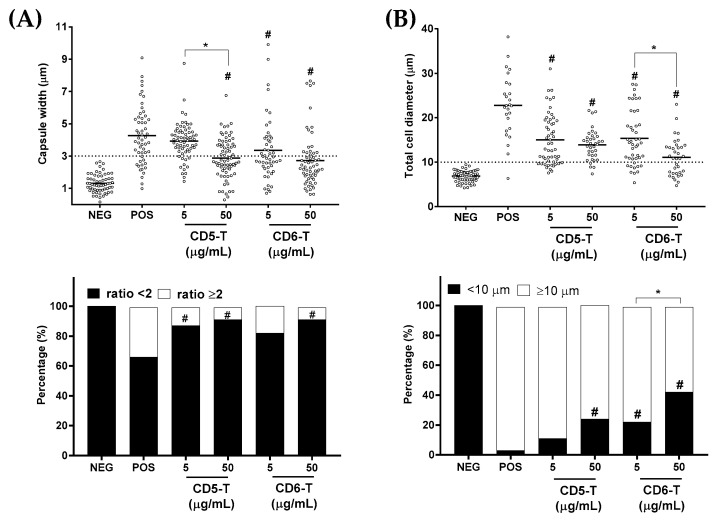
is included in the World Health Organization fungal priority pathogen list, complied to expedite improved research and public-health interventions. The limited number of available antifungal drugs, their associated toxicity, and the emergence of drug-resistant strains make the development of new therapeutic strategies mandatory. Pattern-recognition receptors (PRRs) from the host's innate immune system constitute a potential source of new antimicrobial agents. CD5 and CD6 are lymphoid members of the ancient scavenger receptor cysteine-rich superfamily (SRCR-SF) which bind pathogen-associated molecular patterns (PAMPs) of fungal and bacterial origin. Evidence supports the concept that such binding maps to 11-mer sequences present in each of their three SRCR extracellular domains. Herein, we have designed synthetic peptides containing tandems of such 11-mer sequences (namely CD5-T and CD6-T) and analyzed their -binding properties in vitro. Our results show both inhibitory effects on fungal growth and an ability to impact capsule formation and titanization, two critical virulence factors of involved in immune evasion. These effects hold promise for CD5-T and CD6-T peptides as single or adjuvant therapeutic agents against cryptococcosis.
被列入世界卫生组织真菌重点病原体清单,该清单旨在加快改进研究和公共卫生干预措施。可用抗真菌药物数量有限、其相关毒性以及耐药菌株的出现使得开发新的治疗策略成为必然。宿主先天免疫系统的模式识别受体(PRRs)构成了新抗菌剂的潜在来源。CD5和CD6是古老的富含半胱氨酸的清道夫受体超家族(SRCR-SF)的淋巴样成员,它们结合真菌和细菌来源的病原体相关分子模式(PAMPs)。有证据支持这样的概念,即这种结合映射到它们三个SRCR细胞外结构域中每个结构域存在的11聚体序列。在此,我们设计了包含此类11聚体序列串联的合成肽(即CD5-T和CD6-T),并在体外分析了它们的结合特性。我们的结果显示了对真菌生长的抑制作用以及影响荚膜形成和巨型化的能力,荚膜形成和巨型化是参与免疫逃避的两个关键毒力因子。这些作用使CD5-T和CD6-T肽有望作为抗隐球菌病的单一或辅助治疗剂。