Borkens Julius, Götze Christian, Migliorini Filippo, Sönmez Cueneyt, Koettnitz Julian
Faculty of Medicine, Ruhr-University Bochum, Universitätsstraße 150, 44801 Bochum, Germany.
Department of Orthopaedics and Trauma Surgery, University-Clinic Aachen, RWTH Aachen University Clinic, 52064 Aachen, Germany.
J Clin Med. 2024 Oct 18;13(20):6202. doi: 10.3390/jcm13206202.
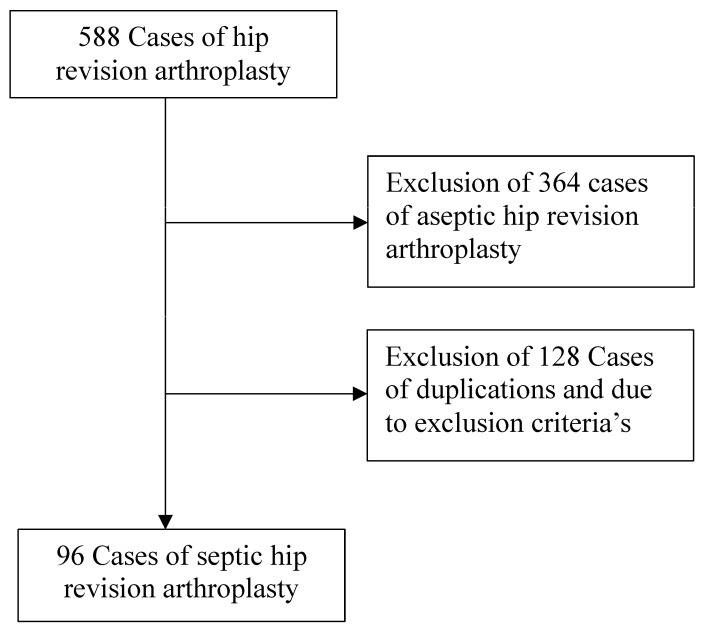
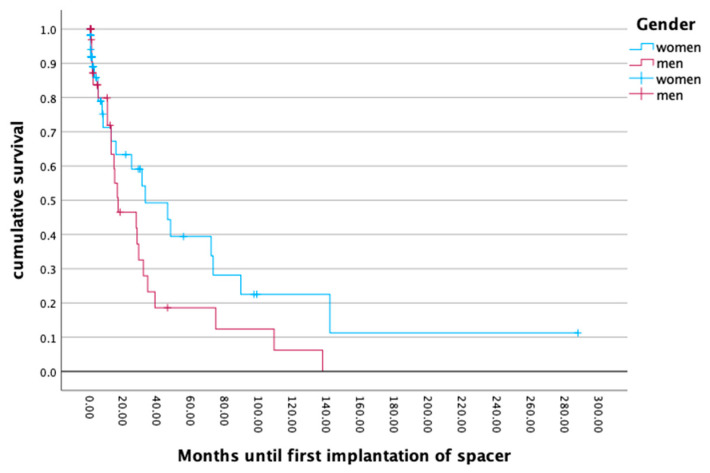
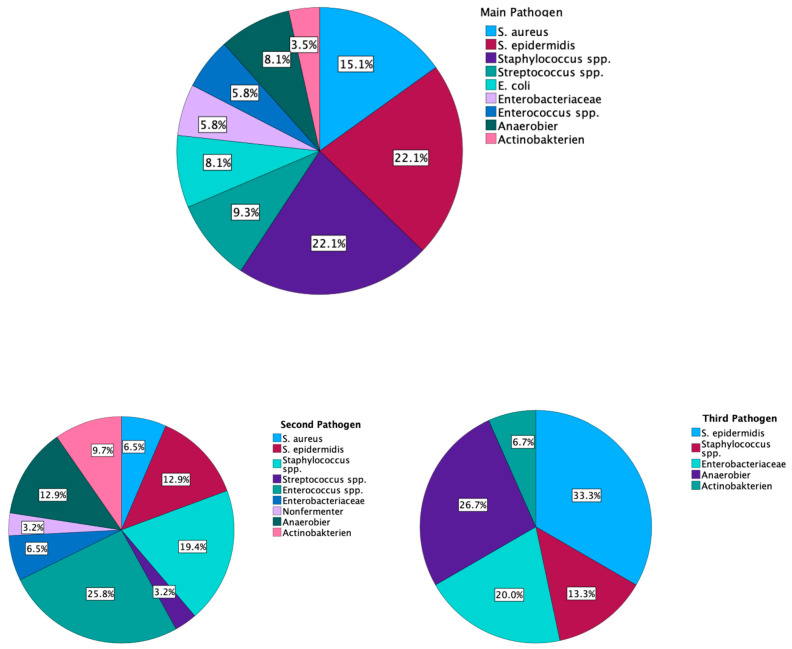
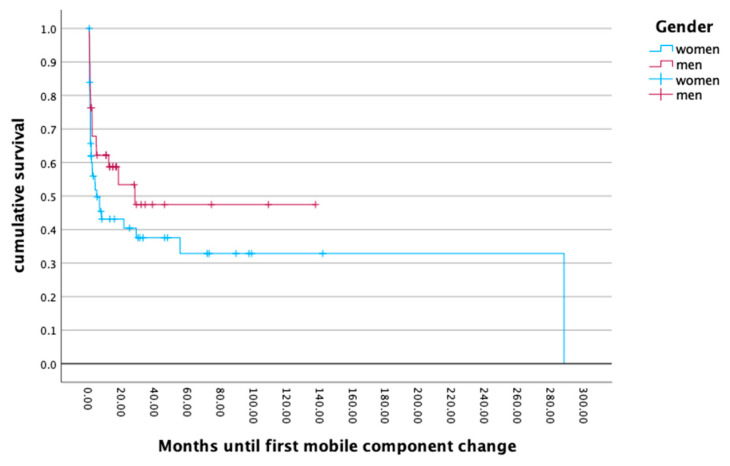
Septic hip revision arthroplasty is a complex procedure associated with significant perioperative risks. This study aimed to analyze perioperative and follow-up risk factors in patients undergoing septic hip revision arthroplasty. A retrospective analysis was conducted on 96 patients who underwent septic revision total hip arthroplasty between 2018 and 2021 at a university hospital. Demographic data, surgical details, pathogen analyses, and complication data were collected and analyzed. The first and second hospitalizations were investigated. Data analyses were conducted with SPSS Version 29.0. The mean age of patients was 69.06 ± 11.56 years, with 59.4% being female. On average, 1.3 ± 0.8 pathogens were detected per patient. species were the most common pathogens. Women experienced significantly more complications during the first revision hospitalization ( = 0.010), including more surgical ( = 0.022) and systemic complications ( = 0.001). Anemia requiring transfusion was more common in women (70.1% vs. 43.5%, = 0.012). A higher BMI was associated with a higher count of pathogens ( = 0.019). The number of pathogens correlated with increased wound healing disorders ( < 0.001) and the need for further revision surgeries ( < 0.001). This study identifies gender as a significant risk factor for complications in septic hip revision arthroplasty. Female patients may require more intensive perioperative management to mitigate risks. The findings underscore the need for personalized approaches in managing these complex cases to improve outcomes.
感染性髋关节翻修置换术是一种复杂的手术,伴有重大的围手术期风险。本研究旨在分析接受感染性髋关节翻修置换术患者的围手术期和随访风险因素。对2018年至2021年在一家大学医院接受感染性全髋关节翻修置换术的96例患者进行了回顾性分析。收集并分析了人口统计学数据、手术细节、病原体分析和并发症数据。对首次和第二次住院情况进行了调查。使用SPSS 29.0版进行数据分析。患者的平均年龄为69.06±11.56岁,女性占59.4%。每位患者平均检测到1.3±0.8种病原体。[此处原文缺失具体病原体种类信息]是最常见的病原体。女性在首次翻修住院期间经历的并发症明显更多(P = 0.010),包括更多的手术并发症(P = 0.022)和全身并发症(P = 0.001)。需要输血的贫血在女性中更常见(70.1%对43.5%,P = 0.012)。较高的体重指数与病原体数量增加相关(P = 0.019)。病原体数量与伤口愈合障碍增加(P < 0.001)和进一步翻修手术的需求增加(P < 0.001)相关。本研究确定性别是感染性髋关节翻修置换术并发症的一个重要风险因素。女性患者可能需要更强化的围手术期管理以降低风险。这些发现强调了在管理这些复杂病例时采用个性化方法以改善结局的必要性。