Shelton Kristen, Deshpande Gargi N, Sanchez Gilson J, Vogel Jason R, Miller A Caitlin, Florea Gabriel, Jeffries Erin R, De Leόn Kara B, Stevenson Bradley, Kuhn Katrin Gaardbo
School of Civil Engineering and Environmental Science, University of Oklahoma, Norman, OK 73071, USA.
Department of Biostatistics and Epidemiology, Hudson College of Public Health, University of Oklahoma Health Sciences Center, Oklahoma City, OK 73104, USA.
Microorganisms. 2024 Sep 30;12(10):2001. doi: 10.3390/microorganisms12102001.
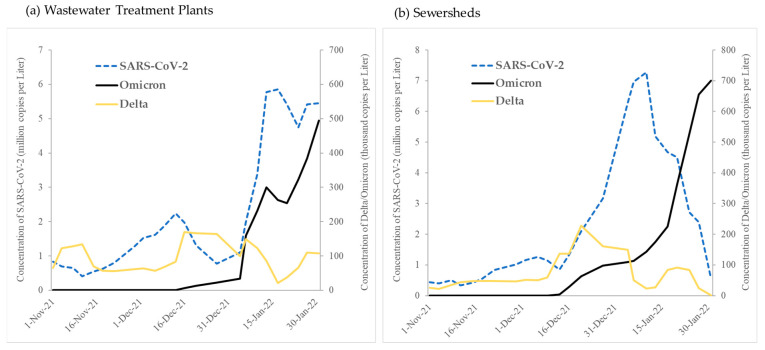
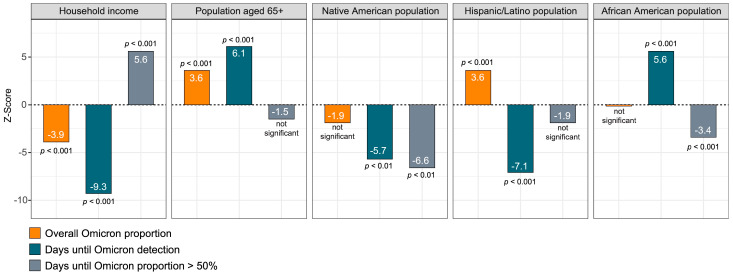
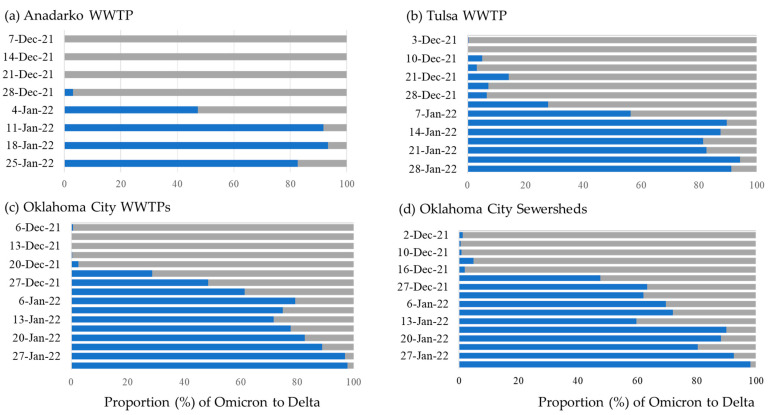
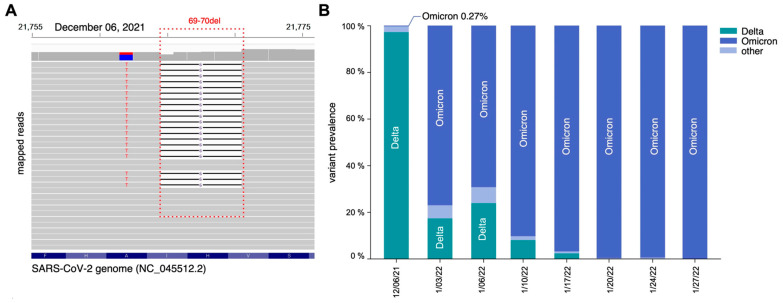
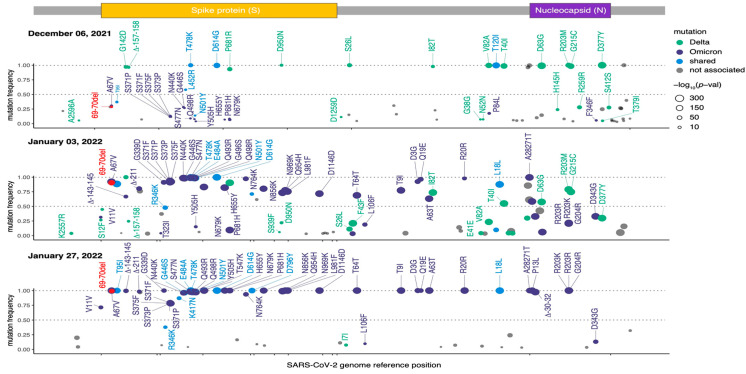
During the COVID-19 pandemic, wastewater surveillance was used to monitor community transmission of SARS-CoV-2. As new genetic variants emerged, the need for timely identification of these variants in wastewater became an important focus. In response to increased reports of Omicron transmission across the United States, the Oklahoma Wastewater Surveillance team utilized allele-specific RT-qPCR assays to detect and differentiate variants, such as Omicron, from other variants found in wastewater in Oklahoma. The PCR assays showed presence of the Omicron variant in Oklahoma on average two weeks before official reports, which was confirmed through genomic sequencing of selected wastewater samples. Through continued surveillance from November 2021 to January 2022, we also demonstrated the transition from prevalence of the Delta variant to prevalence of the Omicron variant in local communities. We further assessed how this transition correlated with certain demographic factors characterizing each community. Our results highlight RT-qPCR assays as a rapid, simple, and cost-effective method for monitoring the community spread of SARS-CoV-2 genetic variants in wastewater. Additionally, they demonstrate that specific demographic factors such as ethnic composition and household income can correlate with the timing of SARS-CoV-2 variant introduction and spread.
在新冠疫情期间,废水监测被用于监测严重急性呼吸综合征冠状病毒2(SARS-CoV-2)的社区传播情况。随着新的基因变异株出现,及时在废水中识别这些变异株的需求成为一个重要关注点。为应对美国各地关于奥密克戎传播的报告增多,俄克拉荷马州废水监测团队利用等位基因特异性逆转录定量聚合酶链反应(RT-qPCR)检测法来检测并区分奥密克戎等变异株与在俄克拉荷马州废水中发现的其他变异株。这些聚合酶链反应检测法显示,奥密克戎变异株在俄克拉荷马州出现的时间平均比官方报告早两周,这通过对选定废水样本的基因组测序得到了证实。通过从2021年11月到2022年1月的持续监测,我们还证明了当地社区中从德尔塔变异株流行向奥密克戎变异株流行的转变。我们进一步评估了这种转变与每个社区的某些人口统计学因素之间的关联。我们的结果凸显了RT-qPCR检测法是一种用于监测废水中SARS-CoV-2基因变异株社区传播的快速、简单且经济高效的方法。此外,这些结果表明,诸如种族构成和家庭收入等特定人口统计学因素可能与SARS-CoV-2变异株引入和传播的时间相关。