Ahn Woo Seok, Huh Yun Chan, Kim Cheong A, Park Woo Tae, Kim Jang Hoon, Jeong Jin-Tae, Hur Mok, Lee Jeonghoon, Moon Youn-Ho, Ahn Sung-Ju, Kim Tae Il
Department of Herbal Crop Research, NIHHS, RDA, Eumseong 27709, Republic of Korea.
Department of Bioenergy Science and Technology, Chonnam National University, Gwangju 61186, Republic of Korea.
Plants (Basel). 2024 Oct 11;13(20):2845. doi: 10.3390/plants13202845.
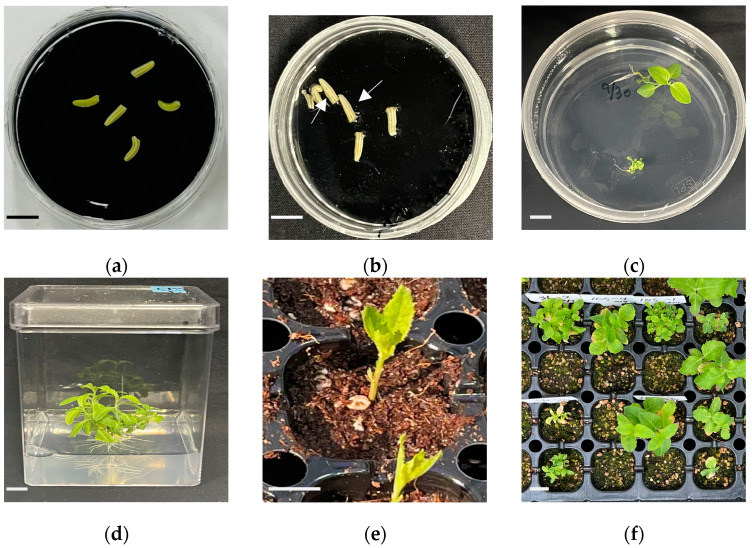
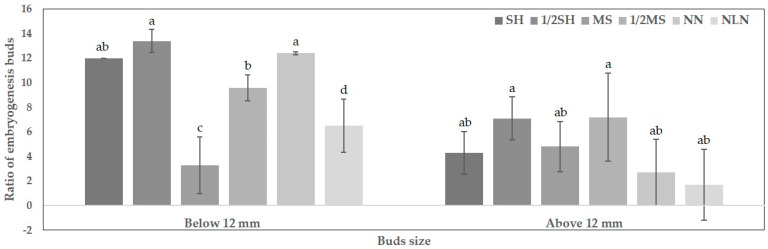
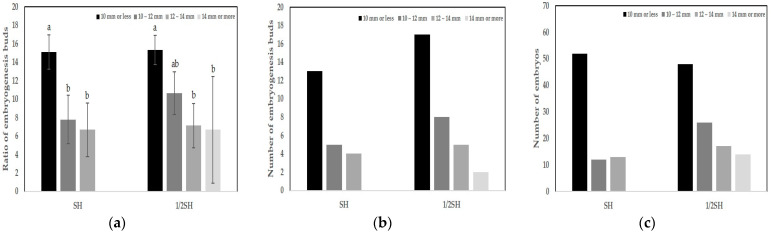
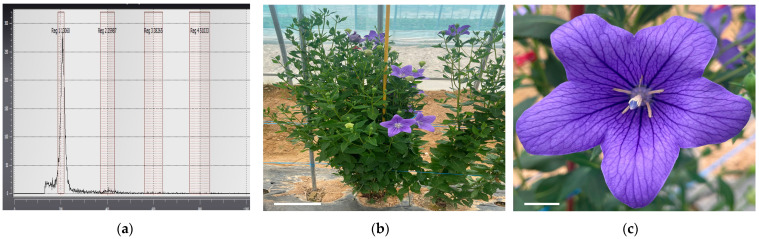
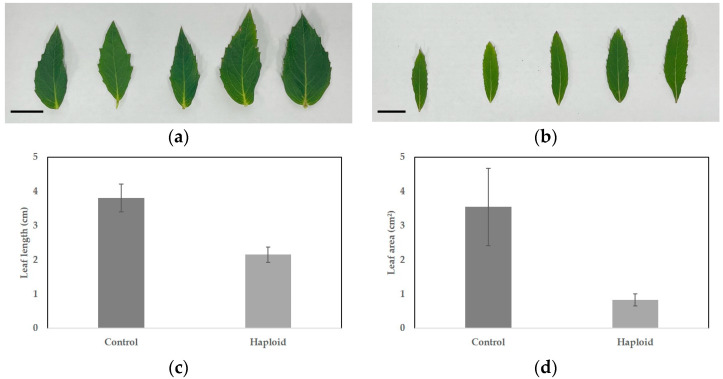
Anther and microspore cultures are efficient methods for inducing haploids in plants. The microspore culture by chromosome-doubling method can produce double haploid lines, developing pure lines within the first or second generations. This study aimed to induce haploid plants in using the shed-microspore culture method. floral buds (n = 1503) were cultured in six types of medium to induce haploids. Anthers were placed on a solid-liquid double-layer medium and cold pre-treated at 9 °C for one week, followed by incubation in the dark at 25 °C. Embryogenesis was observed after approximately 70 days of culture, producing haploid plants through regeneration. Of the 1503 floral buds, embryos developed in 120 buds, resulting in the induction of 402 individuals. Among the media used, Schenk and Hildebrandt (SH) and 1/2SH exhibited high efficiency, with embryogenesis ratios of 12% and 13.4%, respectively. Additionally, the highest embryogenesis ratio (15.3%) was observed in flower buds sized 10 mm or less. Therefore, we established shed-microspore culture conditions to induce haploids in . Using this method, haploids can be efficiently induced in , shortening the breeding period by enabling the rapid development of inbred lines.
花药培养和小孢子培养是诱导植物单倍体的有效方法。通过染色体加倍法进行小孢子培养可以产生双单倍体系,在第一代或第二代就可培育出纯系。本研究旨在利用散粉小孢子培养法在[具体植物名称未给出]中诱导单倍体植株。将1503个花芽(n = 1503)接种于六种培养基中诱导单倍体。花药接种于固液双层培养基上,先在9℃下冷预处理1周,然后在25℃黑暗条件下培养。培养约70天后观察到胚胎发生,通过再生获得单倍体植株。在1503个花芽中,有120个花芽发育出胚,共诱导出402株个体。在所使用的培养基中, Schenk和Hildebrandt(SH)培养基及1/2SH培养基效率较高,胚胎发生率分别为12%和13.4%。此外,在大小为10毫米及以下的花芽中观察到最高胚胎发生率(15.3%)。因此,我们建立了散粉小孢子培养条件以在[具体植物名称未给出]中诱导单倍体。利用该方法,可在[具体植物名称未给出]中高效诱导单倍体,通过快速培育自交系缩短育种周期。