
透皮给药系统的设计特点、质量源于设计方法、特性、治疗应用及临床考量——综述
The Design Features, Quality by Design Approach, Characterization, Therapeutic Applications, and Clinical Considerations of Transdermal Drug Delivery Systems-A Comprehensive Review.
作者信息
Sivadasan Durgaramani, Madkhali Osama A
机构信息
Department of Pharmaceutics, College of Pharmacy, Jazan University, Jazan 45142, Saudi Arabia.
出版信息
Pharmaceuticals (Basel). 2024 Oct 9;17(10):1346. doi: 10.3390/ph17101346.
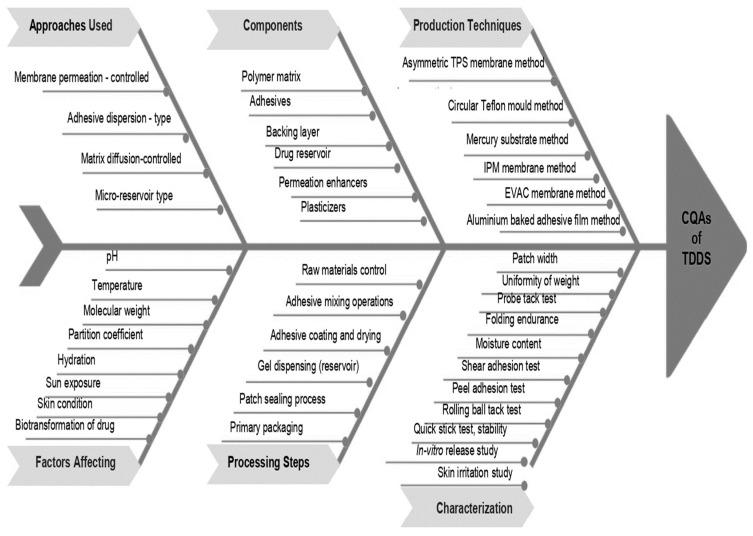
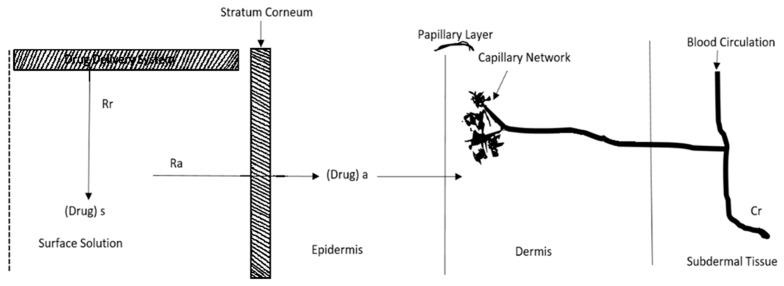
Transdermal drug delivery systems (TDDSs) are designed to administer a consistent and effective dose of an active pharmaceutical ingredient (API) through the patient's skin. These pharmaceutical preparations are self-contained, discrete dosage forms designed to be placed topically on intact skin to release the active component at a controlled rate by penetrating the skin barriers. The API provides the continuous and prolonged administration of a substance at a consistent rate. TDDSs, or transdermal drug delivery systems, have gained significant attention as a non-invasive method of administering APIs to vulnerable patient populations, such as pediatric and geriatric patients. This approach is considered easy to administer and helps overcome the bioavailability issues associated with conventional drug delivery, which can be hindered by poor absorption and metabolism. A TDDS has various advantages compared to conventional methods of drug administration. It is less intrusive, more patient-friendly, and can circumvent first pass metabolism, as well as the corrosive acidic environment of the stomach, that happens when drugs are taken orally. Various approaches have been developed to enhance the transdermal permeability of different medicinal compounds. Recent improvements in TDDSs have enabled the accurate administration of APIs to their target sites by enhancing their penetration through the stratum corneum (SC), hence boosting the bioavailability of drugs throughout the body. Popular physical penetration augmentation methods covered in this review article include thermophoresis, iontophoresis, magnetophoresis, sonophoresis, needle-free injections, and microneedles. This review seeks to provide a concise overview of several methods employed in the production of TDDSs, as well as their evaluation, therapeutic uses, clinical considerations, and the current advancements intended to enhance the transdermal administration of drugs. These advancements have resulted in the development of intelligent, biodegradable, and highly efficient TDDSs.
透皮给药系统(TDDS)旨在通过患者皮肤给予活性药物成分(API)持续且有效的剂量。这些药物制剂是独立的、离散的剂型,设计用于局部放置在完整皮肤上,通过穿透皮肤屏障以可控速率释放活性成分。API以一致的速率持续且长时间地给药。TDDS,即透皮给药系统,作为一种向儿科和老年患者等易受影响的患者群体给药API的非侵入性方法,已受到广泛关注。这种方法被认为易于给药,并有助于克服与传统给药相关的生物利用度问题,传统给药可能因吸收和代谢不良而受到阻碍。与传统给药方法相比
 Zotero 插件