• 文献检索
  • 文档翻译
  • 深度研究
  • 学术资讯
  • Suppr Zotero 插件Zotero 插件
  • 邀请有礼
  • 套餐&价格
  • 历史记录
应用&插件
Suppr Zotero 插件Zotero 插件浏览器插件Mac 客户端Windows 客户端微信小程序
定价
高级版会员购买积分包购买API积分包
服务
文献检索文档翻译深度研究API 文档MCP 服务
关于我们
关于 Suppr公司介绍联系我们用户协议隐私条款
关注我们

Suppr 超能文献

核心技术专利:CN118964589B侵权必究
粤ICP备2023148730 号-1Suppr @ 2026

文献检索

告别复杂PubMed语法,用中文像聊天一样搜索,搜遍4000万医学文献。AI智能推荐,让科研检索更轻松。

立即免费搜索

文件翻译

保留排版,准确专业,支持PDF/Word/PPT等文件格式,支持 12+语言互译。

免费翻译文档

深度研究

AI帮你快速写综述,25分钟生成高质量综述,智能提取关键信息,辅助科研写作。

立即免费体验

初次保留交叉韧带全膝关节置换失败后聚乙烯的线性和体积磨损模式:一项使用光学扫描和计算机辅助设计模型的分析

Linear and Volumetric Polyethylene Wear Patterns after Primary Cruciate-Retaining Total Knee Arthroplasty Failure: An Analysis Using Optical Scanning and Computer-Aided Design Models.

作者信息

Valič Matej, Milošev Ingrid, Levašič Vesna, Blas Mateja, Podovšovnik Eva, Koren Jaka, Trebše Rihard

机构信息

Valdoltra Orthopaedic Hospital, Jadranska cesta 31, 6280 Ankaran, Slovenia.

Faculty of Medicine, University of Ljubljana, Vrazov trg 2, 1000 Ljubljana, Slovenia.

出版信息

Materials (Basel). 2024 Oct 13;17(20):5007. doi: 10.3390/ma17205007.

DOI:10.3390/ma17205007
PMID:39459713
原文链接:https://pmc.ncbi.nlm.nih.gov/articles/PMC11509131/
Abstract

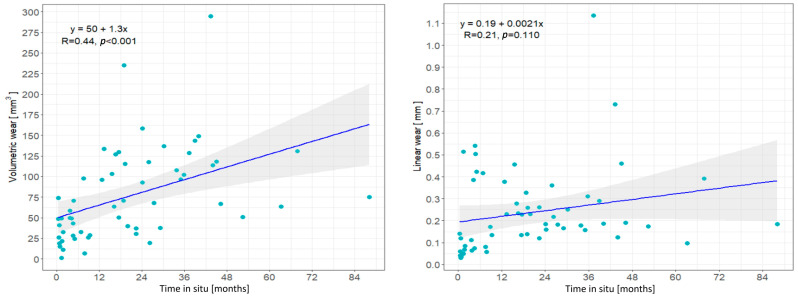
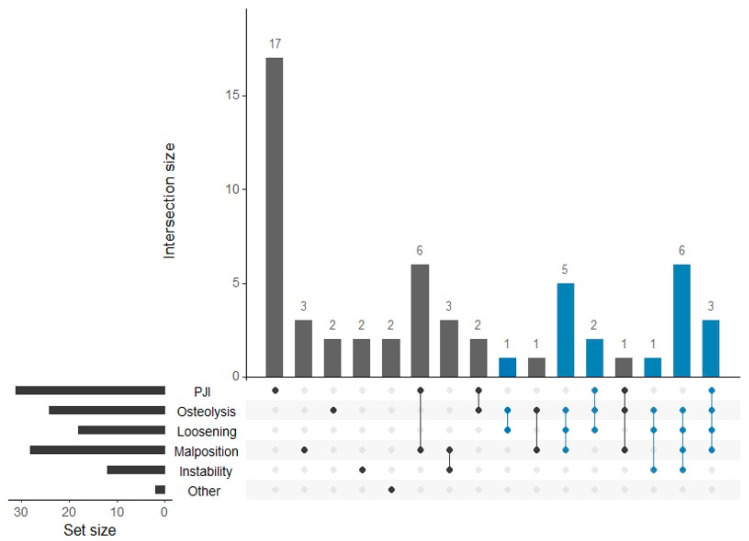
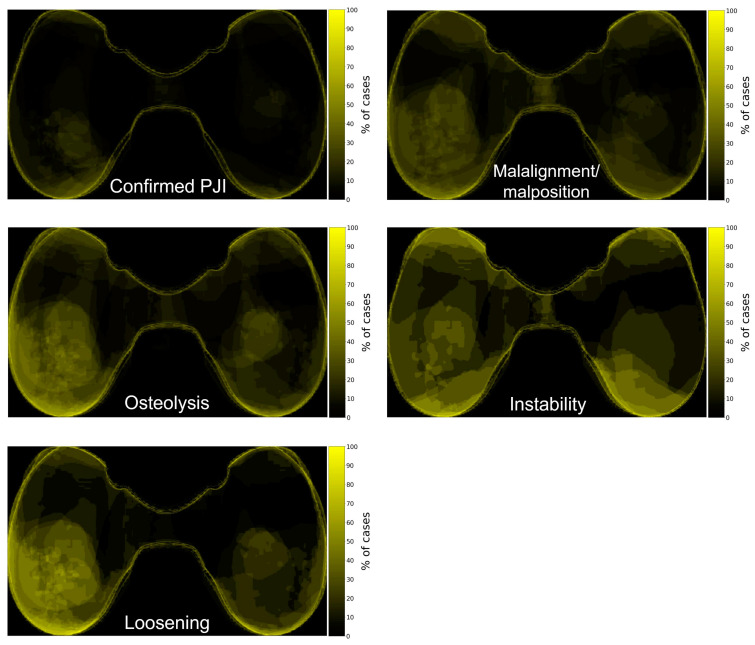
(1) Background: Analyses of retrieved inserts allow for a better understanding of TKA failure mechanisms and the detection of factors that cause increased wear. The purpose of this implant retrieval study was to identify whether insert volumetric wear significantly differs among groups of common causes of total knee arthroplasty failure, whether there is a characteristic wear distribution pattern for a common cause of failure, and whether nominal insert size and component size ratio (femur-to-insert) influence linear and volumetric wear rates. (2) Methods: We digitally reconstructed 59 retrieved single-model cruciate-retaining inserts and computed their articular load-bearing surface wear utilizing an optical scanner and computer-aided design models as references. After comprehensively reviewing all cases, each was categorized into one or more of the following groups: prosthetic joint infection, osteolysis, clinical loosening of the component, joint malalignment or component malposition, instability, and other isolated causes. The associations between volumetric wear and causes of failure were estimated using a multiple linear regression model adjusted for time in situ. Insert linear penetration wear maps from the respective groups of failure were further processed and merged to create a single average binary image, highlighting a potential wear distribution pattern. The differences in wear rates according to nominal insert size (small vs. medium vs. large) and component size ratio (≤1 vs. >1) were tested using the Kruskal-Wallis test and the Mann-Whitney test, respectively. (3) Results: Patients with identified osteolysis alone and those also with clinical loosening of the component had significantly higher volumetric wear when compared to those without both causes ( = 0.016 and = 0.009, respectively). All other causes were not significantly associated with volumetric wear. The instability group differentiated from the others with a combined peripheral antero-posterior wear distribution. Linear and volumetric wear rates showed no significant differences when compared by nominal insert size (small vs. medium vs. large, = 0.563 and = 0.747, respectively) or by component (femoral-to-insert) size ratio (≤1 vs. >1, = 0.885 and = 0.055, respectively). (4) Conclusions: The study found increased volumetric wear in cases of osteolysis alone, with greater wear when combined with clinical loosening compared to other groups. The instability group demonstrated a characteristic peripheral anterior and posterior wear pattern. Insert size and component size ratio seem not to influence wear rates.

摘要

(1) 背景:对取出的植入物进行分析有助于更好地理解全膝关节置换术(TKA)的失败机制,并检测导致磨损增加的因素。本植入物取出研究的目的是确定在全膝关节置换术失败的常见原因组中,植入物的体积磨损是否存在显著差异,一种常见失败原因是否存在特征性的磨损分布模式,以及标称植入物尺寸和部件尺寸比(股骨与植入物)是否会影响线性磨损率和体积磨损率。(2) 方法:我们对59个取出的单模型保留交叉韧带的植入物进行了数字重建,并利用光学扫描仪和计算机辅助设计模型作为参考来计算其关节承重表面的磨损。在全面审查所有病例后,将每个病例归类为以下一个或多个组:人工关节感染、骨溶解、部件临床松动、关节排列不齐或部件位置不当、不稳定以及其他孤立原因。使用针对在位时间进行调整的多元线性回归模型来估计体积磨损与失败原因之间的关联。对各个失败组的植入物线性穿透磨损图进行进一步处理并合并,以创建一个单一的平均二值图像,突出显示潜在的磨损分布模式。分别使用Kruskal-Wallis检验和Mann-Whitney检验来测试根据标称植入物尺寸(小、中、大)和部件尺寸比(≤1与>1)的磨损率差异。(3) 结果:与没有这两种原因的患者相比,仅确定有骨溶解的患者以及同时伴有部件临床松动的患者的体积磨损显著更高(分别为P = 0.016和P = 0.009)。所有其他原因与体积磨损均无显著关联。不稳定组与其他组的区别在于其前后联合的周边磨损分布。按标称植入物尺寸(小、中、大,分别为P = 0.563和P = 0.747)或按部件(股骨与植入物)尺寸比(≤1与>1,分别为P = 0.885和P = 0.055)比较时,线性磨损率和体积磨损率均无显著差异。(4) 结论:该研究发现,仅骨溶解病例的体积磨损增加,与其他组相比,合并临床松动时磨损更大。不稳定组表现出特征性的周边前后磨损模式。植入物尺寸和部件尺寸比似乎不影响磨损率。
https://cdn.ncbi.nlm.nih.gov/pmc/blobs/f819/11509131/ce1557d8e37d/materials-17-05007-g010.jpg
https://cdn.ncbi.nlm.nih.gov/pmc/blobs/f819/11509131/72e31ba779f5/materials-17-05007-g001.jpg
https://cdn.ncbi.nlm.nih.gov/pmc/blobs/f819/11509131/469337df80de/materials-17-05007-g002.jpg
https://cdn.ncbi.nlm.nih.gov/pmc/blobs/f819/11509131/b09ee731072e/materials-17-05007-g003.jpg
https://cdn.ncbi.nlm.nih.gov/pmc/blobs/f819/11509131/1459621525b7/materials-17-05007-g004.jpg
https://cdn.ncbi.nlm.nih.gov/pmc/blobs/f819/11509131/57de9bea1286/materials-17-05007-g005.jpg
https://cdn.ncbi.nlm.nih.gov/pmc/blobs/f819/11509131/6936d3e1159c/materials-17-05007-g006.jpg
https://cdn.ncbi.nlm.nih.gov/pmc/blobs/f819/11509131/880b23d98968/materials-17-05007-g007.jpg
https://cdn.ncbi.nlm.nih.gov/pmc/blobs/f819/11509131/0884cdcc7ac6/materials-17-05007-g008.jpg
https://cdn.ncbi.nlm.nih.gov/pmc/blobs/f819/11509131/e4070204bafd/materials-17-05007-g009.jpg
https://cdn.ncbi.nlm.nih.gov/pmc/blobs/f819/11509131/ce1557d8e37d/materials-17-05007-g010.jpg
https://cdn.ncbi.nlm.nih.gov/pmc/blobs/f819/11509131/72e31ba779f5/materials-17-05007-g001.jpg
https://cdn.ncbi.nlm.nih.gov/pmc/blobs/f819/11509131/469337df80de/materials-17-05007-g002.jpg
https://cdn.ncbi.nlm.nih.gov/pmc/blobs/f819/11509131/b09ee731072e/materials-17-05007-g003.jpg
https://cdn.ncbi.nlm.nih.gov/pmc/blobs/f819/11509131/1459621525b7/materials-17-05007-g004.jpg
https://cdn.ncbi.nlm.nih.gov/pmc/blobs/f819/11509131/57de9bea1286/materials-17-05007-g005.jpg
https://cdn.ncbi.nlm.nih.gov/pmc/blobs/f819/11509131/6936d3e1159c/materials-17-05007-g006.jpg
https://cdn.ncbi.nlm.nih.gov/pmc/blobs/f819/11509131/880b23d98968/materials-17-05007-g007.jpg
https://cdn.ncbi.nlm.nih.gov/pmc/blobs/f819/11509131/0884cdcc7ac6/materials-17-05007-g008.jpg
https://cdn.ncbi.nlm.nih.gov/pmc/blobs/f819/11509131/e4070204bafd/materials-17-05007-g009.jpg
https://cdn.ncbi.nlm.nih.gov/pmc/blobs/f819/11509131/ce1557d8e37d/materials-17-05007-g010.jpg

相似文献

1
Linear and Volumetric Polyethylene Wear Patterns after Primary Cruciate-Retaining Total Knee Arthroplasty Failure: An Analysis Using Optical Scanning and Computer-Aided Design Models.初次保留交叉韧带全膝关节置换失败后聚乙烯的线性和体积磨损模式:一项使用光学扫描和计算机辅助设计模型的分析
Materials (Basel). 2024 Oct 13;17(20):5007. doi: 10.3390/ma17205007.
2
Cementless, Cruciate-Retaining Primary Total Knee Arthroplasty Using Conventional Instrumentation: Technical Pearls and Intraoperative Considerations.使用传统器械的非骨水泥型、保留交叉韧带初次全膝关节置换术:技术要点与术中注意事项
JBJS Essent Surg Tech. 2024 Sep 13;14(3). doi: 10.2106/JBJS.ST.23.00036. eCollection 2024 Jul-Sep.
3
Current Total Knee Designs: Does Baseplate Roughness or Locking Mechanism Design Affect Polyethylene Backside Wear?当前全膝关节设计:基板粗糙度或锁定机制设计会影响聚乙烯背面磨损吗?
Clin Orthop Relat Res. 2017 Dec;475(12):2970-2980. doi: 10.1007/s11999-017-5494-3. Epub 2017 Sep 13.
4
Does increased topside conformity in modular total knee arthroplasty lead to increased backside wear?模块化全膝关节置换术中上方贴合度增加会导致后方磨损增加吗?
Clin Orthop Relat Res. 2015 Jan;473(1):220-5. doi: 10.1007/s11999-014-3648-0.
5
Highly Crosslinked-remelted versus Less-crosslinked Polyethylene in Posterior Cruciate-retaining TKAs in the Same Patients.同一患者后交叉韧带保留型全膝关节置换术中高交联再熔融聚乙烯与低交联聚乙烯的对比
Clin Orthop Relat Res. 2015 Nov;473(11):3588-94. doi: 10.1007/s11999-015-4425-4. Epub 2015 Jun 27.
6
Does Kinematic Alignment Increase Polyethylene Wear Compared With Mechanically Aligned Components? A Wear Simulation Study.运动学对线是否会增加聚乙烯磨损,与机械对线组件相比?磨损模拟研究。
Clin Orthop Relat Res. 2022 Sep 1;480(9):1790-1800. doi: 10.1097/CORR.0000000000002245. Epub 2022 May 17.
7
What factors drive polyethylene wear in total knee arthroplasty? : results of a large retrieval series.哪些因素导致全膝关节置换术后聚乙烯磨损?:一项大型检索系列研究结果。
Bone Joint J. 2021 Nov;103-B(11):1695-1701. doi: 10.1302/0301-620X.103B11.BJJ-2020-2334.R1.
8
Wear and Osteolysis of Highly Crosslinked Polyethylene at 10 to 14 Years: The Effect of Femoral Head Size.10至14年时高交联聚乙烯的磨损与骨溶解:股骨头尺寸的影响
Clin Orthop Relat Res. 2016 Feb;474(2):365-71. doi: 10.1007/s11999-015-4319-5.
9
Decreased Survival of Medial Pivot Designs Compared with Cruciate-retaining Designs in TKA Without Patellar Resurfacing.非髌骨表面置换的 TKA 中,与保留交叉韧带设计相比,内侧旋转平台设计的生存率降低。
Clin Orthop Relat Res. 2020 Jun;478(6):1207-1218. doi: 10.1097/CORR.0000000000001120.
10
Primary posterior cruciate-retaining total knee arthroplasty: a comparison of American and Japanese cohorts.初次后交叉韧带保留型全膝关节置换术:美国和日本队列的比较
J Surg Orthop Adv. 2007 Winter;16(4):164-70.

引用本文的文献

1
Chemical, Mechanical and Tribological Effects of Artificially Aging up to 6 Weeks on Virgin and Crosslinked UHMWPE Evaluated for a TKR Design.在全膝关节置换(TKR)设计中,对原始和交联超高分子量聚乙烯(UHMWPE)进行长达6周的人工老化后的化学、机械和摩擦学效应评估 。
Bioengineering (Basel). 2025 Jul 24;12(8):793. doi: 10.3390/bioengineering12080793.
2
Retrieval analysis in total knee arthroplasty.全膝关节置换术的检索分析
World J Orthop. 2025 Mar 18;16(3):102160. doi: 10.5312/wjo.v16.i3.102160.

本文引用的文献

1
Overcoming Challenges and Innovations in Orthopedic Prosthesis Design: An Interdisciplinary Perspective.骨科假体设计中的挑战与创新:跨学科视角
Biomed Mater Devices. 2023 May 12:1-12. doi: 10.1007/s44174-023-00087-8.
2
Projections and Epidemiology of Primary Hip and Knee Arthroplasty in Medicare Patients to 2040-2060.医疗保险患者原发性髋关节和膝关节置换术至2040 - 2060年的预测与流行病学
JB JS Open Access. 2023 Feb 28;8(1). doi: 10.2106/JBJS.OA.22.00112. eCollection 2023 Jan-Mar.
3
Highly cross-linked polyethylene versus conventional polyethylene in primary total knee arthroplasty: comparable clinical and radiological results at a 10-year follow-up.
在初次全膝关节置换术中,高交联聚乙烯与传统聚乙烯的比较:10 年随访时的临床和影像学结果相当。
Knee Surg Sports Traumatol Arthrosc. 2023 Mar;31(3):1082-1088. doi: 10.1007/s00167-022-07226-6. Epub 2022 Nov 21.
4
A high physical activity level after total knee arthroplasty does not increase the risk of revision surgery during the first twelve years: A systematic review with meta-analysis and GRADE.全膝关节置换术后较高的身体活动水平在头十二年中不会增加翻修手术风险:一项采用Meta分析和GRADE的系统评价
Knee. 2022 Dec;39:168-184. doi: 10.1016/j.knee.2022.08.004. Epub 2022 Oct 5.
5
Machine Learning: the Future of Total Knee Replacement.机器学习:全膝关节置换的未来
Fed Pract. 2022 Feb;39(2):62-63. doi: 10.12788/fp.0224. Epub 2022 Feb 14.
6
Comparable results between crosslinked polyethylene and conventional ultra-high molecular weight polyethylene implanted in total knee arthroplasty: systematic review and meta-analysis of randomised clinical trials.交联聚乙烯和传统超高相对分子质量聚乙烯在全膝关节置换术中的疗效比较:随机临床试验的系统评价和荟萃分析。
Knee Surg Sports Traumatol Arthrosc. 2022 Sep;30(9):3120-3130. doi: 10.1007/s00167-022-06879-7. Epub 2022 Feb 19.
7
What factors drive polyethylene wear in total knee arthroplasty? : results of a large retrieval series.哪些因素导致全膝关节置换术后聚乙烯磨损?:一项大型检索系列研究结果。
Bone Joint J. 2021 Nov;103-B(11):1695-1701. doi: 10.1302/0301-620X.103B11.BJJ-2020-2334.R1.
8
Osteolysis: A Literature Review of Basic Science and Potential Computer-Based Image Processing Detection Methods.骨质溶解:基础科学及潜在的基于计算机图像处理检测方法的文献综述
Comput Intell Neurosci. 2021 Oct 4;2021:4196241. doi: 10.1155/2021/4196241. eCollection 2021.
9
A Protocol to Systematic Radiographic Assessment of Primary Total Knee Arthroplasty.一份原发性全膝关节置换术系统影像学评估方案。
Orthop Res Rev. 2021 Jul 17;13:95-106. doi: 10.2147/ORR.S320372. eCollection 2021.
10
The EBJIS definition of periprosthetic joint infection.EBJIS 定义的人工关节假体周围感染。
Bone Joint J. 2021 Jan;103-B(1):18-25. doi: 10.1302/0301-620X.103B1.BJJ-2020-1381.R1.