Department of Pediatrics, Herman B Wells Center for Pediatric Research, Indiana University, Indianapolis, IN 46202, USA.
Department of Molecular Microbiology and Immunology, School of Medicine, University of Missouri, Columbia, MO 65211, USA.
Viruses. 2024 Sep 24;16(10):1507. doi: 10.3390/v16101507.
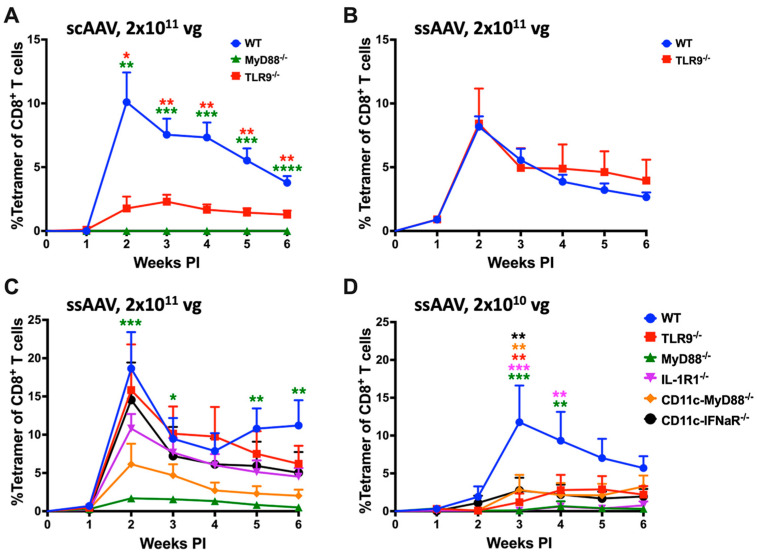
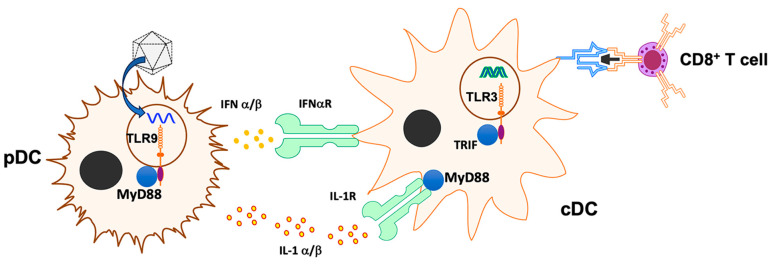
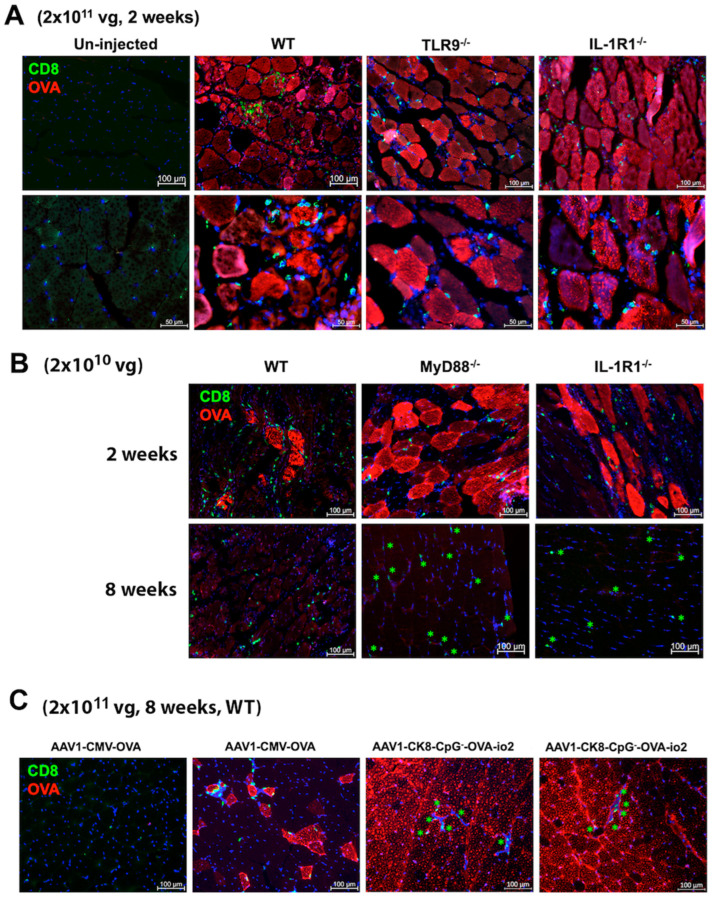
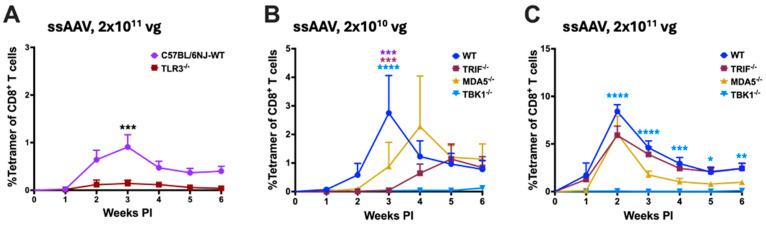
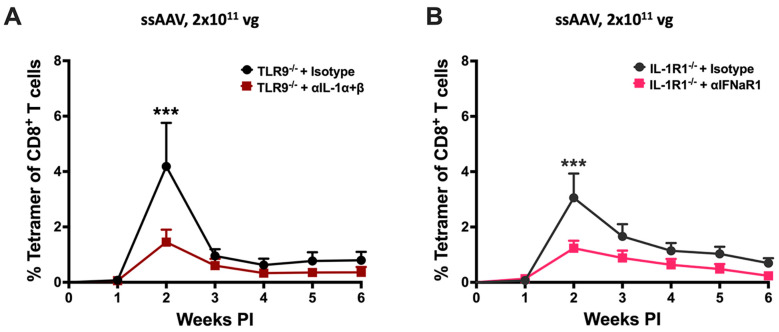
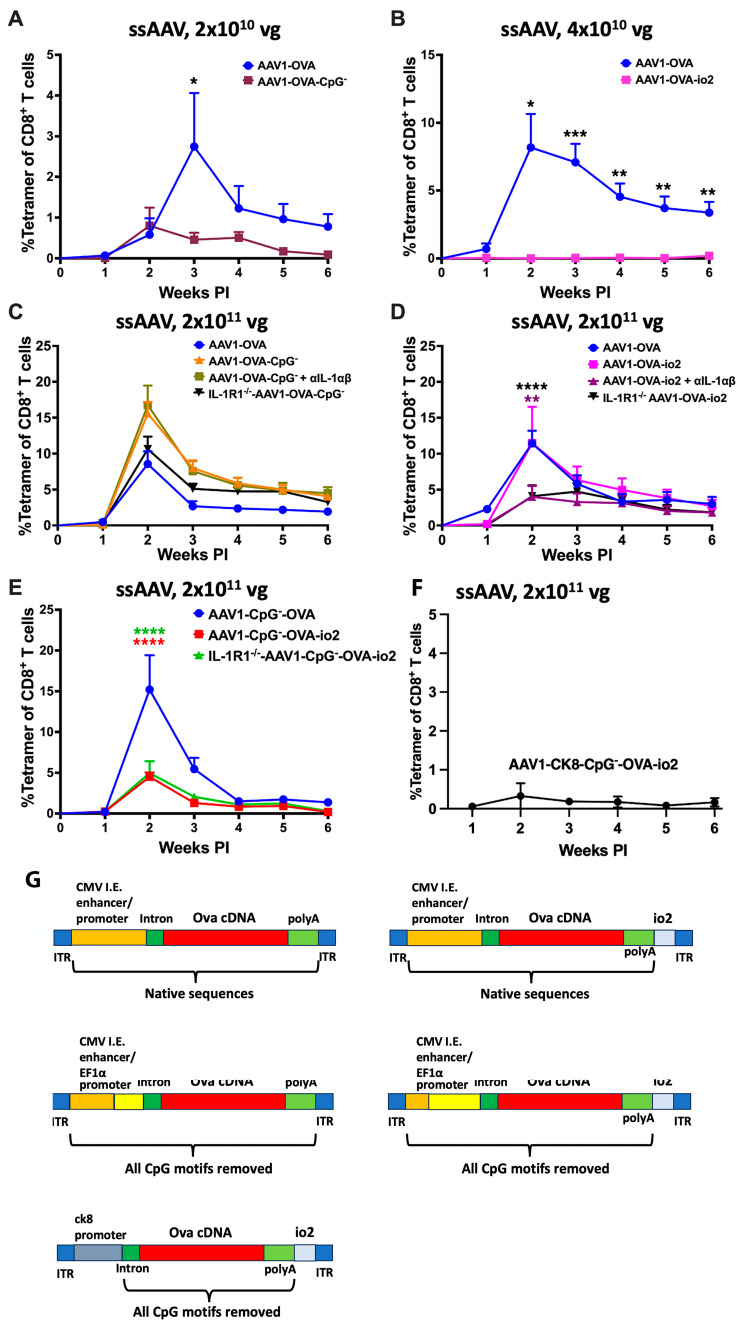
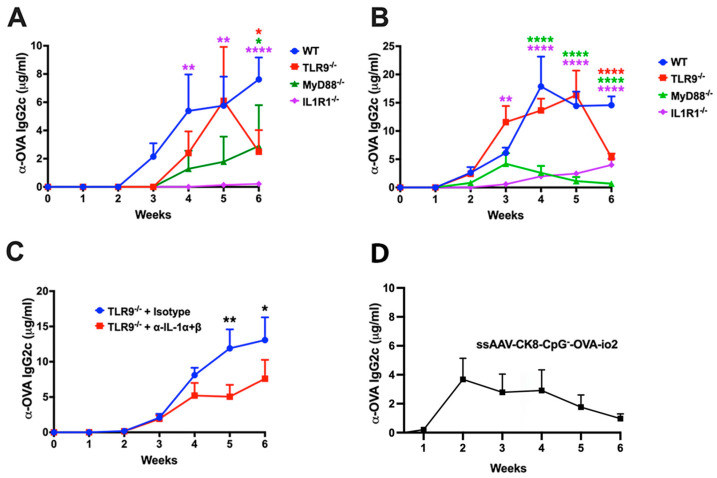
While adeno-associated viral (AAV) vectors are successfully used in a variety of in vivo gene therapy applications, they continue to be hampered by the immune system. Here, we sought to identify innate and cytokine signaling pathways that promote CD8 T-cell responses against the transgene product upon AAV1 vector administration to murine skeletal muscle. Eliminating just one of several pathways (including DNA sensing via TLR9, IL-1 receptor signaling, and possibly endosomal sensing of double-stranded RNA) substantially reduced the CD8 T-cell response at lower vector doses but was surprisingly ineffective at higher doses. Using genetic, antibody-mediated, and vector engineering approaches, we show that blockade of at least two innate pathways is required to achieve an effect at higher vector doses. Concurrent blockade of IL-1R1 > MyD88 and TLR9 > MyD88 > type I IFN > IFNaR pathways was often but not always synergistic and had limited utility in preventing antibody formation against the transgene product. Further, even low-frequency CD8 T-cell responses could eliminate transgene expression, even in MyD88- or IL-1R1-deficient animals that received a low vector dose. However, we provide evidence that CpG depletion of vector genomes and including TLR9 inhibitory sequences can synergize. When this construct was combined with the use of a muscle-specific promoter, transgene expression in muscle was sustained with minimal local or systemic CD8 T-cell response. Thus, innate immune avoidance/blockade strategies by themselves, albeit helpful, may not be sufficient to prevent destructive cellular responses in muscle gene transfer because of the redundancy of immune-activating pathways.
腺相关病毒 (AAV) 载体在多种体内基因治疗应用中取得了成功,但它们仍然受到免疫系统的限制。在这里,我们试图确定先天和细胞因子信号通路,这些通路在 AAV1 载体给药后促进针对转基因产物的 CD8 T 细胞反应,从而在鼠骨骼肌中。消除几种途径中的一种(包括 TLR9 通过 DNA 感应、IL-1 受体信号和双链 RNA 的内体感应)会在较低的载体剂量下大大降低 CD8 T 细胞反应,但在较高的剂量下却出乎意料地无效。通过遗传、抗体介导和载体工程方法,我们表明,至少需要阻断两种先天途径才能在较高的载体剂量下产生效果。同时阻断 IL-1R1>MyD88 和 TLR9>MyD88>type I IFN>IFNaR 途径通常但并非总是协同作用,并且在预防针对转基因产物的抗体形成方面的作用有限。此外,即使是低频的 CD8 T 细胞反应也可以消除转基因表达,即使在接受低载体剂量的 MyD88 或 IL-1R1 缺陷型动物中也是如此。然而,我们提供的证据表明,载体基因组的 CpG 耗竭和包括 TLR9 抑制序列可以协同作用。当将这种构建体与使用肌肉特异性启动子结合使用时,转基因在肌肉中的表达得以维持,而局部或全身 CD8 T 细胞反应最小。因此,尽管先天免疫回避/阻断策略本身很有帮助,但由于免疫激活途径的冗余,它们可能不足以防止肌肉基因转移中的破坏性细胞反应。