Department of Pediatric Intensive Care Unit, Faculty of Medicine, Ain Shams University, Cairo, Egypt.
Department of Pediatric Cardiology Unit, Faculty of Medicine, Ain Shams University, Cairo, Egypt.
BMC Pediatr. 2024 Oct 26;24(1):681. doi: 10.1186/s12887-024-05110-5.
Cardiovascular dysfunction is a significant factor contributing to weaning failure in mechanically ventilated children. Understanding the cardiopulmonary pathophysiological changes that occur during weaning is a prerequisite for the early recognition of weaning failure of cardiovascular origin. This study aimed to assess the effect of weaning trials on central hemodynamics and to identify the indices predictive of cardiac-related weaning failure.
This prospective observational study was conducted in the Pediatric Intensive Care Unit (PICU) and included mechanically ventilated patients aged between 2 and 30 months who were on minimal ventilatory settings and ready for weaning. Patients who were hemodynamically unstable, diagnosed with neuromuscular diseases, or diagnosed with cardiac diseases were excluded. Hemodynamic parameters were evaluated during weaning from ventilation via echocardiography and noninvasive cardiometry during pressure support (PS) ventilation and at the end of the spontaneous breathing trial (SBT).
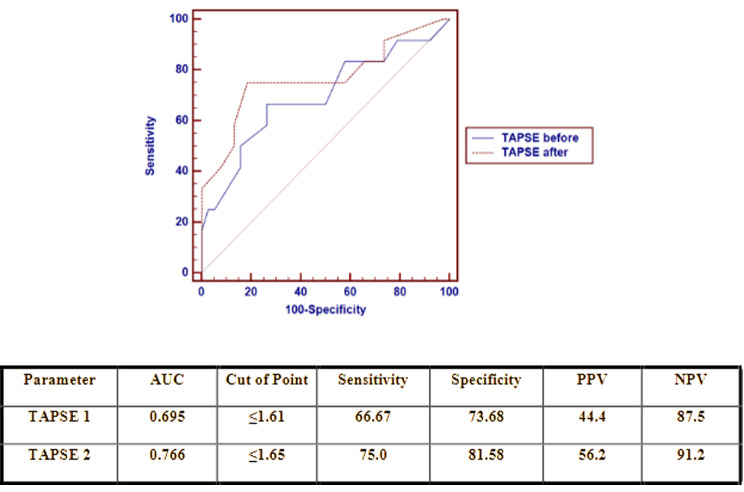
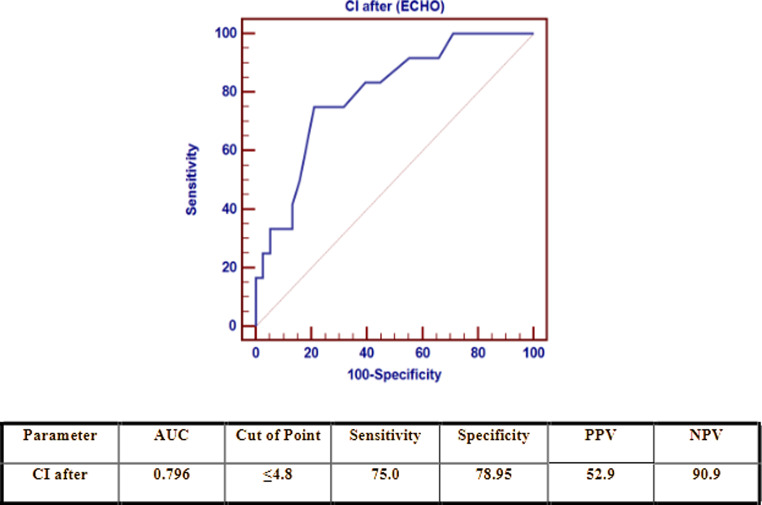
The study included 50 patients, comprising 30 males (60%) and 20 females (40%) with ages ranging from 2 to 30 months. Echocardiography revealed a significant increase in the cardiac index (CI), tricuspid annular plane systolic excursion (TAPSE), and the E/A ratio at the end of SBT. Moreover, right ventricular systolic pressure (RVSP) significantly decreased. Noninvasive cardiometry revealed a significant increase in the index of contractility (ICON) and CI at the end of SBT (p-value = 0.023 and < 0.001, respectively). Of the 12 (25%) patients who failed their first extubation trial, they exhibited a significantly lower CI and TAPSE (p values = 0.001 and 0.001, respectively).
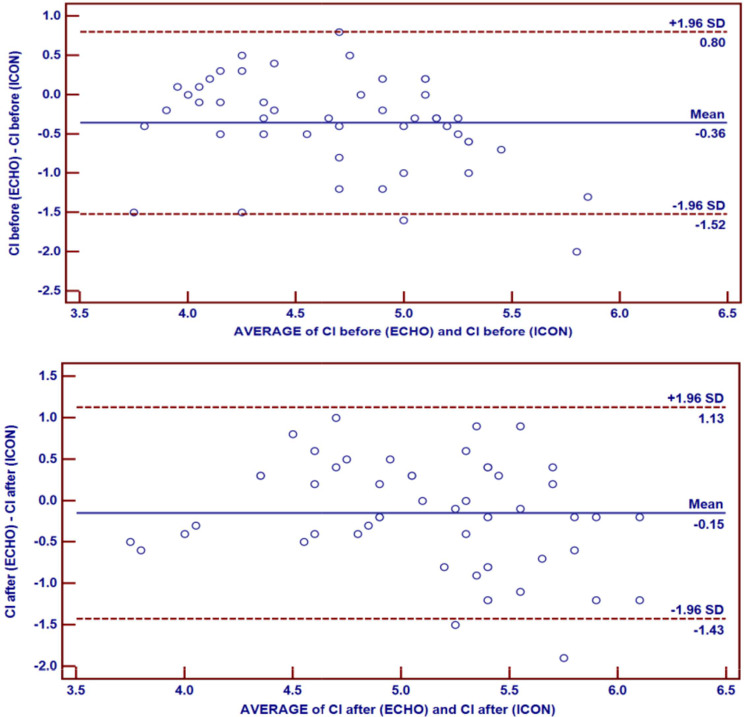
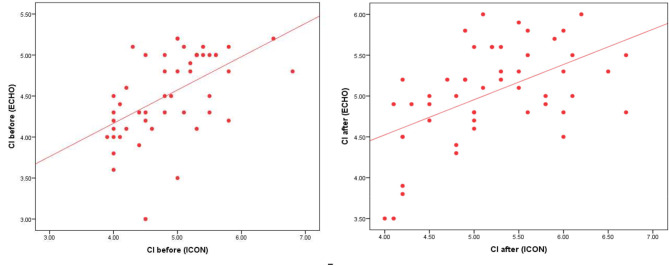
This study identified that weaning from mechanical ventilation in children is associated with hemodynamic changes, which can impact weaning success and reveal potential ventricular dysfunction. Bedside echocardiography was found to detect cardiac dysfunctions during weaning, and noninvasive cardiometry was considered a reliable tool that supports echocardiography for detecting changing trends in CI in PICUs. However, accurate values should be confirmed by echocardiography.
心血管功能障碍是导致机械通气儿童撤机失败的重要因素。了解撤机过程中心肺病理生理学变化是早期识别心血管源性撤机失败的前提。本研究旨在评估撤机试验对中心血液动力学的影响,并确定预测与心脏相关的撤机失败的指标。
这是一项前瞻性观察研究,在儿科重症监护病房(PICU)进行,纳入了年龄在 2 至 30 个月、处于最低机械通气设置且准备撤机的机械通气患者。排除血流动力学不稳定、诊断为神经肌肉疾病或诊断为心脏疾病的患者。通过在压力支持通气(PS)期间和自主呼吸试验(SBT)结束时经超声心动图和无创心计量法评估撤机过程中的血液动力学参数。
该研究纳入了 50 例患者,其中男 30 例(60%),女 20 例(40%),年龄 2 至 30 个月。超声心动图显示 SBT 结束时心指数(CI)、三尖瓣环平面收缩期位移(TAPSE)和 E/A 比值显著增加。此外,右心室收缩压(RVSP)显著降低。无创心计量法显示 SBT 结束时收缩指数(ICON)和 CI 显著增加(p 值分别为 0.023 和 <0.001)。在首次拔管试验失败的 12 例(25%)患者中,CI 和 TAPSE 显著较低(p 值分别为 0.001 和 0.001)。
本研究表明,儿童机械通气撤机与血液动力学变化相关,这可能会影响撤机成功并揭示潜在的心室功能障碍。床边超声心动图可在撤机过程中检测到心脏功能障碍,无创心计量法被认为是一种可靠的工具,可支持超声心动图在儿科重症监护病房中检测 CI 的变化趋势。然而,准确值仍需通过超声心动图来确认。