Bhatia Niharika, R Navaneethan
Department of Orthodontics, Saveetha Dental College and Hospitals, Saveetha Institute of Medical and Technical Sciences, Saveetha University, Chennai, IND.
Cureus. 2024 Sep 25;16(9):e70146. doi: 10.7759/cureus.70146. eCollection 2024 Sep.
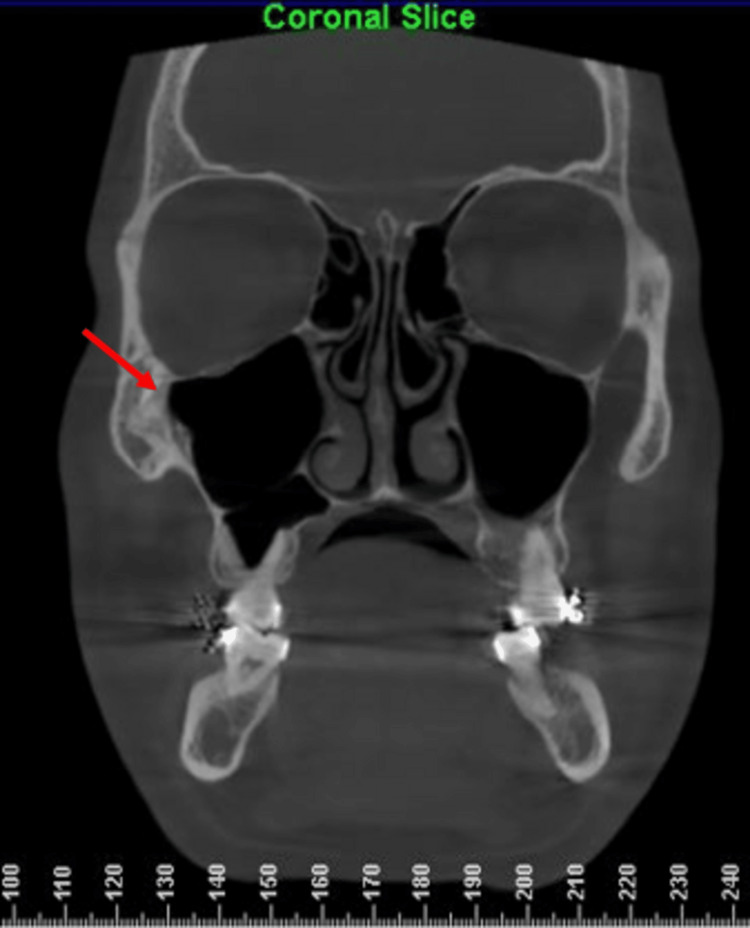
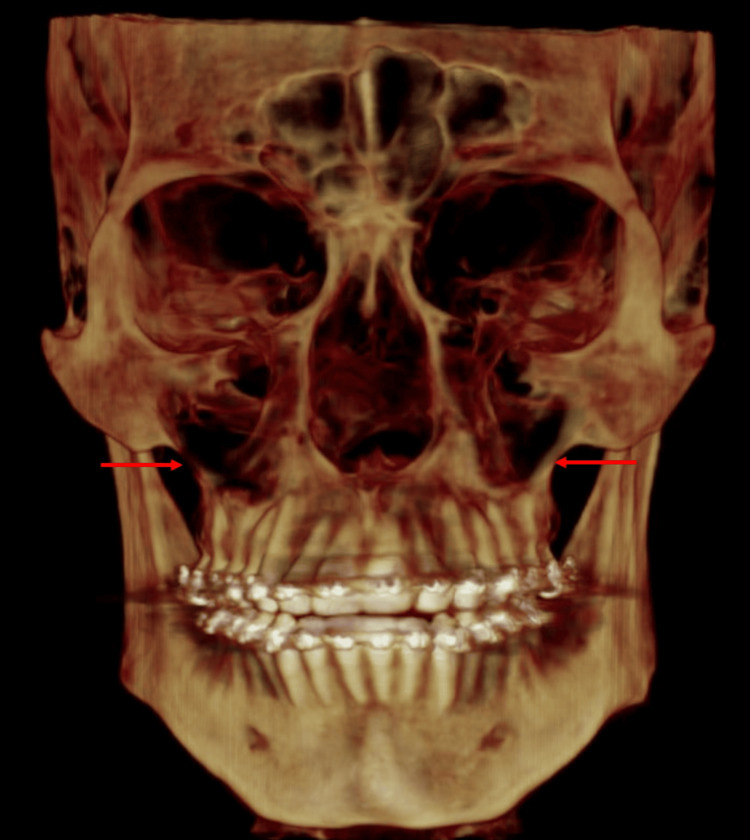
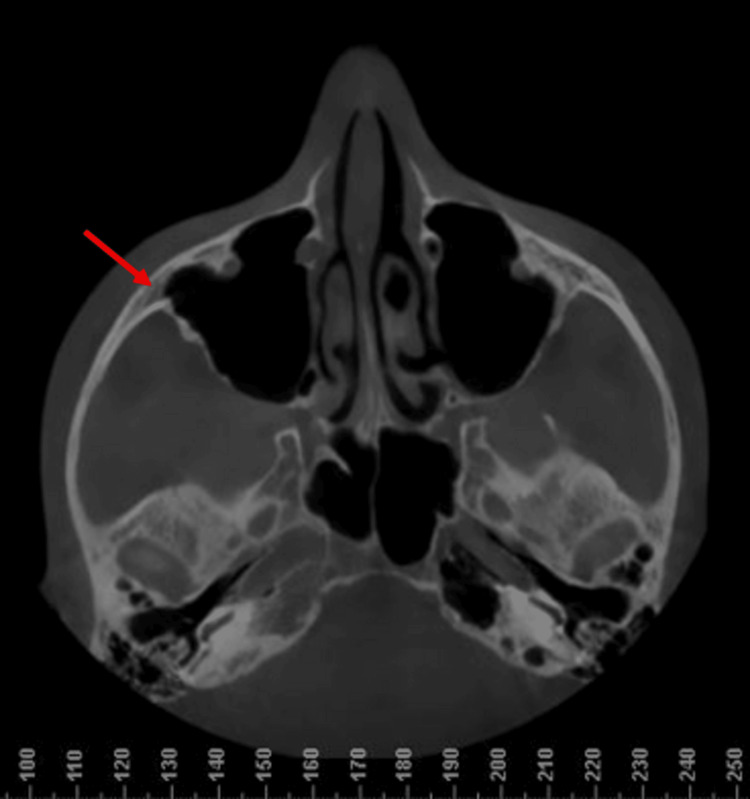
Introduction The zygomaticomaxillary suture (ZMS) is vital for craniofacial development and orthodontic treatment planning. Located at the junction of the zygomatic and maxillary bones, the ZMS undergoes significant changes during growth, affecting midfacial morphology and stability. Understanding ZMS maturation is essential for optimizing orthodontic interventions, especially in patients with cleft lip and palate (CLP), who often exhibit altered craniofacial growth patterns due to congenital deformities and surgical interventions. Methodology A retrospective analysis was conducted with 50 participants, including 25 patients with unilateral CLP and 25 age-matched controls. Clinical and radiographic data, including lateral cephalometric radiographs and cone-beam computed tomography (CBCT) scans, were collected to assess ZMS maturation stages. The stages, ranging from immature (stage 0) to fully mature (stage 4), were evaluated using established radiographic criteria. Statistical analyses, including Chi-square tests and logistic regression, were performed to compare the distribution of maturation stages between groups. Results Significant differences were observed in ZMS maturation stages between the cleft side, non-cleft side, and control group. The cleft side exhibited a higher prevalence of immature (stage 0) and early maturation (stage 1) stages compared to the control group, with mean values of 4 ± 1.2 and 5 ± 1.3, respectively. The control group showed a higher prevalence of fully mature (stage 4) sutures, with a mean value of 8 ± 1.4. The p-values for stages 0, 1, and 4 were 0.045, 0.034, and 0.039, respectively, indicating statistical significance. The findings highlight distinct maturation patterns in CLP patients, with delayed ZMS maturation on the cleft side. This suggests the need for tailored orthodontic interventions to accommodate prolonged growth phases in CLP patients. The study underscores the importance of detailed ZMS assessments for personalized treatment planning. Future research should focus on longitudinal studies to further understand CLP's impact on craniofacial development. Conclusion Assessing ZMS maturation provides critical insights for optimizing orthodontic and surgical treatment outcomes in CLP patients. By identifying specific developmental delays and tailoring interventions accordingly, clinicians can improve the effectiveness and stability of treatments. This study contributes to the growing body of evidence supporting individualized treatment plans based on precise developmental assessments.
引言 颧上颌缝(ZMS)对于颅面发育和正畸治疗计划至关重要。颧上颌缝位于颧骨和上颌骨的交界处,在生长过程中会发生显著变化,影响面中部形态和稳定性。了解颧上颌缝的成熟情况对于优化正畸干预至关重要,尤其是对于唇腭裂(CLP)患者,他们由于先天性畸形和手术干预,常常表现出颅面生长模式的改变。
方法 对50名参与者进行了回顾性分析,其中包括25名单侧唇腭裂患者和25名年龄匹配的对照组。收集了临床和影像学数据,包括头颅侧位X线片和锥形束计算机断层扫描(CBCT),以评估颧上颌缝的成熟阶段。使用既定的影像学标准对从未成熟(0期)到完全成熟(4期)的阶段进行评估。进行了包括卡方检验和逻辑回归在内的统计分析,以比较各组之间成熟阶段的分布情况。
结果 在腭裂侧、非腭裂侧和对照组之间,颧上颌缝成熟阶段存在显著差异。与对照组相比,腭裂侧未成熟(0期)和早期成熟(1期)阶段的患病率更高,平均值分别为4±1.2和5±1.3。对照组完全成熟(4期)缝合的患病率更高,平均值为8±1.4。0期、1期和4期的p值分别为0.045、0.034和0.039,表明具有统计学意义。研究结果突出了唇腭裂患者独特的成熟模式,腭裂侧颧上颌缝成熟延迟。这表明需要量身定制正畸干预措施,以适应唇腭裂患者延长的生长阶段。该研究强调了详细的颧上颌缝评估对于个性化治疗计划的重要性。未来的研究应侧重于纵向研究,以进一步了解唇腭裂对颅面发育的影响。
结论 评估颧上颌缝的成熟情况为优化唇腭裂患者的正畸和手术治疗结果提供了关键见解。通过识别特定的发育延迟并相应地调整干预措施,临床医生可以提高治疗的有效性和稳定性。本研究为基于精确发育评估的个性化治疗计划提供了越来越多的证据。