Cruz-González Sebastián, Gu Esther, Gomez Lissette, Mews Makaela, Vance Jeffery M, Cuccaro Michael L, Cornejo-Olivas Mario R, Feliciano-Astacio Briseida E, Byrd Goldie S, Haines Jonathan L, Pericak-Vance Margaret A, Griswold Anthony J, Bush William S, Capra John A
Biological and Medical Informatics Program, University of California, San Francisco, San Francisco, CA.
Bakar Computational Health Sciences Institute, University of California, San Francisco, CA.
bioRxiv. 2024 Oct 18:2024.10.16.618588. doi: 10.1101/2024.10.16.618588.
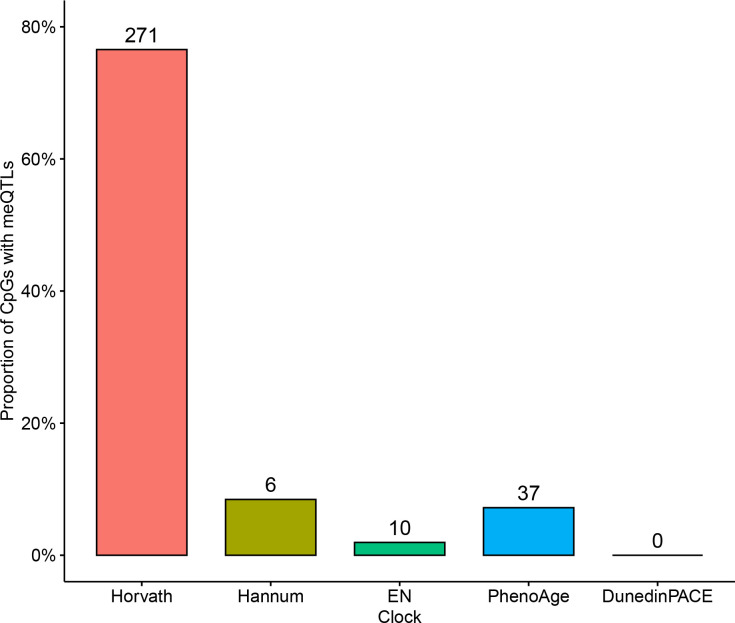
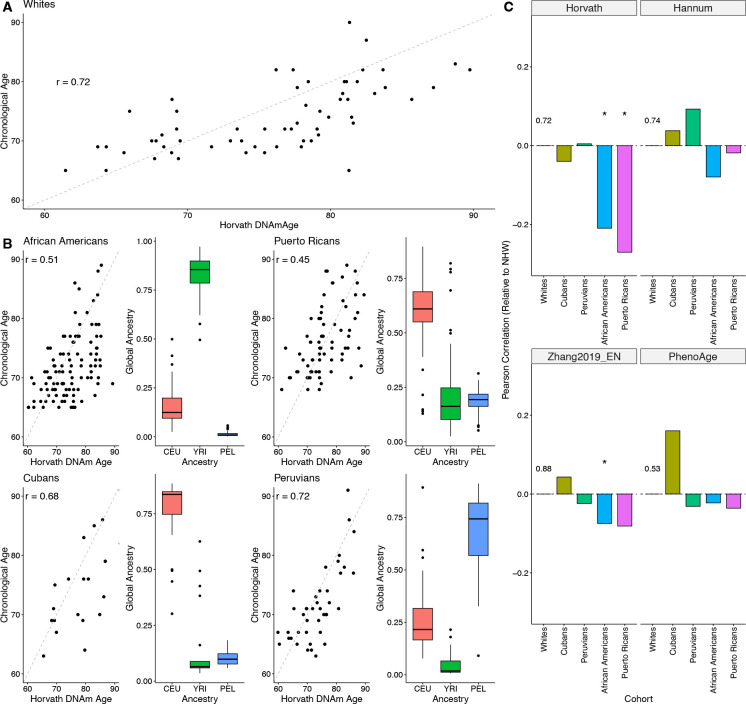
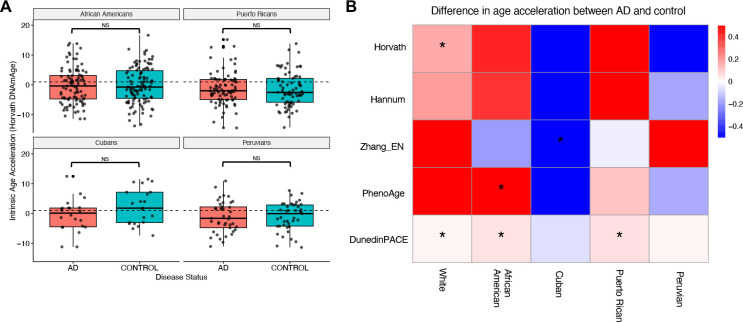
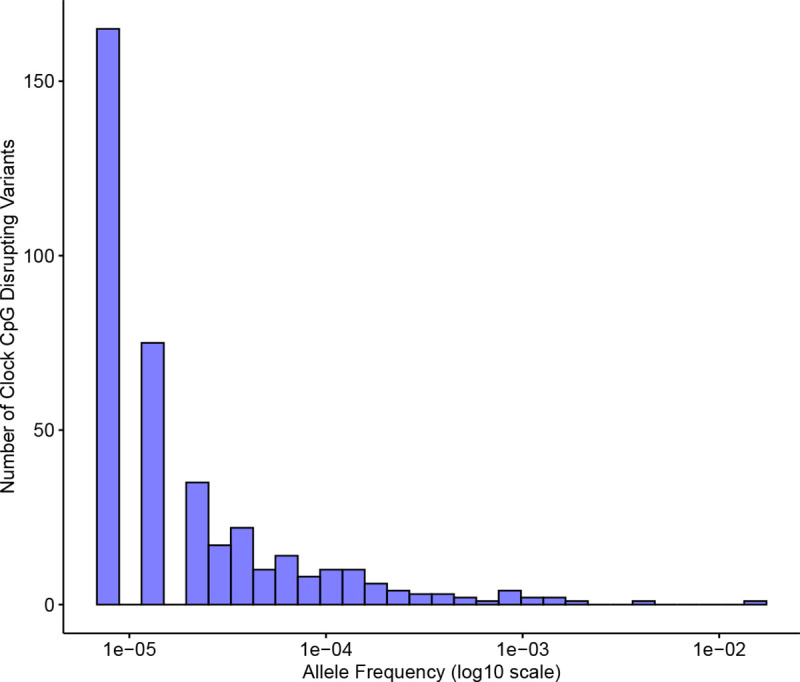
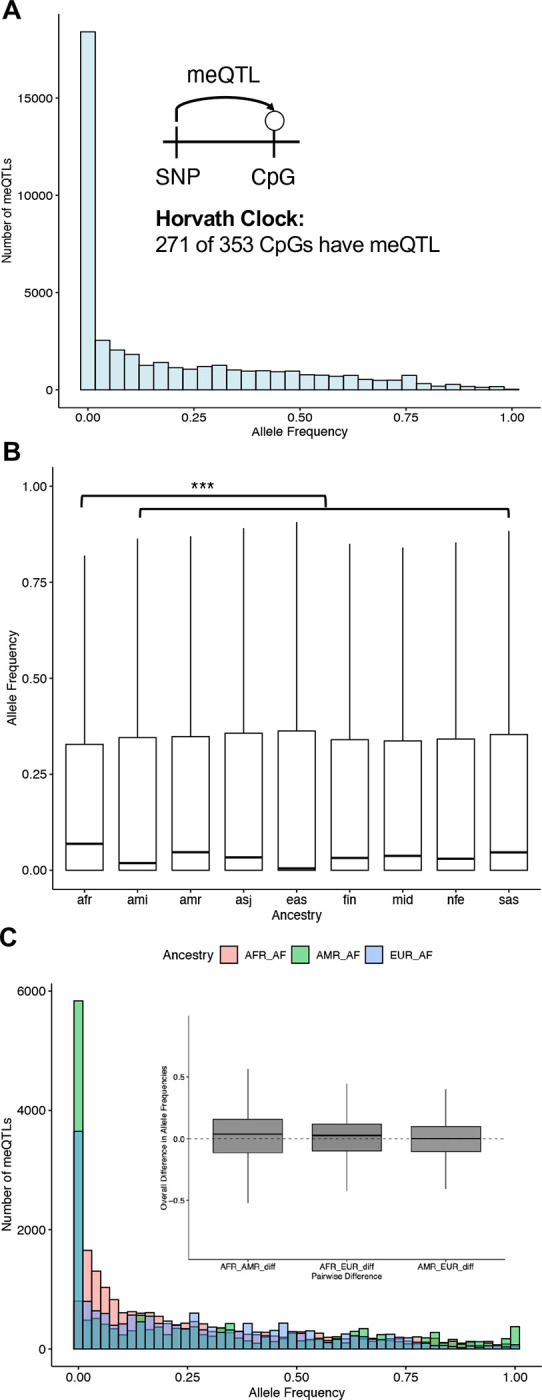
Epigenetic clocks that quantify rates of aging from DNA methylation patterns across the genome have emerged as a potential biomarker for risk of age-related diseases, like Alzheimer's disease (AD), and environmental and social stressors. However, methylation clocks have not been validated in genetically diverse cohorts. Here we evaluate a set of methylation clocks in 621 AD patients and matched controls from African American, Hispanic, and white cohorts. The clocks are less accurate at predicting age in genetically admixed individuals, especially those with substantial African ancestry, than in the white cohort. The clocks also do not consistently identify age acceleration in admixed AD cases compared to controls. Methylation QTL (meQTL) commonly influence CpGs in clocks, and these meQTL have significantly higher frequencies in African genetic ancestries. Our results demonstrate that methylation clocks often fail to predict age and AD risk beyond their training populations and suggest avenues for improving their portability.
从全基因组DNA甲基化模式量化衰老速率的表观遗传时钟已成为一种潜在的生物标志物,可用于评估与年龄相关疾病(如阿尔茨海默病(AD))以及环境和社会压力源的风险。然而,甲基化时钟尚未在基因多样化的队列中得到验证。在此,我们评估了来自非裔美国人、西班牙裔和白人队列的621名AD患者及匹配对照中的一组甲基化时钟。与白人队列相比,这些时钟在预测基因混合个体(尤其是具有大量非洲血统的个体)的年龄时准确性较低。与对照组相比,这些时钟也不能始终一致地识别混合AD病例中的年龄加速情况。甲基化定量性状位点(meQTL)通常会影响时钟中的CpG,并且这些meQTL在非洲遗传血统中的频率显著更高。我们的结果表明,甲基化时钟通常无法在其训练人群之外预测年龄和AD风险,并提出了提高其通用性的途径。