Department of Parasitology and Tropical Medicine, Institute of Medical Science, Gyeongsang National University College of Medicine, Jinju, 52727, Korea.
Department of Convergence Medical Science, Gyeongsang National University, Jinju, 52727, Korea.
BMC Infect Dis. 2024 Oct 28;24(1):1216. doi: 10.1186/s12879-024-10116-6.
Plasmodium falciparum merozoite surface proteins 1 (PfMSP1) and 2 (PfMSP2) are potential candidates for malaria vaccine development. However, the genetic diversity of these genes in the global P. falciparum population presents a significant challenge in developing an effective vaccine. Hence, understanding the genetic diversity and evolutionary trends in the global P. falciparum population is crucial.
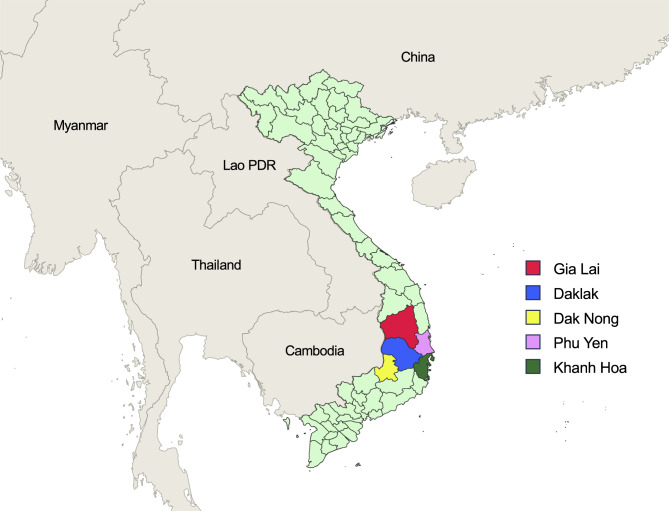
This study analyzed the genetic variations and evolutionary changes of pfmsp1 and pfmsp2 in P. falciparum isolates from the Central Highland and South-Central regions of Vietnam. DNASTAR and MEGA7 programs were utilized for analyses. The polymorphic nature of global pfmsp1 and pfmsp2 was also investigated.
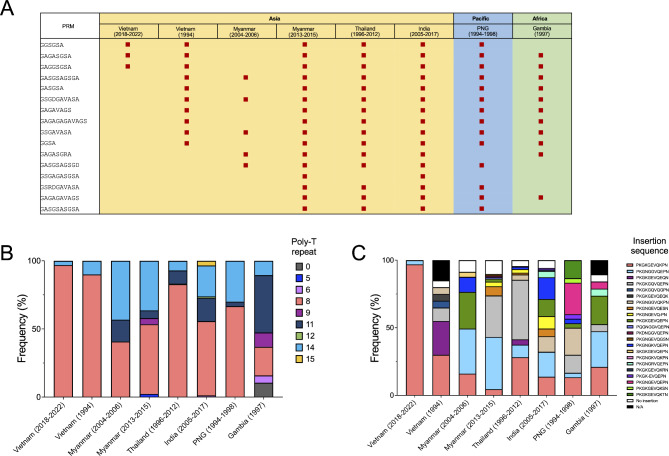
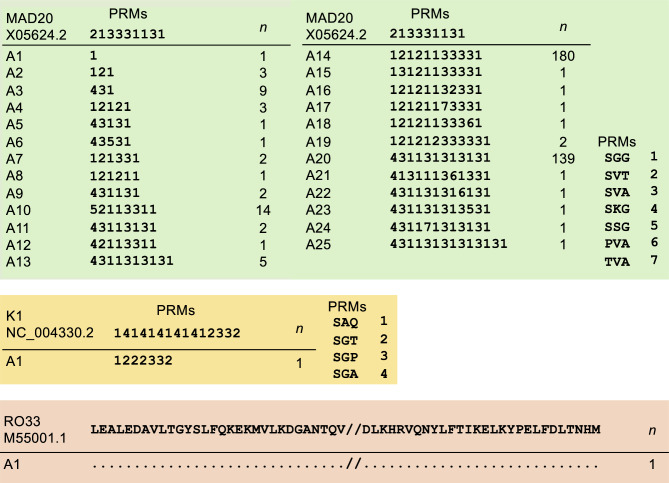
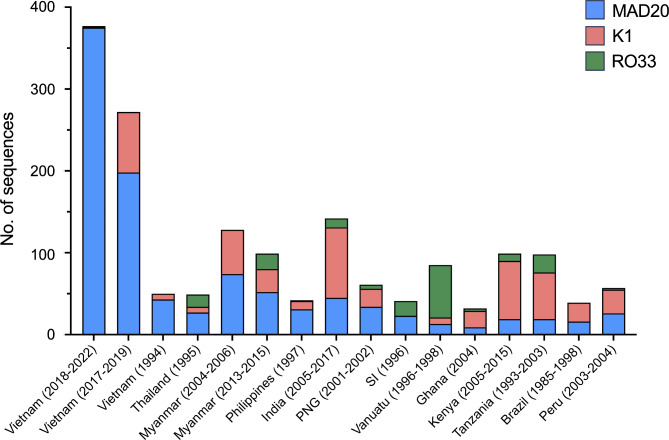
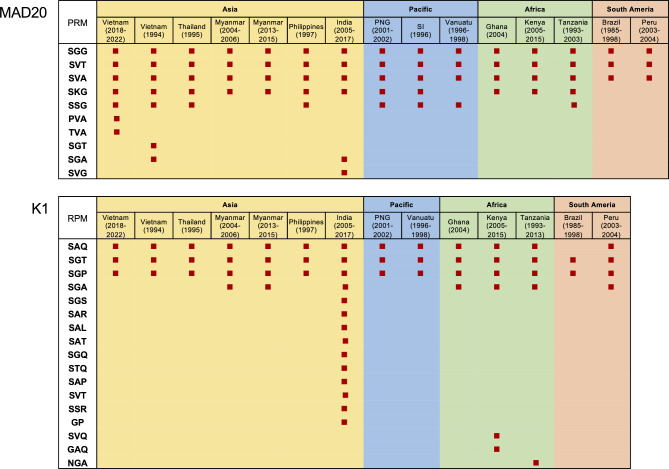
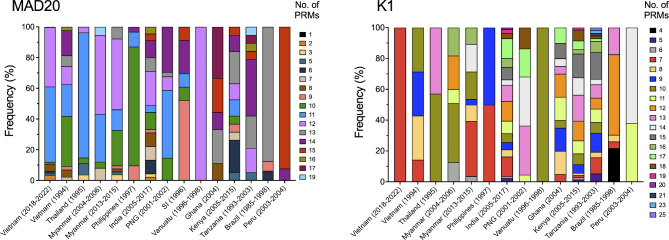
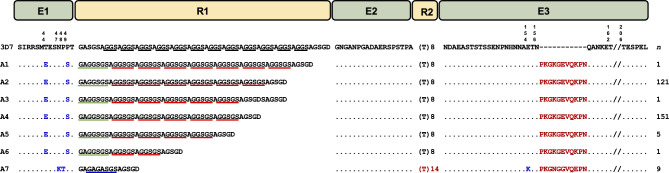
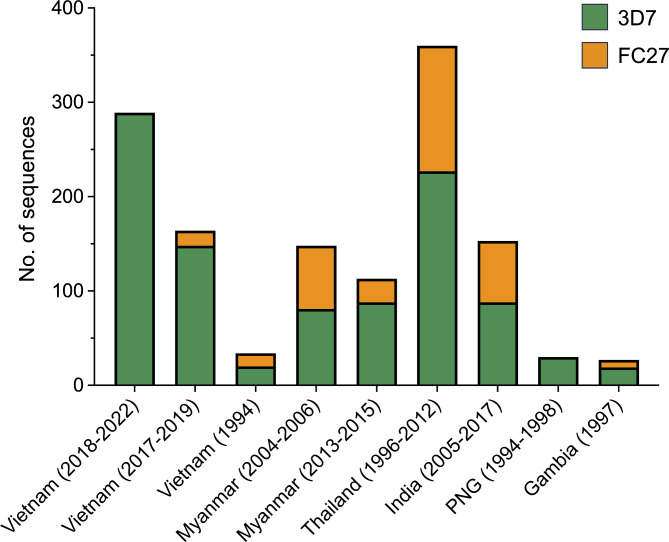
A total of 337 sequences of pfmsp1 and 289 sequences of pfmsp2 were obtained. The pfmsp1 and pfmsp2 from Vietnam revealed a higher degree of genetic homogeneity compared to those from other malaria-endemic countries. Remarkably, the allele diversity patterns of Vietnam pfmsp1 and pfmsp2 differed significantly from those of neighboring countries in the Greater Mekong Subregion. Declines in allele diversity and polymorphic patterns of Vietnam pfmsp1 and pfmsp2 were observed.
The Vietnam P. falciparum population might be genetically isolated from the parasite populations in other neighboring GMS countries, likely due to geographical barriers and distinct evolutionary pressures. Furthermore, bottleneck effects or selective sweeps may have contributed to the genetic homogeneity of Vietnam pfmsp1 and pfmsp2.
恶性疟原虫裂殖子表面蛋白 1(PfMSP1)和 2(PfMSP2)是疟疾疫苗开发的潜在候选物。然而,全球恶性疟原虫种群中这些基因的遗传多样性在开发有效疫苗方面带来了重大挑战。因此,了解全球恶性疟原虫种群中的遗传多样性和进化趋势至关重要。
本研究分析了来自越南中高原和中南地区的恶性疟原虫分离株中 pfmsp1 和 pfmsp2 的遗传变异和进化变化。使用 DNASTAR 和 MEGA7 程序进行分析。还研究了全球 pfmsp1 和 pfmsp2 的多态性。
共获得 337 个 pfmsp1 序列和 289 个 pfmsp2 序列。与其他疟疾流行国家相比,越南的 pfmsp1 和 pfmsp2 具有更高程度的遗传同质性。值得注意的是,越南 pfmsp1 和 pfmsp2 的等位基因多样性模式与大湄公河次区域邻国的模式明显不同。越南 pfmsp1 和 pfmsp2 的等位基因多样性和多态性模式下降。
越南恶性疟原虫种群可能与其他邻近大湄公河次区域国家的寄生虫种群在遗传上隔离,这可能是由于地理屏障和独特的进化压力所致。此外,瓶颈效应或选择压力可能导致越南 pfmsp1 和 pfmsp2 的遗传同质性。