Tang Xiaotian, Cui Yingjun, Namarra Ushuu, Tian Xiuqi, Rivas-Giorgi Freddie, Fikrig Erol
Zhejiang Key Laboratory of Biology and Ecological Regulation of Crop Pathogens and Insects, Institute of Insect Sciences, College of Agriculture and Biotechnology, Zhejiang University, Hangzhou, China.
Section of Infectious Diseases, Department of Internal Medicine, School of Medicine, Yale University, New Haven, Connecticut, USA.
mBio. 2024 Dec 11;15(12):e0175424. doi: 10.1128/mbio.01754-24. Epub 2024 Oct 29.
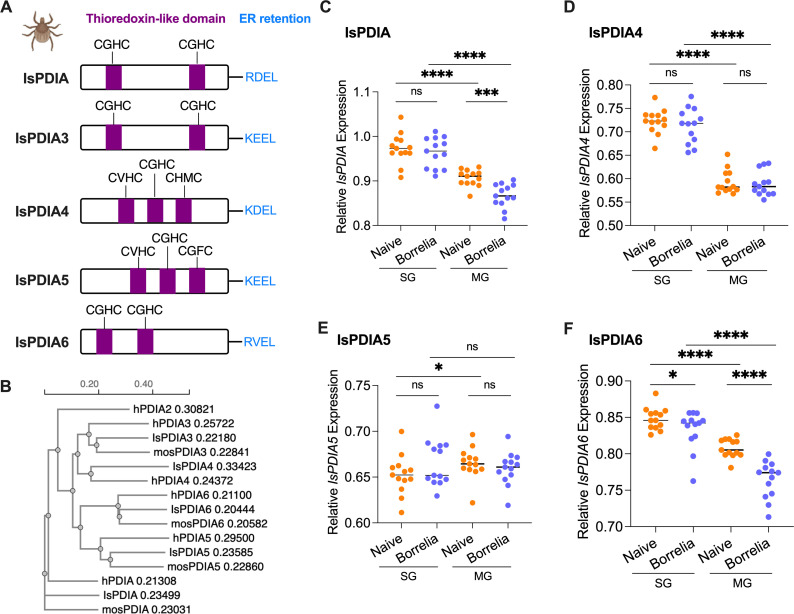
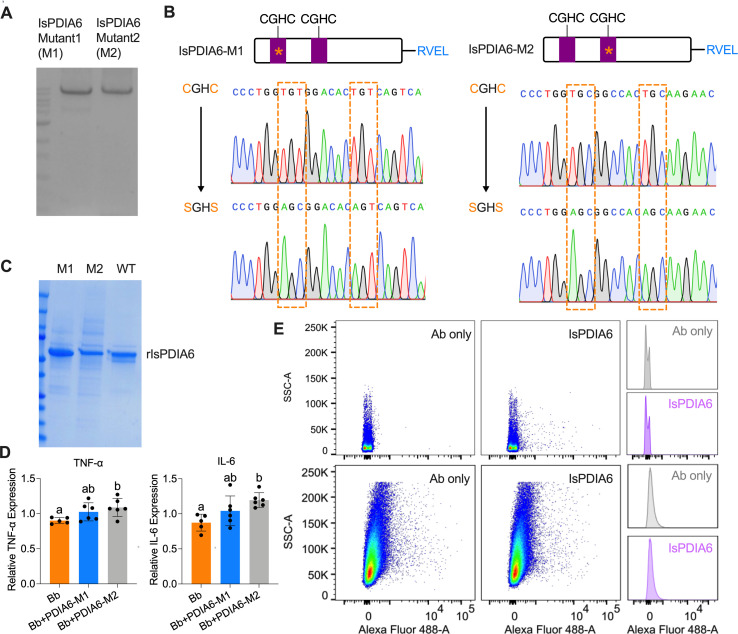
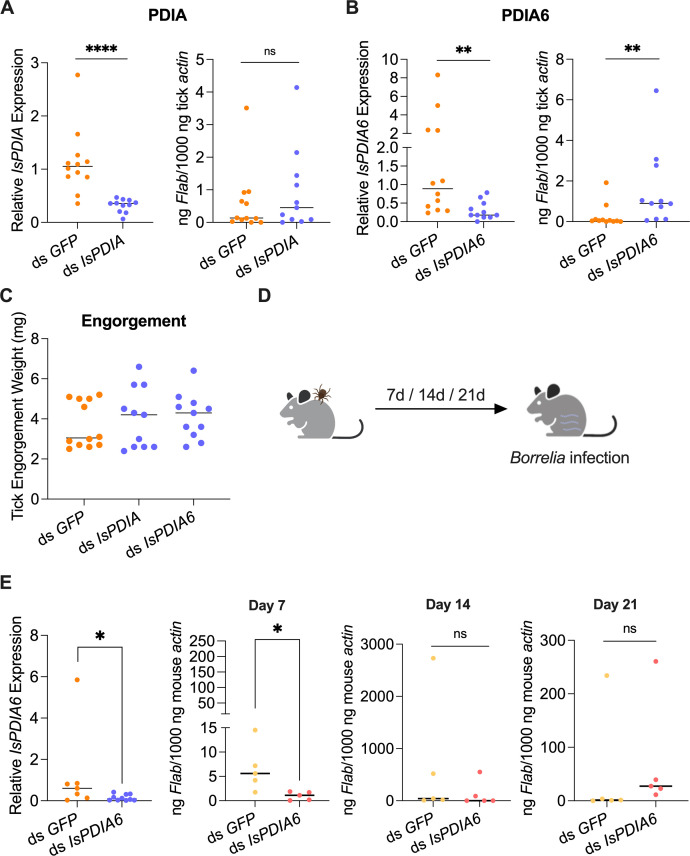
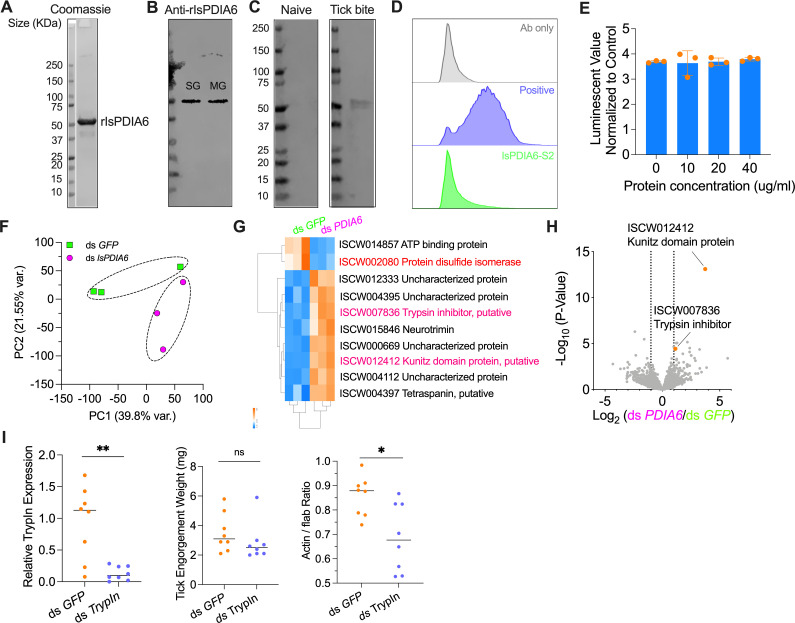
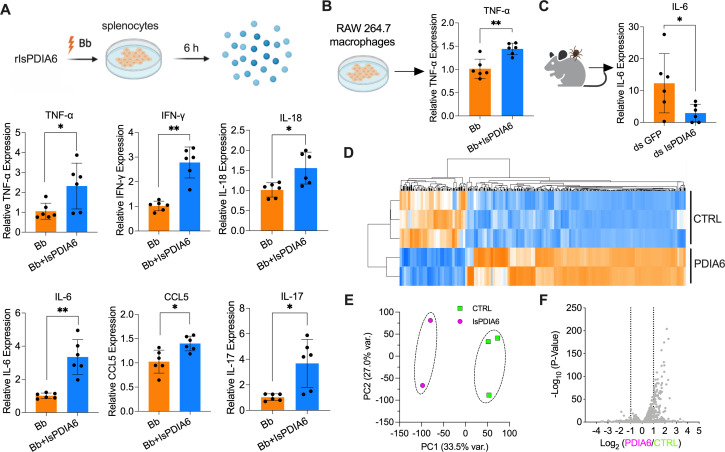
The protein disulfide isomerase (PDI) family is a group of enzymes that have thiol-disulfide oxidoreductase, disulfide isomerase, and redox-dependent chaperone activities. PDIs facilitate diverse infections in mammalian hosts by directly binding to pathogens, immunomodulation, or enabling microbial invasion of host cells. PDI homologs within pathogens are also potential virulence factors. However, whether PDIs within blood-feeding ticks influence microbial infection remains unknown. In this study, we investigated the role of PDIs, on the Lyme disease agent, has five PDIs (IsPDIs), and gene expression is reduced upon infection in the tick. IsPDIA6-mediated trypsin inhibitor gene expression contributes to colonization within the tick midgut. IsPDIA6 is also secreted into the host during tick feeding, alters cytokine/chemokine expression at the tick bite site, and influences the initial stage of bacterial infection in mice. These data demonstrate that a PDI from a blood-feeding vector plays a role in the life cycle of an extracellular pathogen.
Vector-borne diseases are a leading cause of death and illness worldwide, and more than 80% of the global population live in areas at risk from at least one major vector-borne disease. In this study, we demonstrate a dual role of a specific tick protein disulfide isomerase (PDI) in inhibiting the ability of the Lyme disease agent to colonize ticks and also in enhancing the initial stage of spirochete infection of mice. This study represents a novel conceptual advancement that a PDI from a blood-feeding vector plays important roles in the life cycle of an extracellular pathogen.
蛋白质二硫键异构酶(PDI)家族是一组具有硫醇 - 二硫键氧化还原酶、二硫键异构酶和氧化还原依赖性伴侣活性的酶。PDI通过直接结合病原体、免疫调节或促进微生物侵入宿主细胞,促进在哺乳动物宿主中的多种感染。病原体中的PDI同源物也是潜在的毒力因子。然而,吸血蜱体内的PDI是否影响微生物感染仍不清楚。在本研究中,我们调查了莱姆病病原体中的PDI的作用,该病原体有五种PDI(IsPDI),蜱感染后其基因表达降低。IsPDIA6介导的胰蛋白酶抑制剂基因表达有助于病原体在蜱中肠内的定殖。IsPDIA6在蜱叮咬时也会分泌到宿主体内,改变蜱叮咬部位的细胞因子/趋化因子表达,并影响小鼠细菌感染的初始阶段。这些数据表明,来自吸血媒介的一种PDI在细胞外病原体的生命周期中发挥作用。
媒介传播疾病是全球死亡和疾病的主要原因,全球超过80%的人口生活在至少面临一种主要媒介传播疾病风险的地区。在本研究中,我们证明了一种特定的蜱蛋白质二硫键异构酶(PDI)在抑制莱姆病病原体定殖蜱的能力以及增强小鼠螺旋体感染初始阶段方面的双重作用。这项研究代表了一个新的概念进展,即来自吸血媒介的一种PDI在细胞外病原体的生命周期中发挥重要作用。