Department of Pathology, The First Affiliated Hospital of Zhengzhou University, Zhengzhou, China.
Department of Pathology, The First Affiliated Hospital of Zhengzhou University, Zhengzhou, China.
Neoplasia. 2021 Sep;23(9):912-928. doi: 10.1016/j.neo.2021.07.004. Epub 2021 Jul 26.
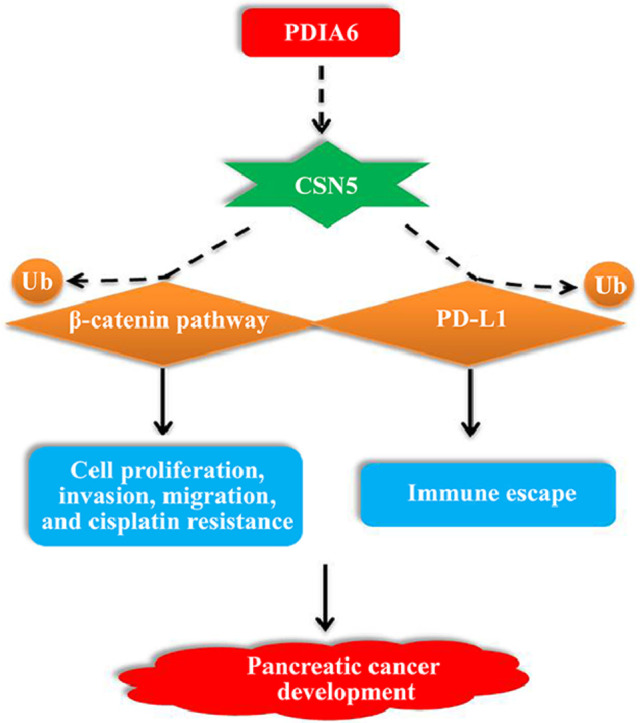
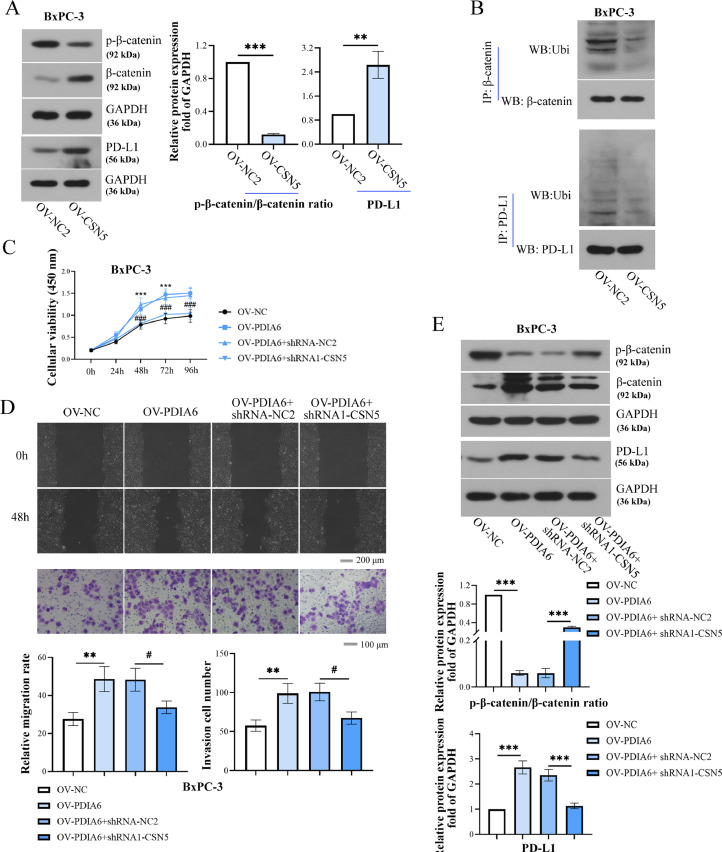
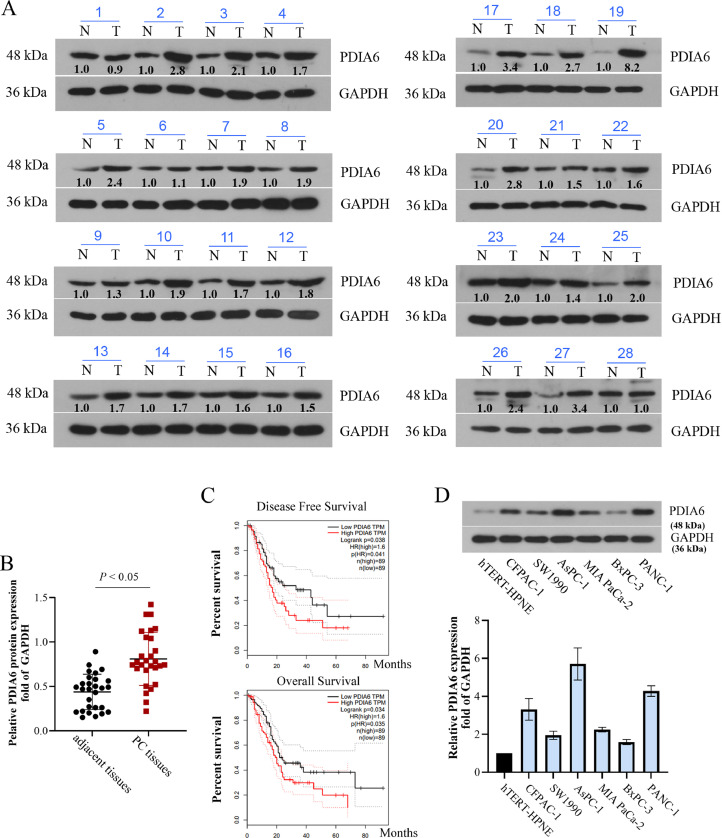
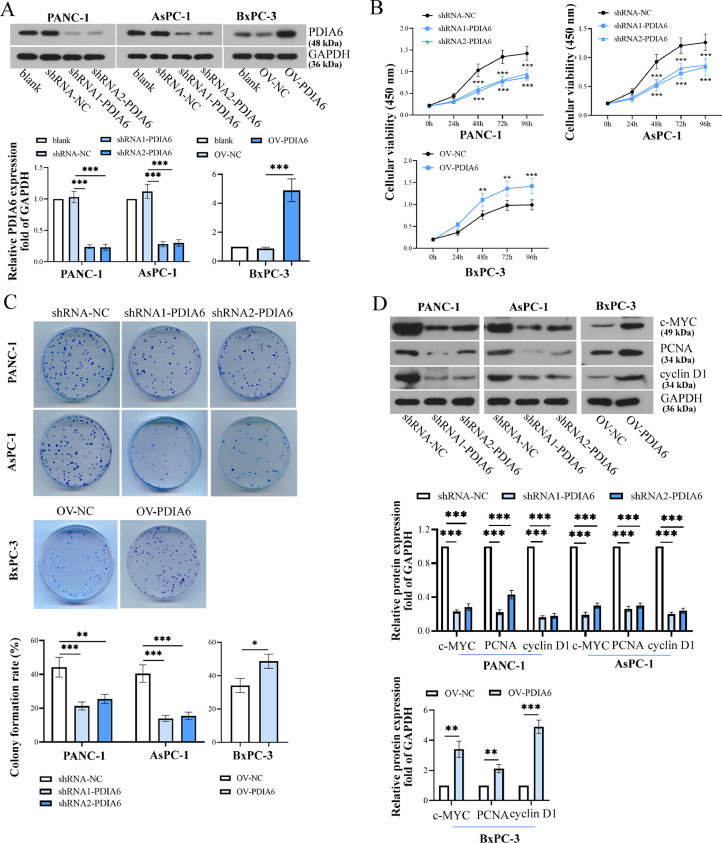
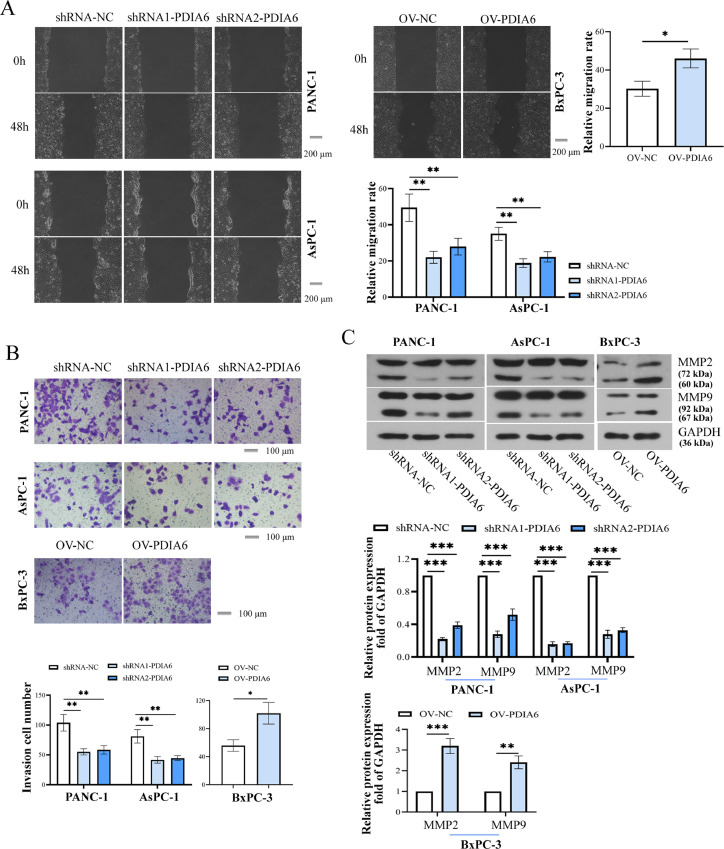
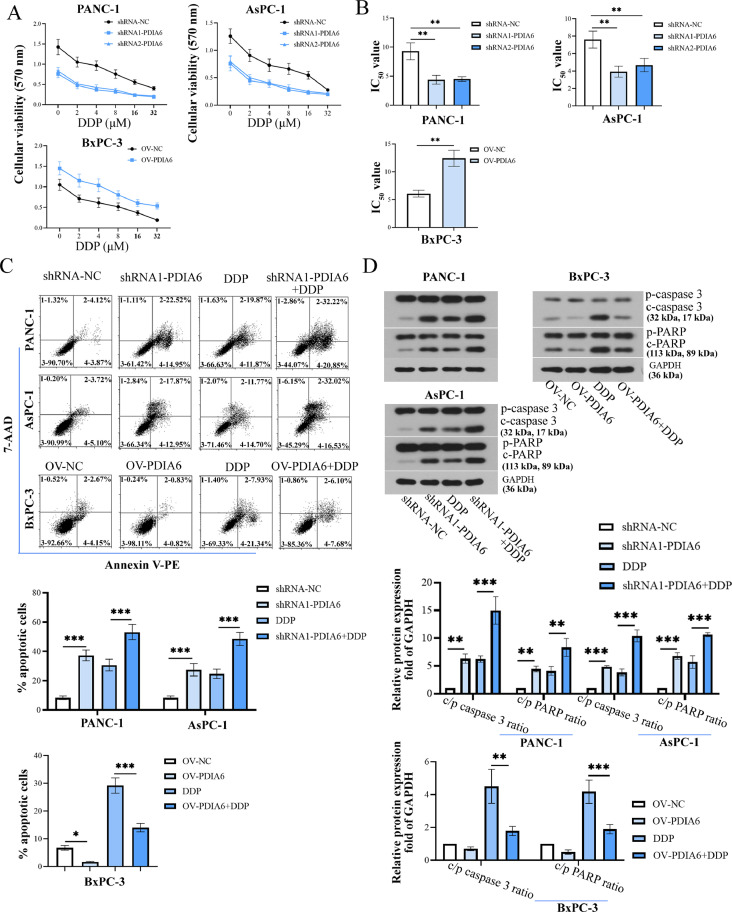
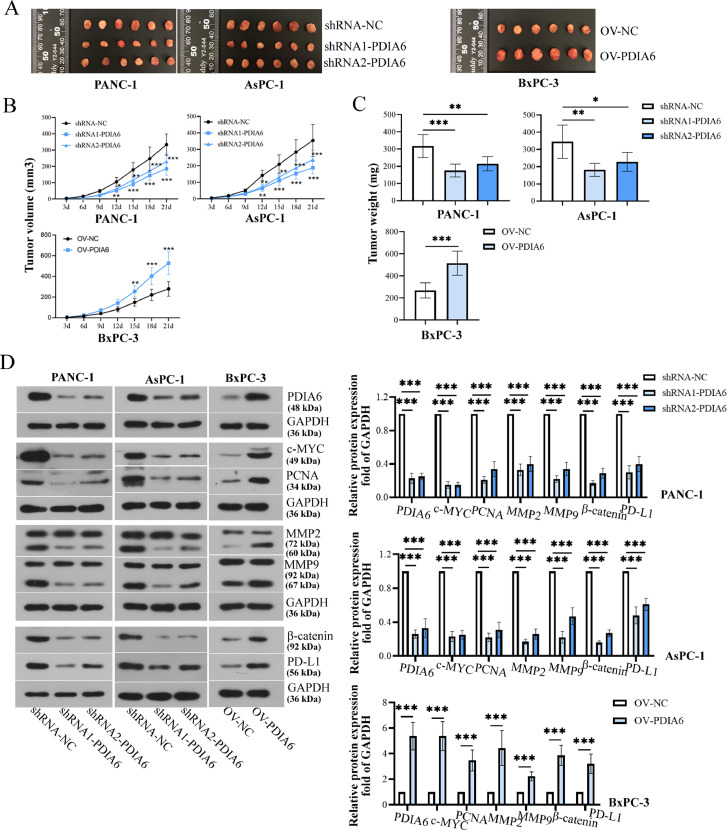
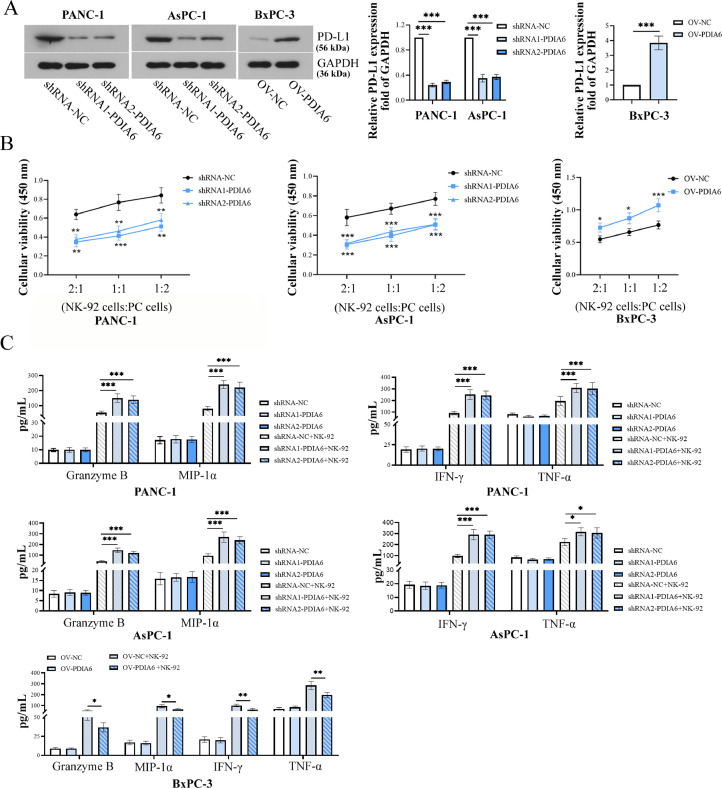
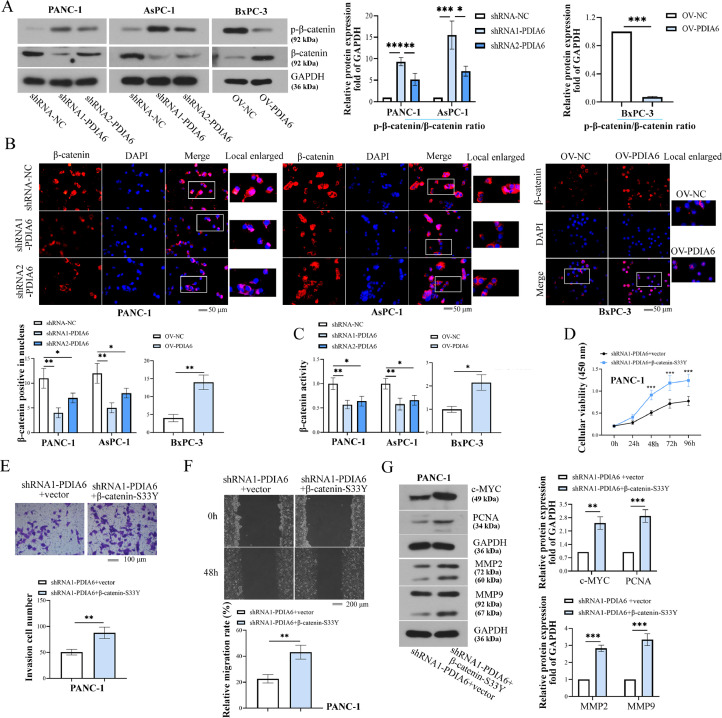
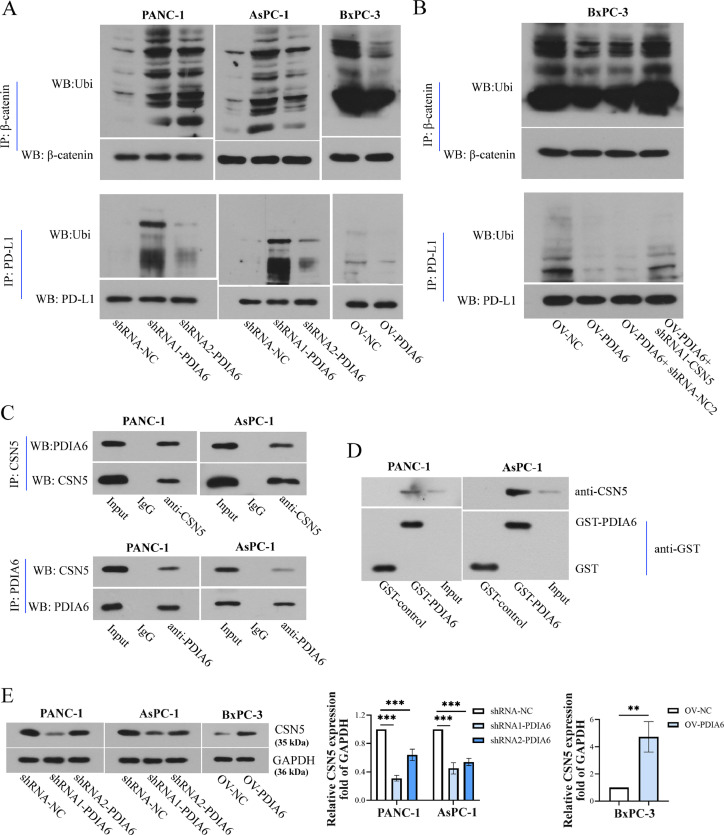
Protein Disulfide Isomerase Family A Member 6 (PDIA6) is an endoplasmic reticulum protein that is capable of catalyzing protein folding and disulfide bond formation. Abnormally elevated expression of PDIA6 has been reported to predict poor outcomes in various cancers. Herein, gain-of- and loss-of-function experiments were performed to investigate how PDIA6 participated in the carcinogenesis of pancreatic cancer (PC). By analyzing the protein expression of PDIA6 in 28 paired PC and para carcinoma specimens, we first found that PDIA6 expression was higher in PC samples. Both the overall survival and disease-free survival rates of PC patients with higher PDIA6 expression were poorer than those with lower PDIA6 (n = 178). Furthermore, knockdown of PDIA6 impaired the malignancies of PC cells - suppressed cell proliferation, invasion, migration, cisplatin resistance, and xenografted tumor growth. PDIA6-silenced PC cells were more sensitive to cytotoxic natural killer (NK) cells. Overexpression of PDIA6 had opposite effects on PC cells. Interestingly, COP9 signalosome subunit 5 (CSN5), a regulator of E3 ubiquitin ligases known to promote deubiquitination of its downstream targets, was demonstrated to interact with PDIA6, and its expression was increased in PC cells overexpressing PDIA6. Additionally, PDIA6 overexpression promoted deubiquitination of β-catenin and PD-L1 and subsequently upregulated their expression in PC cells. These alterations were partly reversed by CSN5 shRNA. Collectively, the above results demonstrate that PDIA6 contributes to PC progression, which may be associated with CSN5-regulated deubiquitination of β-catenin and PD-L1. Our findings suggest PDIA6 as a potential target for the treatment of PC.
蛋白质二硫键异构酶家族 A 成员 6(PDIA6)是一种内质网蛋白,能够催化蛋白质折叠和二硫键形成。异常升高的 PDIA6 表达已被报道可预测各种癌症的不良预后。在此,通过进行 gain-of-和 loss-of 功能实验来研究 PDIA6 如何参与胰腺癌(PC)的发生。通过分析 28 对 PC 和癌旁组织标本中 PDIA6 的蛋白表达,我们首先发现 PDIA6 在 PC 样本中的表达更高。PDIA6 表达较高的 PC 患者的总生存率和无病生存率均差于 PDIA6 表达较低的患者(n=178)。此外,敲低 PDIA6 可削弱 PC 细胞的恶性程度-抑制细胞增殖、侵袭、迁移、顺铂耐药性和异种移植瘤生长。PDIA6 沉默的 PC 细胞对细胞毒性自然杀伤(NK)细胞更为敏感。PDIA6 的过表达对 PC 细胞具有相反的作用。有趣的是,COP9 信号osome 亚基 5(CSN5)是一种 E3 泛素连接酶的调节剂,已知其可促进其下游靶标的去泛素化,被证明与 PDIA6 相互作用,并且在过表达 PDIA6 的 PC 细胞中其表达增加。此外,PDIA6 过表达促进了β-连环蛋白和 PD-L1 的去泛素化,随后上调了它们在 PC 细胞中的表达。这些改变部分被 CSN5 shRNA 逆转。综上所述,这些结果表明 PDIA6 有助于 PC 的进展,这可能与 CSN5 调节的β-连环蛋白和 PD-L1 的去泛素化有关。我们的研究结果表明 PDIA6 可能成为治疗 PC 的潜在靶点。