Laboratory of Tropical Diseases-Prof. Dr. Luiz Jacintho da Silva, Department of Genetics, Evolution, Microbiology and Immunology, University of Campinas-UNICAMP, Campinas, São Paulo, Brazil.
Department of Microbiology and Immunology, Columbia University Irving Medical Center, New York, New York, United States of America.
PLoS Pathog. 2024 Oct 29;20(10):e1012627. doi: 10.1371/journal.ppat.1012627. eCollection 2024 Oct.
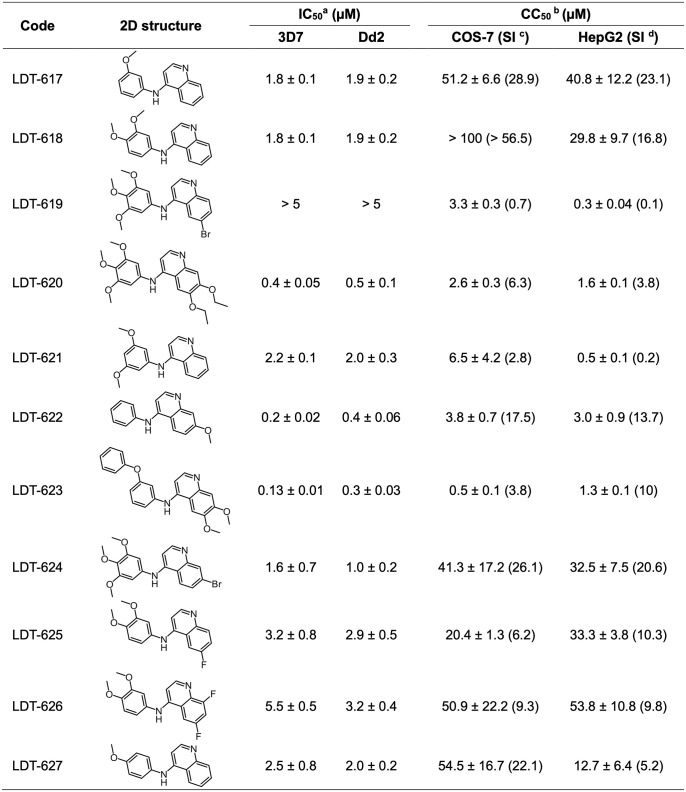
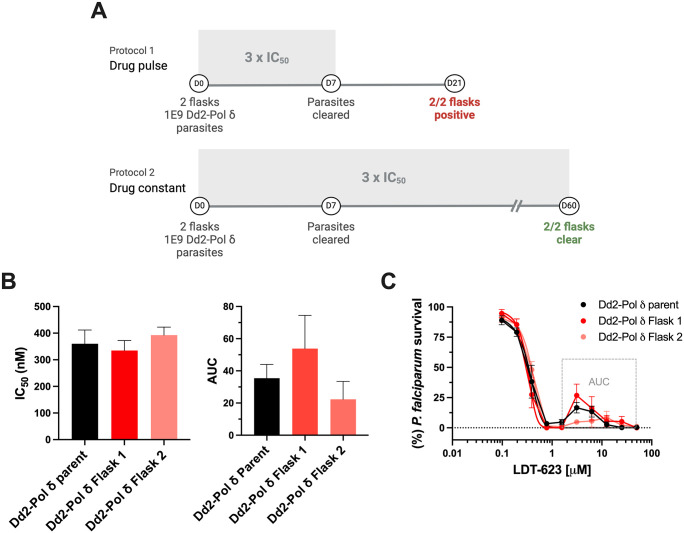
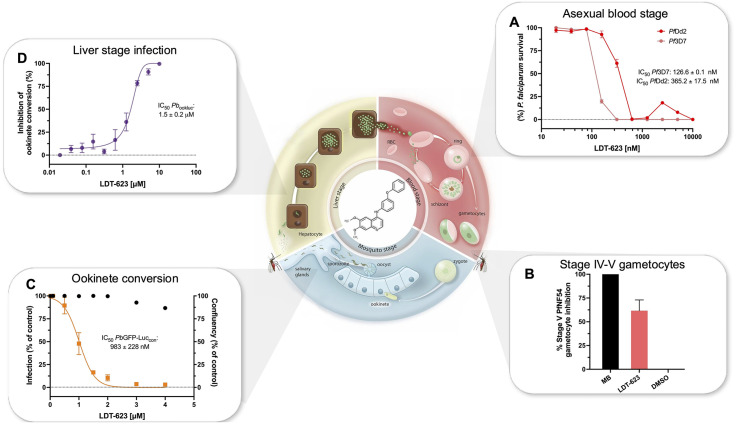
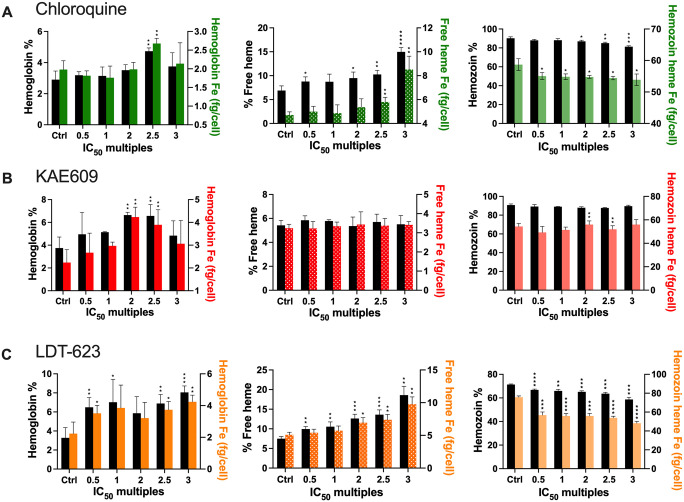
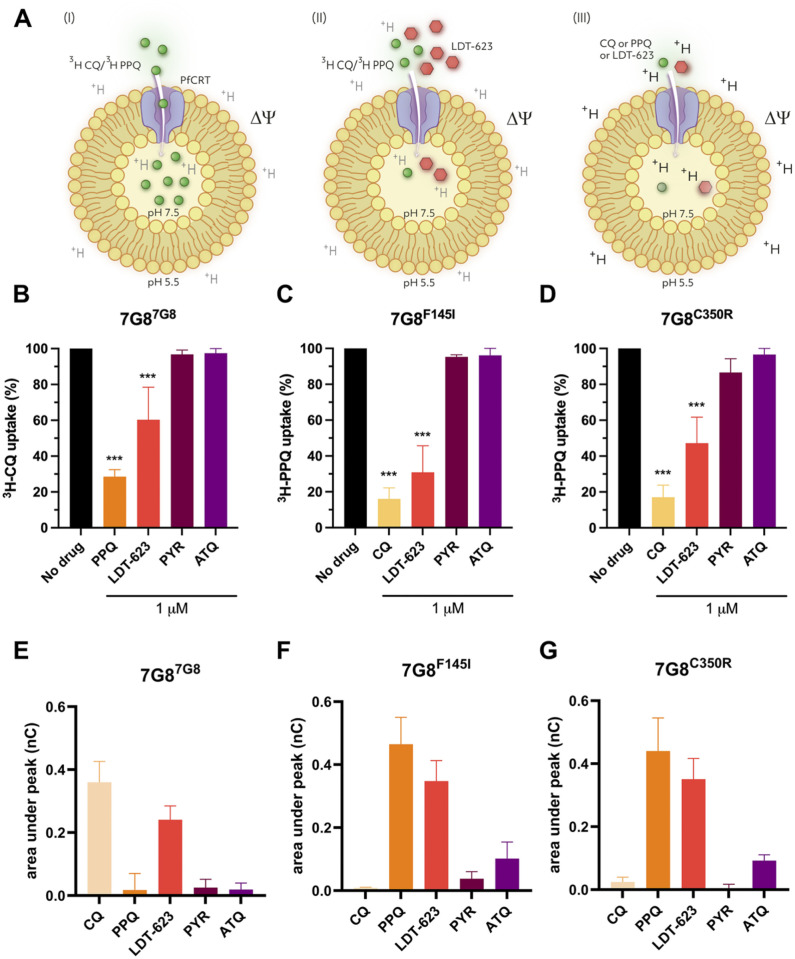
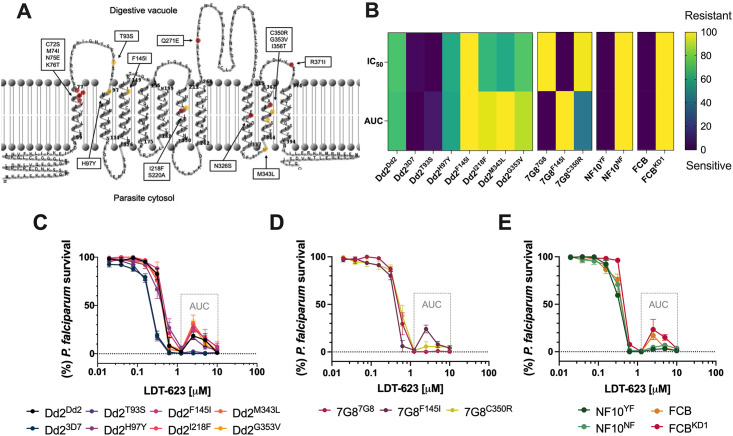
Artemisinin-based combination therapy (ACT) is the mainstay of effective treatment of Plasmodium falciparum malaria. However, the long-term utility of ACTs is imperiled by widespread partial artemisinin resistance in Southeast Asia and its recent emergence in parts of East Africa. This underscores the need to identify chemotypes with new modes of action (MoAs) to circumvent resistance to ACTs. In this study, we characterized the asexual blood stage antiplasmodial activity and resistance mechanisms of LDT-623, a 4-aminoquinoline (4-AQ). We also detected LDT-623 activity against multiple stages (liver schizonts, stage IV-V gametocytes, and ookinetes) of Plasmodium's life cycle, a feature unlike other 4-AQs such as chloroquine (CQ) and piperaquine (PPQ). Using heme fractionation profiling and drug uptake studies in PfCRT-containing proteoliposomes, we observed inhibition of hemozoin formation and PfCRT-mediated transport, which constitute characteristic features of 4-AQs' MoA. We also found minimal cross-resistance to LDT-623 in a panel of mutant pfcrt or pfmdr1 lines, but not the PfCRT F145I mutant that is highly resistant to PPQ resistance yet is very unfit. No P. falciparum parasites were recovered in an in vitro resistance selection study, suggesting a high barrier for resistance to emerge. Finally, a competitive growth assay comprising >50 barcoded parasite lines with mutated resistance mediators or major drug targets found no evidence of cross-resistance. Our findings support further exploration of this promising 4-AQ.
青蒿素为基础的联合疗法(ACT)是治疗恶性疟原虫疟疾的主要方法。然而,由于东南亚地区青蒿素部分耐药的长期存在,以及其最近在东非部分地区的出现,ACT 的长期应用受到了威胁。这凸显了需要确定具有新作用机制(MoA)的化学型,以规避对 ACT 的耐药性。在这项研究中,我们对 LDT-623 的无性血阶段抗疟活性和耐药机制进行了描述,LDT-623 是一种 4-氨基喹啉(4-AQ)。我们还检测了 LDT-623 对疟原虫生命周期多个阶段(肝裂殖体、IV-V 期配子体和动合子)的活性,这是与其他 4-AQ(如氯喹(CQ)和哌喹(PPQ))不同的特征。通过血红素分馏谱分析和 PfCRT 含蛋白脂质体中的药物摄取研究,我们观察到抑制亚铁血红素形成和 PfCRT 介导的转运,这构成了 4-AQ 的 MoA 的特征。我们还发现,在包含突变 pfcrt 或 pfmdr1 系的药物敏感性测试中,对 LDT-623 的最小交叉耐药性,但对 PfCRT F145I 突变体没有交叉耐药性,PfCRT F145I 突变体对 PPQ 耐药性高度耐药,但非常不适应。在体外耐药选择研究中没有恢复到疟原虫,表明出现耐药性的障碍很高。最后,在包含>50 个带有突变耐药介质或主要药物靶点的条形码寄生虫系的竞争生长测定中,没有发现交叉耐药性的证据。我们的研究结果支持进一步探索这种有前途的 4-AQ。