Savargaonkar Aniruddha Vijay, Madruga Liszt Coutinho, Munshi Amit H, Popat Ketul C
Department of Mechanical Engineering, Colorado State University Fort Collins CO 80523 USA
Department of Bioengineering, George Mason University Fairfax VA 22030 USA
RSC Adv. 2024 Oct 29;14(46):34362-34371. doi: 10.1039/d4ra05038j. eCollection 2024 Oct 23.
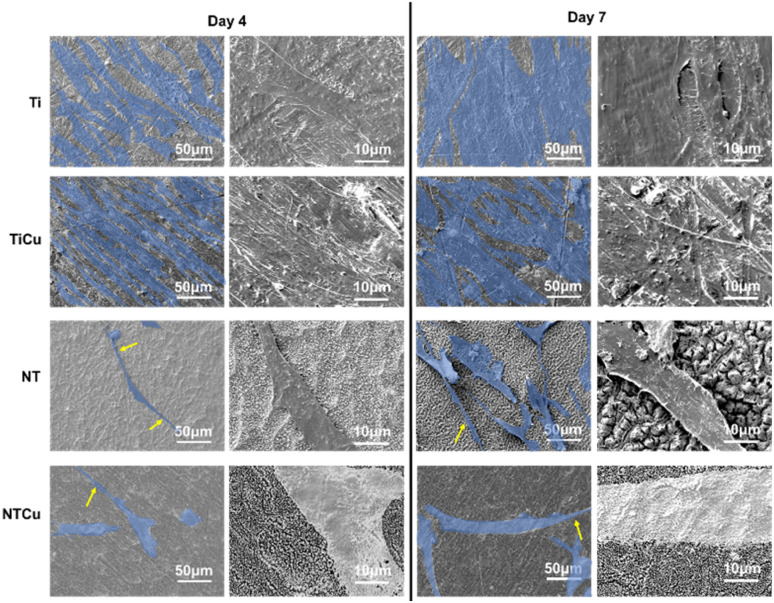
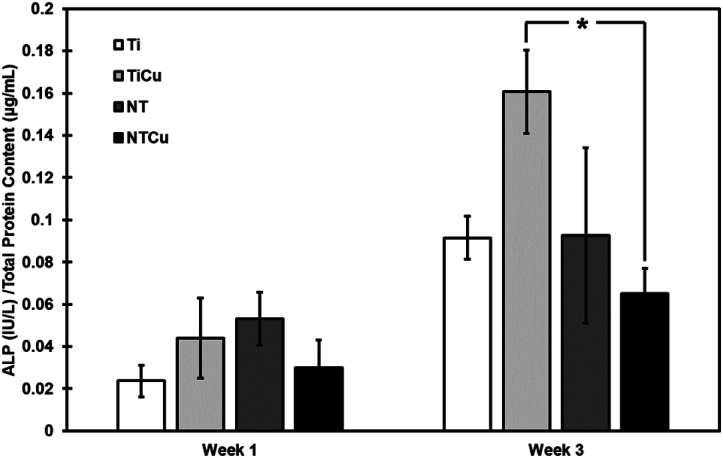
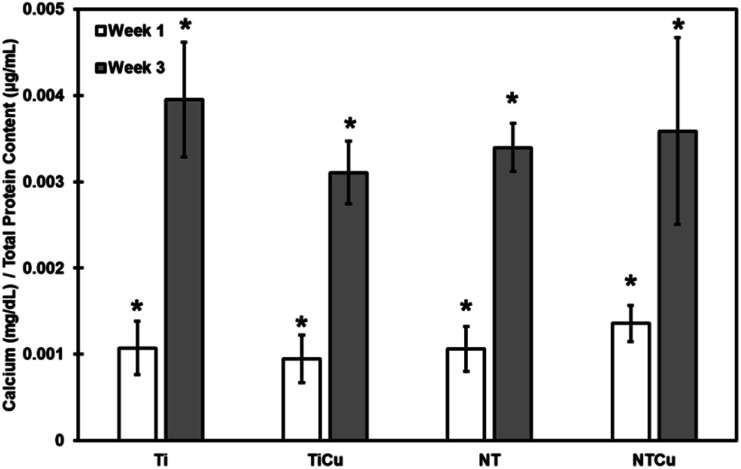
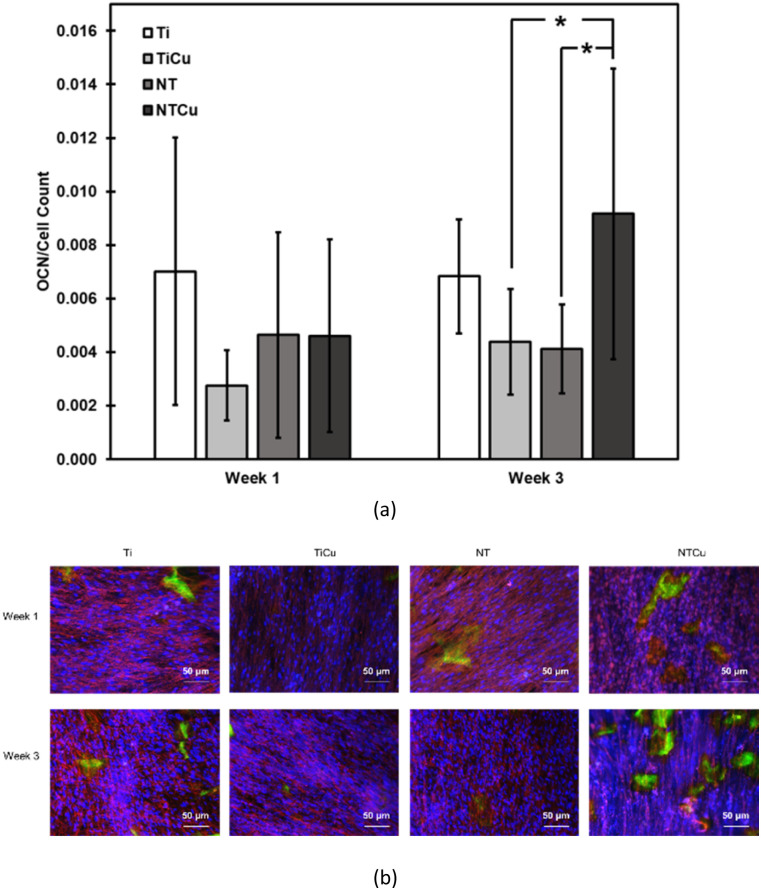
To achieve long term success of orthopedic implants, it is critical to have a successful integration of bone and implant material. To accomplish this, various surface modifications have been investigated in research. Even though titania nanotubes and copper have individually demonstrated successful stem cell adhesion, proliferation and differentiation, these modifications have not yet been investigated together. In this study, we fabricated copper-modified titania nanotubes and evaluated the adhesion, proliferation and osteogenic differentiation of adipose derived stem cells on these surfaces. Implant surfaces also have to interact with blood after insertion in the body. Several studies have shown the importance of blood clots on material surfaces and their influence in differentiation of cells. Hence, blood clotting properties of modified surfaces were also investigated through whole blood clotting, and platelet adhesion and activation. The copper-modified titania nanotube surfaces demonstrated increased differentiation of adipose derived stem cells towards osteogenic lineage as well as enhanced blood clotting properties, thus they can be used as a potential surface for orthopedic implants.
为实现骨科植入物的长期成功,骨与植入材料的成功整合至关重要。为达成这一目标,研究中对各种表面改性进行了探究。尽管二氧化钛纳米管和铜各自已证明能成功实现干细胞的黏附、增殖和分化,但尚未对这些改性进行联合研究。在本研究中,我们制备了铜改性的二氧化钛纳米管,并评估了脂肪来源干细胞在这些表面上的黏附、增殖和成骨分化情况。植入物表面在植入体内后还必须与血液相互作用。多项研究表明了材料表面上血凝块的重要性及其对细胞分化的影响。因此,还通过全血凝血以及血小板黏附和活化对改性表面的凝血特性进行了研究。铜改性的二氧化钛纳米管表面显示出脂肪来源干细胞向成骨谱系的分化增加以及凝血特性增强,因此它们可作为骨科植入物的潜在表面。