Li Bao, Shen Yang, Liu Songbo, Yuan Hong, Liu Ming, Li Haokun, Zhang Tonghe, Du Shuyuan, Liu Xinwei
Department of Orthopedics, General Hospital of Northern Theater Command, Shenyang, China.
Front Mol Biosci. 2024 Oct 17;11:1376793. doi: 10.3389/fmolb.2024.1376793. eCollection 2024.
Osteoarthritis (OA) is a degenerative disease with a high incidence worldwide. Most affected patients do not exhibit obvious discomfort symptoms or imaging findings until OA progresses, leading to irreversible destruction of articular cartilage and bone. Therefore, developing new diagnostic biomarkers that can reflect articular cartilage injury is crucial for the early diagnosis of OA. This study aims to explore biomarkers related to the immune microenvironment of OA, providing a new research direction for the early diagnosis and identification of risk factors for OA.
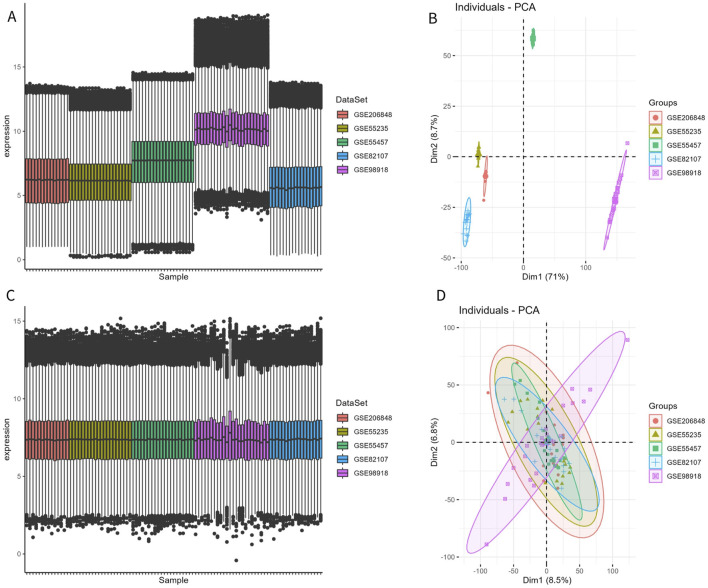
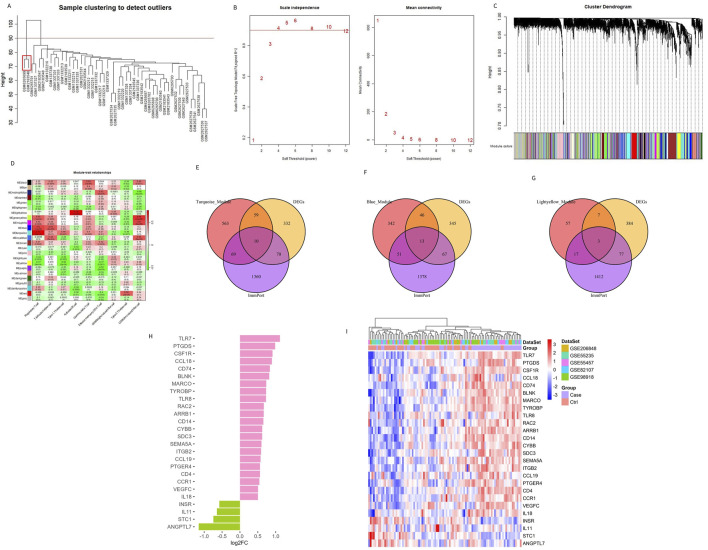
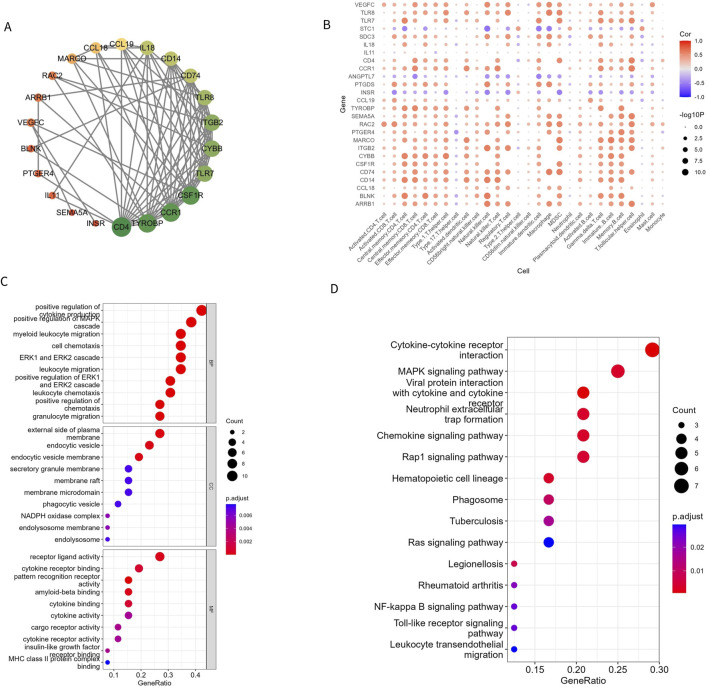
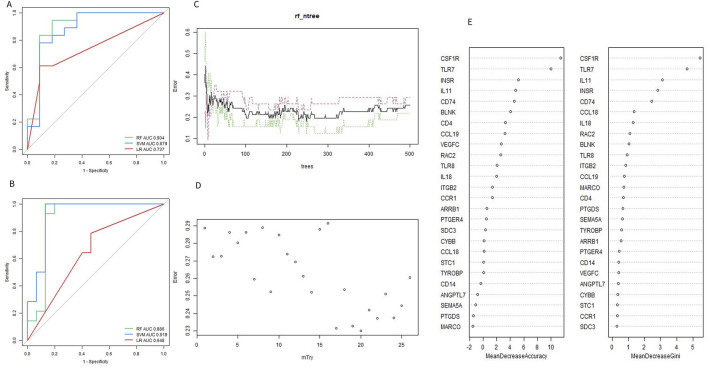
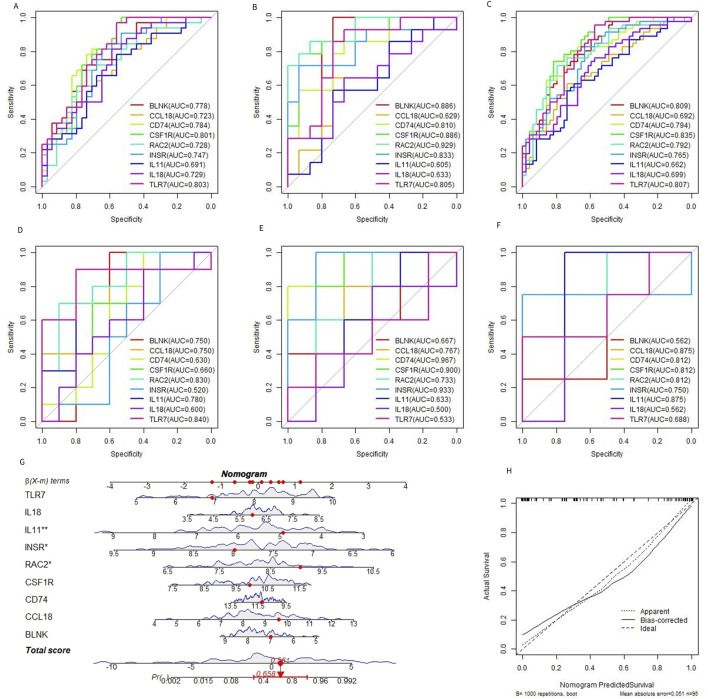
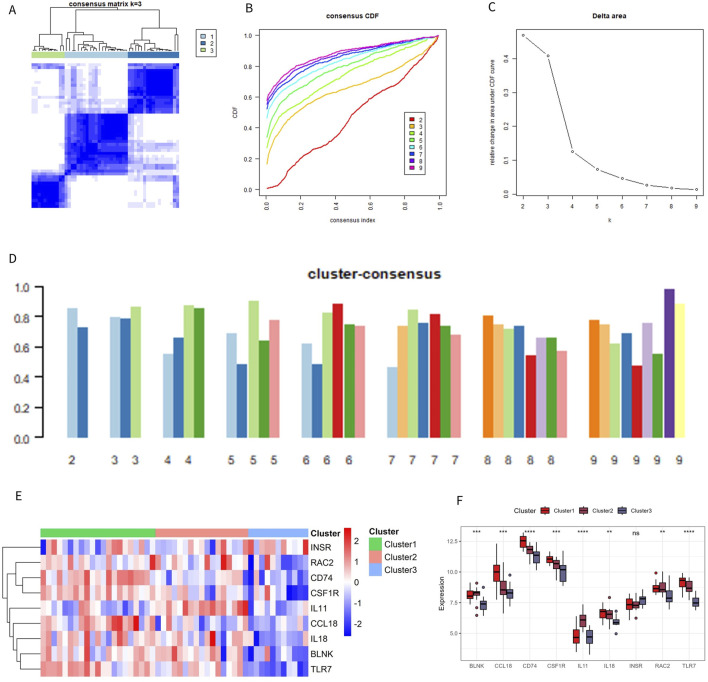
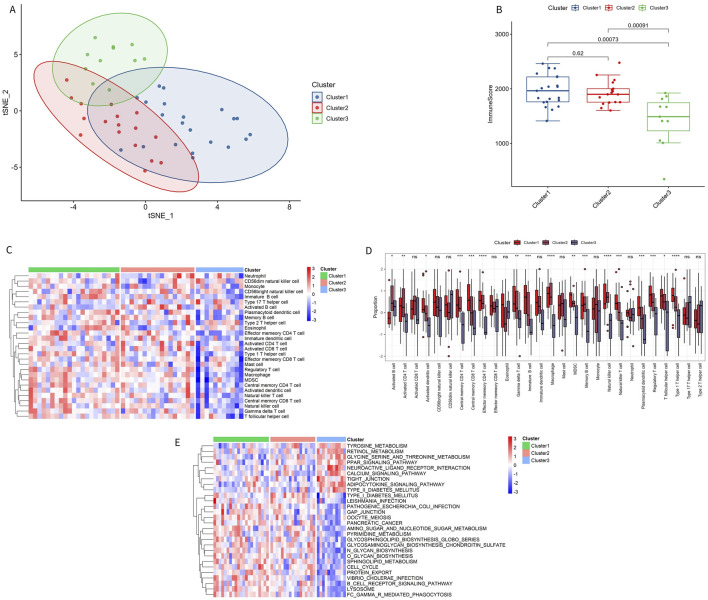
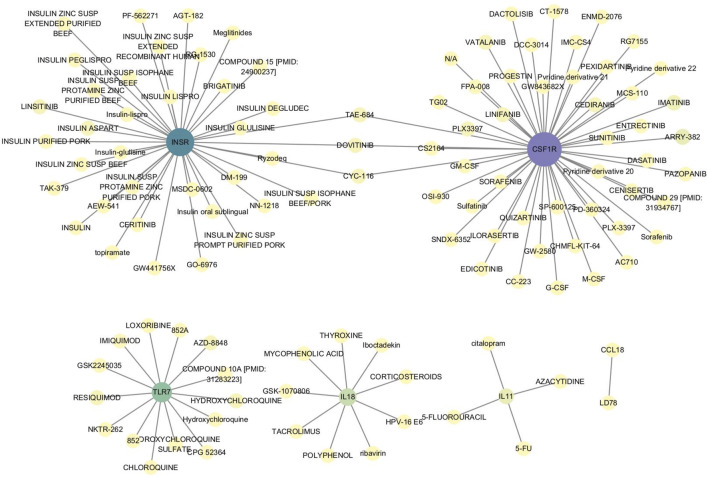
We screened and downloaded relevant data from the Gene Expression Omnibus (GEO) database, and the immune microenvironment-related genes (Imr-DEGs) were identified using the ImmPort data set by combining weighted coexpression analysis (WGCNA). Functional enrichment of GO and Kyoto Encyclopedia of Genes and Genomes (KEGG) were conducted to explore the correlation of Imr-DEGs. A random forest machine learning model was constructed to analyze the characteristic genes of OA, and the diagnostic significance was determined by the Receiver Operating Characteristic Curve (ROC) curve, with external datasets used to verify the diagnostic ability. Different immune subtypes of OA were identified by unsupervised clustering, and the function of these subtypes was analyzed by gene set enrichment analysis (GSVA). The Drug-Gene Interaction Database was used to explore the relationship between characteristic genes and drugs.
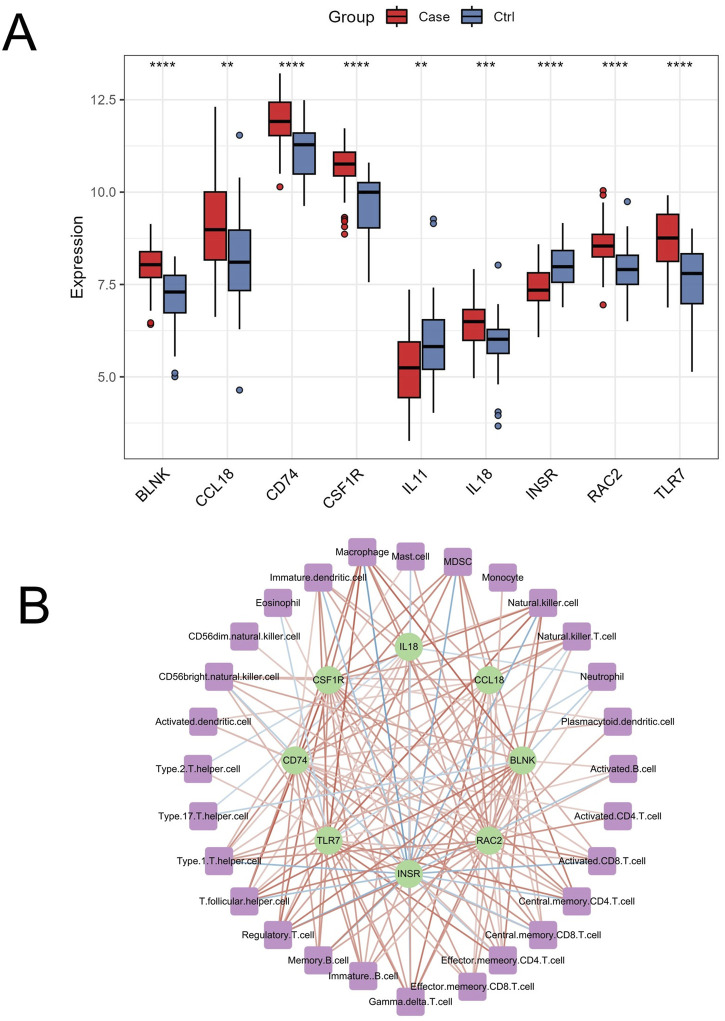
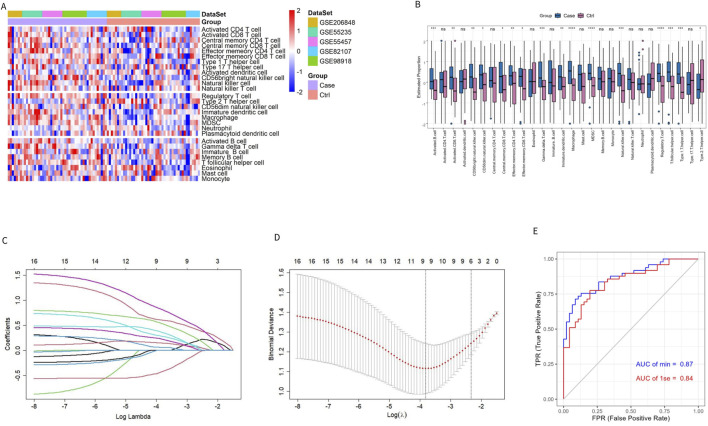
Single sample gene set enrichment analysis (ssGSEA) revealed that 16 of 28 immune cell subsets in the dataset significantly differed between OA and normal groups. There were 26 Imr-DEGs identified by WGCNA, showing that functional enrichment was related to immune response. Using the random forest machine learning model algorithm, nine characteristic genes were obtained: (AUC = 0.809), (AUC = 0.692), (AUC = 0.794), (AUC = 0.835), (AUC = 0.792), (AUC = 0.765), (AUC = 0.662), (AUC = 0.699), and (AUC = 0.807). A nomogram was constructed to predict the occurrence and development of OA, and the calibration curve confirmed the accuracy of these 9 genes in OA diagnosis.
This study identified characteristic genes related to the immune microenvironment in OA, providing new insight into the risk factors of OA.
骨关节炎(OA)是一种在全球范围内发病率较高的退行性疾病。大多数受影响的患者在OA进展之前不会表现出明显的不适症状或影像学表现,这会导致关节软骨和骨骼的不可逆破坏。因此,开发能够反映关节软骨损伤的新型诊断生物标志物对于OA的早期诊断至关重要。本研究旨在探索与OA免疫微环境相关的生物标志物,为OA的早期诊断和危险因素识别提供新的研究方向。
我们从基因表达综合数据库(GEO)中筛选并下载相关数据,并通过结合加权共表达分析(WGCNA)使用ImmPort数据集鉴定免疫微环境相关基因(Imr-DEGs)。进行基因本体(GO)和京都基因与基因组百科全书(KEGG)的功能富集分析,以探索Imr-DEGs的相关性。构建随机森林机器学习模型来分析OA的特征基因,并通过受试者工作特征曲线(ROC)确定其诊断意义,使用外部数据集验证诊断能力。通过无监督聚类识别OA的不同免疫亚型,并通过基因集富集分析(GSVA)分析这些亚型的功能。利用药物-基因相互作用数据库探索特征基因与药物之间的关系。
单样本基因集富集分析(ssGSEA)显示,数据集中28个免疫细胞亚群中的16个在OA组和正常组之间存在显著差异。通过WGCNA鉴定出26个Imr-DEGs,表明功能富集与免疫反应相关。使用随机森林机器学习模型算法,获得了9个特征基因: (曲线下面积[AUC]=0.809), (AUC=0.692), (AUC=0.794), (AUC=0.835), (AUC=0.792), (AUC=0.765), (AUC=0.662), (AUC=0.699),以及 (AUC=0.807)。构建了列线图以预测OA的发生和发展,校准曲线证实了这9个基因在OA诊断中的准确性。
本研究鉴定了与OA免疫微环境相关的特征基因,为OA的危险因素提供了新的见解。