Department of Stem Cell and Regenerative Biology, Harvard University, Cambridge, MA, USA; Gene Regulation Observatory, Broad Institute, Cambridge, MA, USA.
Oncology R&D, AstraZeneca, Waltham, MA, USA.
Cell Rep Med. 2024 Nov 19;5(11):101804. doi: 10.1016/j.xcrm.2024.101804. Epub 2024 Oct 31.
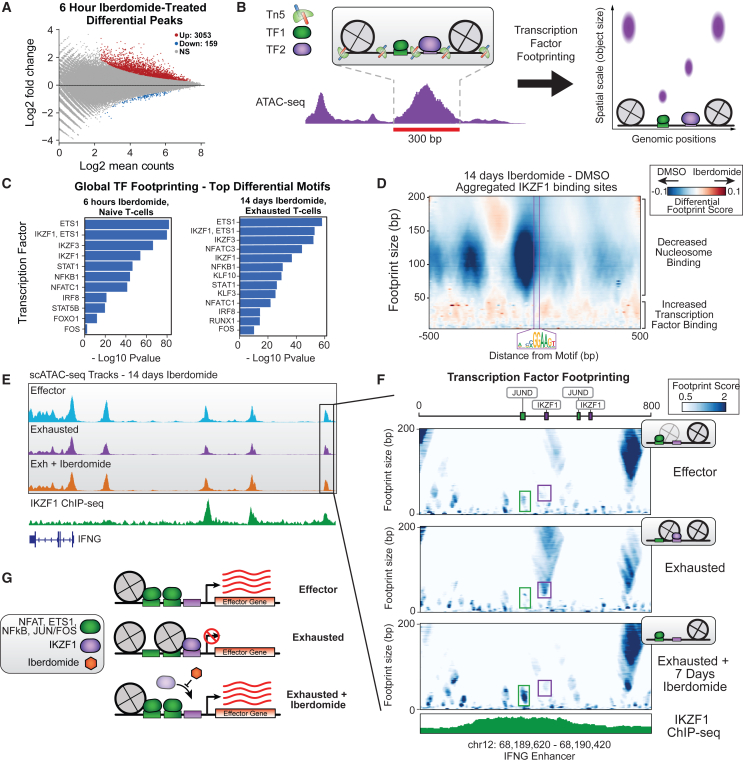
In cancer, chronic antigen stimulation drives effector T cells to exhaustion, limiting the efficacy of T cell therapies. Recent studies have demonstrated that epigenetic rewiring governs the transition of T cells from effector to exhausted states and makes a subset of exhausted T cells non-responsive to PD1 checkpoint blockade. Here, we describe an antigen-specific assay for T cell exhaustion that generates T cells phenotypically and transcriptionally similar to those found in human tumors. We perform a screen of human epigenetic regulators, identifying IKZF1 as a driver of T cell exhaustion. We determine that the IKZF1 degrader iberdomide prevents exhaustion by blocking chromatin remodeling at T cell effector enhancers and preserving the binding of AP-1, NF-κB, and NFAT. Thus, our study uncovers a role for IKZF1 as a driver of T cell exhaustion through epigenetic modulation, providing a rationale for the use of iberdomide in solid tumors to prevent T cell exhaustion.
在癌症中,慢性抗原刺激会导致效应 T 细胞衰竭,从而限制 T 细胞疗法的疗效。最近的研究表明,表观遗传重编程控制着 T 细胞从效应状态向衰竭状态的转变,并使衰竭 T 细胞的一部分对 PD1 检查点阻断无反应。在这里,我们描述了一种用于 T 细胞衰竭的抗原特异性检测方法,该方法产生的 T 细胞表型和转录与在人类肿瘤中发现的 T 细胞相似。我们对人类表观遗传调节剂进行了筛选,确定 IKZF1 是 T 细胞衰竭的驱动因素。我们确定 IKZF1 降解剂 iberdomide 通过阻止 T 细胞效应增强子的染色质重塑并保留 AP-1、NF-κB 和 NFAT 的结合来阻止衰竭。因此,我们的研究通过表观遗传调控揭示了 IKZF1 作为 T 细胞衰竭驱动因素的作用,为在实体瘤中使用 iberdomide 来防止 T 细胞衰竭提供了依据。