Zhang Bin, Zhan Zhaolong, Zhang Feng, Xi Sijie, Yuan Xiaosong, Shi Zhonghua
Department of Medical Genetics, Changzhou Maternal and Child Health Care Hospital, Changzhou Medical Center, Nanjing Medical University, Changzhou, China.
Department of Obstetrics, Changzhou Maternal and Child Health Care Hospital, Changzhou Medical Center, Nanjing Medical University, Changzhou, China.
Diabetol Metab Syndr. 2024 Nov 5;16(1):262. doi: 10.1186/s13098-024-01503-9.
The association between serum triglyceride to high density lipoprotein cholesterol ratio (THR) in late pregnancy and adverse birth outcomes (ABO) remains controversial because of inconsistent results. The present study assessed the association between maternal serum THR and incidence of ABO [preterm birth (PTB), small and large for gestational age (SGA/LGA), low birth weight (LBW) and macrosomia] in a Chinese population.
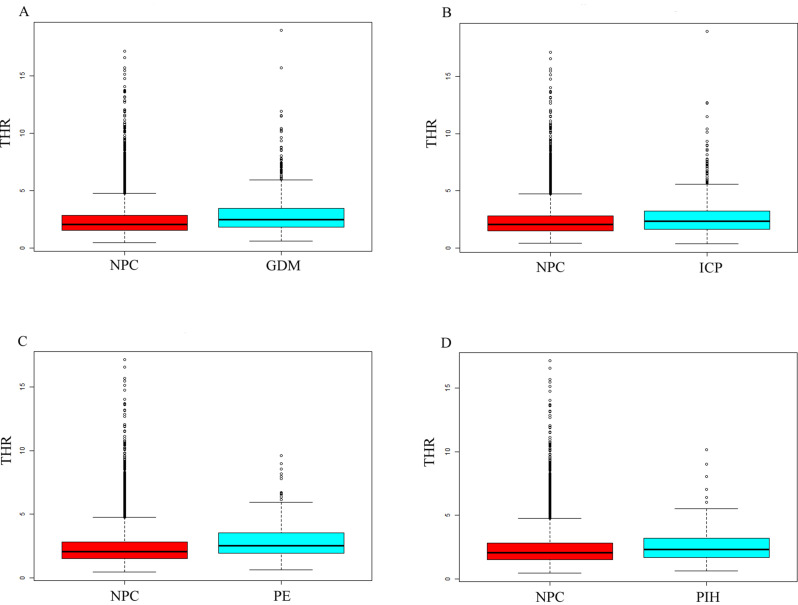
A total of 11,553 consecutive participants from a real-world database with data on lipid profiles and birth outcomes were included. Logistic regression models were applied to assess the association between THR and incident ABO. Mediation analysis was performed to investigate the contribution of pregnancy complications [gestational diabetes mellitus (GDM), intrahepatic cholestasis of pregnancy (ICP) and pre-eclampsia (PE)] to this association.
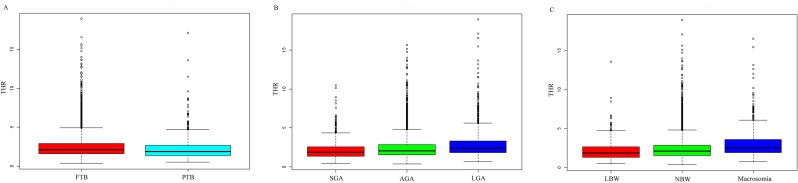
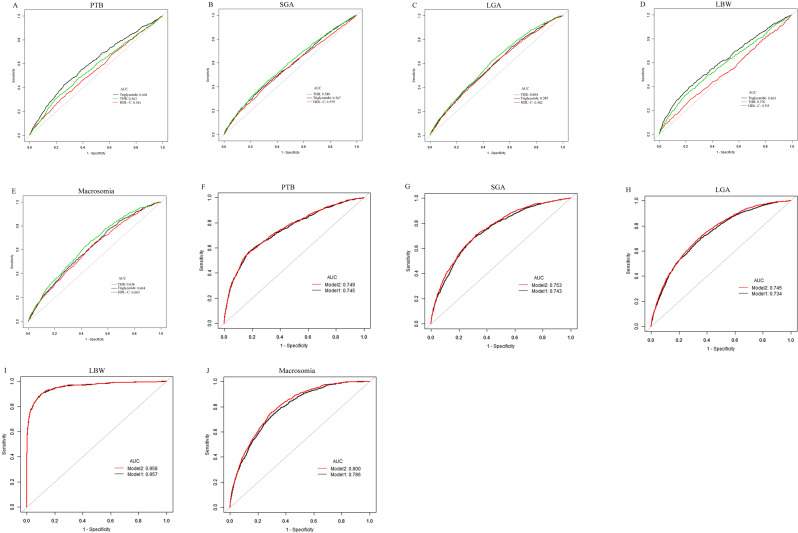
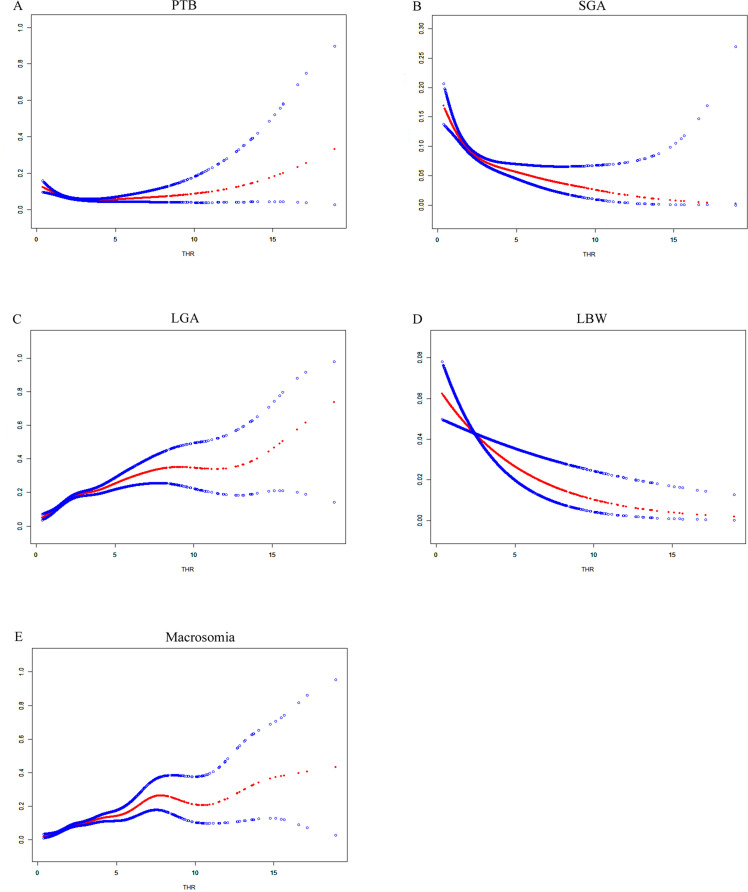
Approximately 6.6% (762/11,553), 8.9% (1023/11,553), 15.5% (1792/11,553), 4.3% (494/11,553), and 7.4% (851/11,553) of individuals developed PTB, SGA, LGA, LBW and macrosomia, respectively. Significant trends across the quintiles of THR toward decreasing incidence of SGA and LBW and increasing incidence of LGA and macrosomia were observed. The multivariate-adjusted odds ratios (OR) in the top quintile of serum THR (> 3.16) versus the bottom quintile (< 1.44) were 0.52 for PTB, 0.48 for SGA, 0.64 for LBW, 2.80 for LGA and 3.80 for macrosomia, respectively. A 1-standard deviation (SD) increase in serum THR was associated with decreased risk of PTB [OR = 0.84, 95% confidence interval (CI): 0.76-0.93), SGA (OR = 0.71, 95% CI:0.65-0.78) and LBW (OR = 0.76, 95% CI:0.65-0.90) and increased risk of LGA (OR = 1.40, 95% CI:1.32-1.49) and macrosomia (OR = 1.49, 95% CI:1.38-1.62). In mediation analyses, PE mediated - 19.8%, -10.6% and - 24.6% of THR-associated PTB, SGA and LBW, respectively, GDM accounted for - 3.7%, 6.8% and 4.3% of THR-associated PTB, LGA and macrosomia, respectively, and ICP explained - 1.9% and - 2.1% of THR-associated PTB and LBW, respectively. In addition, incorporating THR to ABO predictive models significantly improved the area under the curve for SGA (0.743 vs. 0.753, P < 0.001), LGA (0.734 vs. 0.745, P < 0.001) and macrosomia (0.786 vs. 0.800, P < 0.001).
Real-world data showed an association between serum THR in late pregnancy and ABO risk, and this association may be partially mediated by prevalent pregnancy complications (PE/GDM/ICP), suggesting a potential role of THR in predicting ABO (SGA/LGA/macrosomia).
由于结果不一致,妊娠晚期血清甘油三酯与高密度脂蛋白胆固醇比值(THR)与不良分娩结局(ABO)之间的关联仍存在争议。本研究评估了中国人群中孕妇血清THR与ABO发生率[早产(PTB)、小于胎龄儿和大于胎龄儿(SGA/LGA)、低出生体重(LBW)和巨大儿]之间的关联。
纳入了来自一个真实世界数据库的11553名连续参与者,这些参与者有血脂谱和分娩结局的数据。应用逻辑回归模型评估THR与ABO事件之间的关联。进行中介分析以研究妊娠并发症[妊娠期糖尿病(GDM)、妊娠肝内胆汁淤积症(ICP)和子痫前期(PE)]对这种关联的影响。
分别有大约6.6%(762/11553)、8.9%(1023/11553)、15.5%(1792/11553)、4.3%(494/11553)和7.4%(851/11553)的个体发生了PTB、SGA、LGA、LBW和巨大儿。观察到THR五分位数之间SGA和LBW发生率降低以及LGA和巨大儿发生率增加的显著趋势。血清THR最高五分位数(>3.16)与最低五分位数(<1.44)相比,PTB的多变量调整比值比(OR)为0.52,SGA为0.48,LBW为0.64,LGA为2.80,巨大儿为3.80。血清THR每增加1个标准差(SD)与PTB[OR = 0.84,95%置信区间(CI):0.76 - 0.93]、SGA(OR = 0.71,95% CI:0.65 - 0.78)和LBW(OR = 0.76,95% CI:0.65 - 0.90)风险降低以及LGA(OR = 1.40,95% CI:1.32 - 1.49)和巨大儿(OR = 1.49,95% CI: