Karino Sonoko, Usuda Haruki, Kanda Shoma, Okamoto Takayuki, Niibayashi Tomomi, Yano Takahisa, Naora Kohji, Wada Koichiro
Department of Pharmacology, Faculty of Medicine, Shimane University, Izumo, Shimane, 693-8501, Japan.
Department of Pharmacy, Shimane University Hospital, Izumo, Shimane, 693-8501, Japan.
Biochem Biophys Rep. 2024 Oct 19;40:101848. doi: 10.1016/j.bbrep.2024.101848. eCollection 2024 Dec.
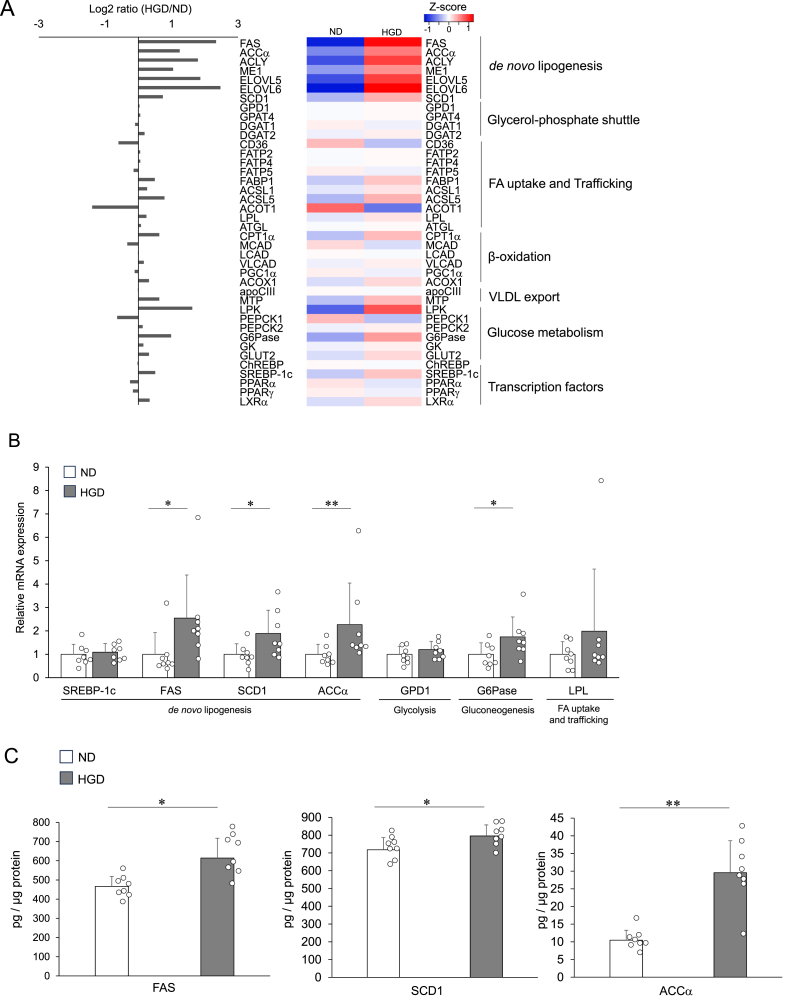
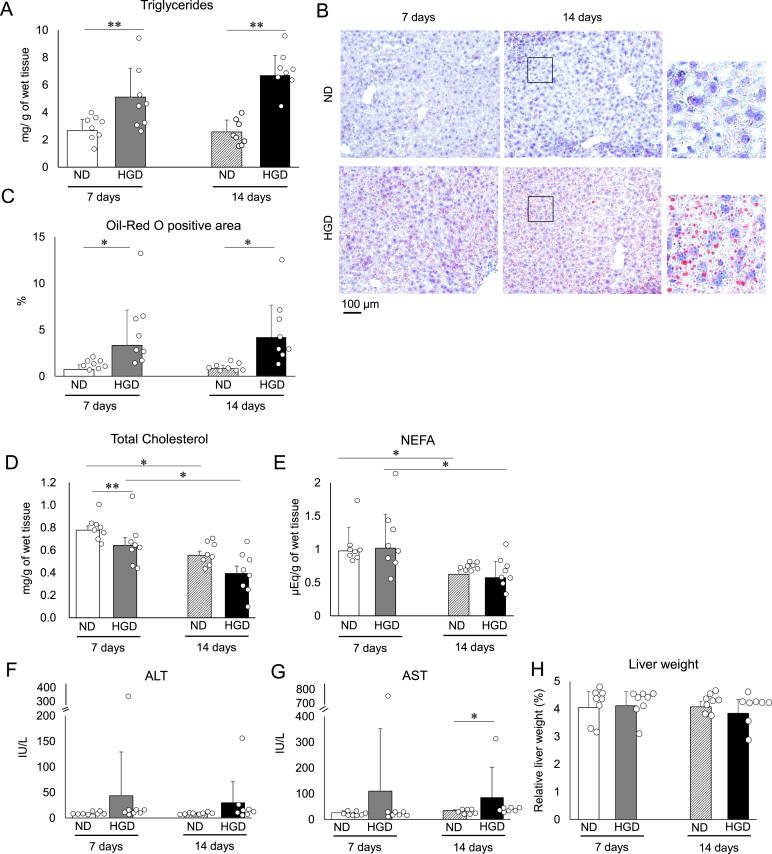
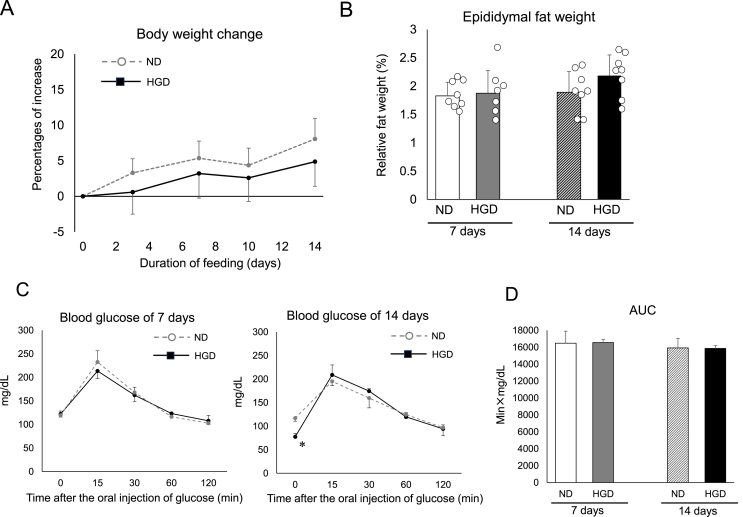
This study investigated whether a standard calorie diet that is high in glucose and deficient in dietary fibre (described as HGD [high glucose diet]) induces hepatic fat accumulation in mice. We evaluated hepatic steatosis at 7 days and 14 days after the commencement of the HGD. Hepatic triglycerides and areas of oil droplets increased in the HGD group both at day 7 and day 14, whereas weight gain, weight of epididymal fat, and plasma levels of triglycerides were unaffected by HGD consumption. A microarray analysis of the livers revealed that the expression of lipogenesis-related genes was the most affected by HGD consumption. Furthermore, HGD consumption induced the expression of hepatic proteins of fatty acid synthetase, acetyl-CoA carboxylase alpha, and stearoyl-CoA desaturase 1, which are known to be involved in the synthesis of triglyceride. These results indicate that HGD consumption causes fat accumulation in the liver, with an increase in enzymes that are involved in de novo lipogenesis without an accompanying weight or obesity phenotype. Our new findings suggest that HGD consumption could serve as a breeding ground for liver steatosis.
本研究调查了一种高糖且膳食纤维含量低的标准热量饮食(称为HGD [高糖饮食])是否会诱导小鼠肝脏脂肪堆积。我们在开始HGD饮食后的第7天和第14天评估了肝脏脂肪变性情况。在第7天和第14天,HGD组的肝脏甘油三酯和油滴面积均增加,而体重增加、附睾脂肪重量和血浆甘油三酯水平不受HGD饮食的影响。对肝脏进行的微阵列分析显示,与脂肪生成相关的基因表达受HGD饮食的影响最大。此外,HGD饮食诱导了脂肪酸合成酶、乙酰辅酶A羧化酶α和硬脂酰辅酶A去饱和酶1的肝脏蛋白表达,已知这些蛋白参与甘油三酯的合成。这些结果表明,HGD饮食会导致肝脏脂肪堆积,同时参与从头脂肪生成的酶增加,而没有伴随的体重或肥胖表型。我们的新发现表明,HGD饮食可能是肝脏脂肪变性的温床。