Qu Xuefeng, Li Na, Xu Cong, Huang Zifeng, Li Chunyan, Jiang Yang, Zheng Guizhao, Fu Haiping, Zhang Guangyan, Liu Chuan
Dongguan Research Center of Agricultural Sciences, Dongguan, Guangdong, China.
Chongqing Key Laboratory of Big Data for Bio Intelligence, Chongqing University of Posts and Telecommunications, Chongqing, China.
Front Plant Sci. 2024 Dec 13;15:1497230. doi: 10.3389/fpls.2024.1497230. eCollection 2024.
Orchids are renowned for their intricate floral structures, where sepals and petals contribute significantly to ornamental value and pollinator attraction. In Section , the distinctive curvature of these floral organs enhances both aesthetic appeal and pollination efficiency. However, the molecular and cellular mechanisms underlying this trait remain poorly understood.
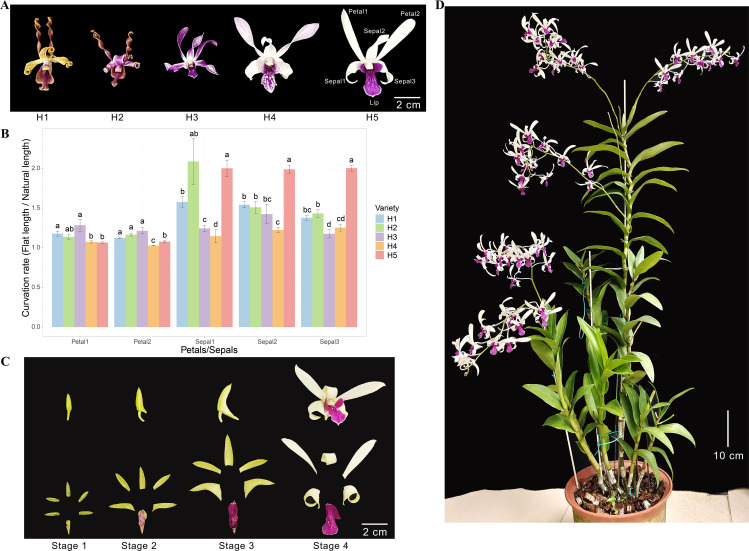
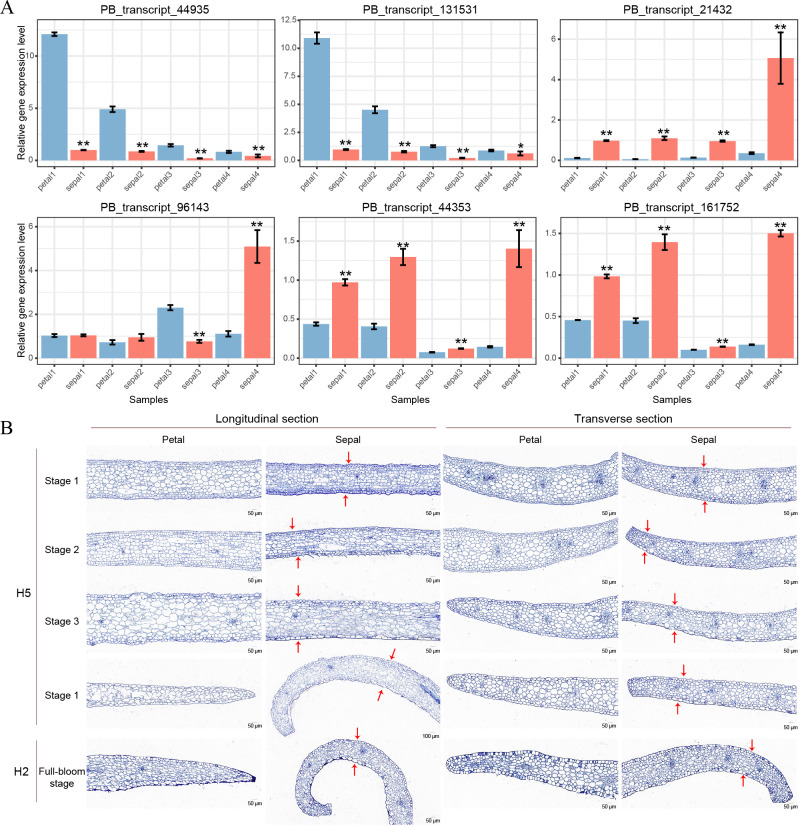
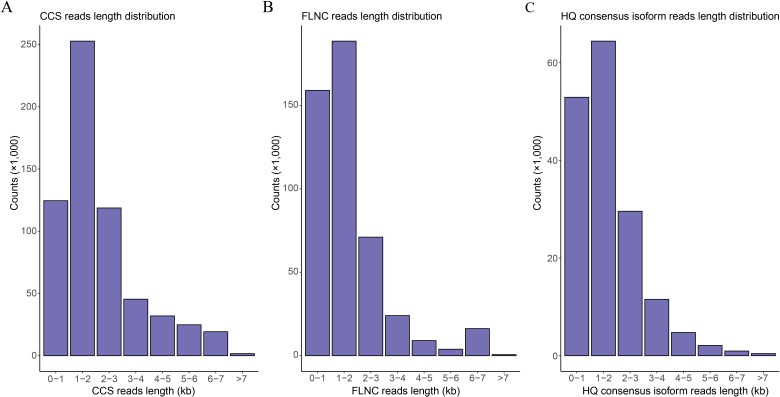
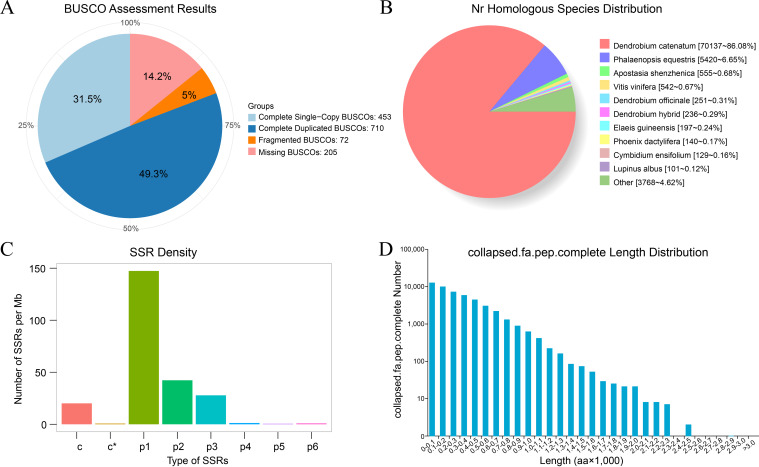
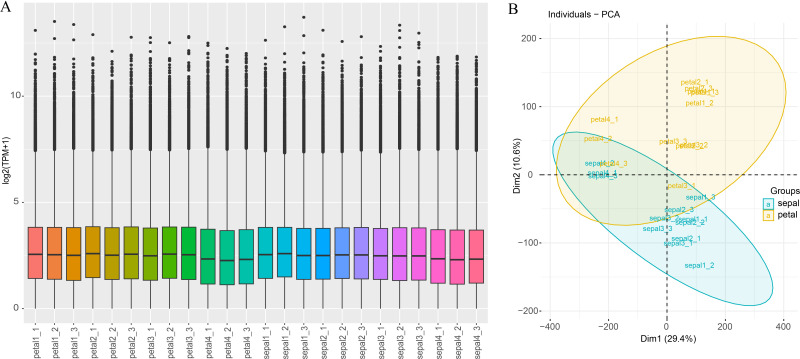
Morphological characteristics of five hybrids were analyzed, with a particular focus on hybrid H5, which exhibits pronounced sepal curling. Full-length transcriptomic sequencing was employed to assemble a reference transcriptome, while RNA-seq identified differentially expressed genes (DEGs) between sepals and petals. Gene ontology and pathway enrichment analyses were conducted to uncover biological processes associated with sepal curvature. Cytological microscopy was used to examine cell size and number, and quantitative real-time PCR (qRT-PCR) was performed to validate transcriptomic findings.
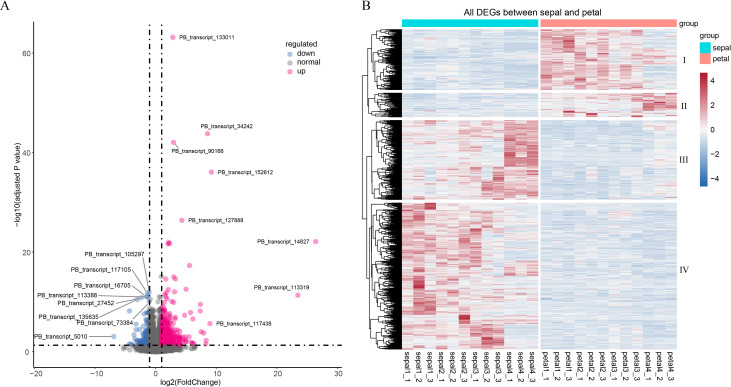
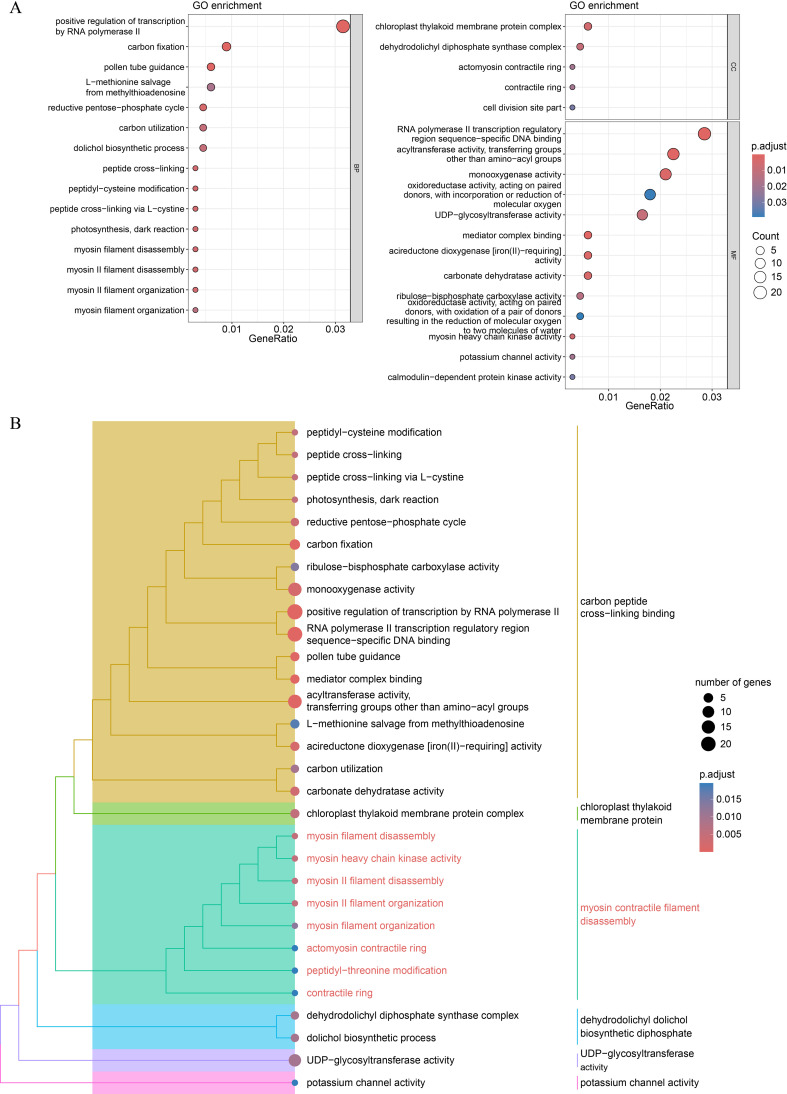
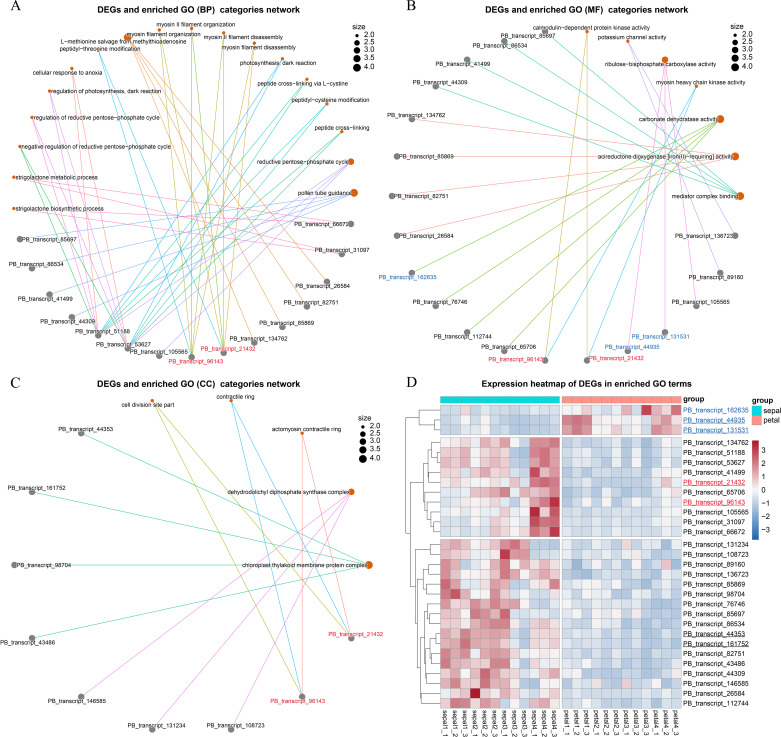
The reference transcriptome contained 94,258 non-redundant transcripts, and RNA-seq identified 821 DEGs between sepals and petals, with 72.8% of these upregulated in sepals. Enrichment analysis revealed the significant involvement of DEGs in cytokinesis, cytoskeletal organization, and energy metabolism. Notably, myosin II filament organization was implicated in generating the mechanical forces responsible for curling, while metabolic pathways provided the energy necessary for these developmental processes. Cytological observations showed that the upper cell layers of the sepal were smaller and more numerous than the lower layers, indicating that differential cell growth contributes to sepal curvature. qRT-PCR analysis validated the differential expression of selected genes, supporting the transcriptomic findings.
The interplay of cellular mechanics, cytoskeletal dynamics, and metabolic regulation is crucial in shaping sepal morphology. Future studies involving gene knockdown or overexpression experiments are recommended to validate the roles of specific genes in processes such as actin organization and myosin activity. Such work would provide deeper insights into the contributions of cytoskeletal dynamics and mechanical force generation to sepal morphogenesis.
兰花以其复杂的花结构而闻名,其中萼片和花瓣对观赏价值和吸引传粉者起着重要作用。在第 节中,这些花器官独特的弯曲度增强了美学吸引力和授粉效率。然而,这一性状背后的分子和细胞机制仍知之甚少。
分析了五个杂交种的形态特征,特别关注表现出明显萼片卷曲的杂交种H5。采用全长转录组测序来组装参考转录组,同时通过RNA测序鉴定萼片和花瓣之间的差异表达基因(DEG)。进行基因本体论和通路富集分析以揭示与萼片弯曲相关的生物学过程。利用细胞显微镜检查细胞大小和数量,并进行定量实时PCR(qRT-PCR)以验证转录组学结果。
参考转录组包含94,258个非冗余转录本,RNA测序鉴定出萼片和花瓣之间有821个差异表达基因,其中72.8%在萼片中上调。富集分析表明差异表达基因在胞质分裂、细胞骨架组织和能量代谢中显著参与。值得注意的是,肌球蛋白II丝组织与产生导致卷曲的机械力有关,而代谢途径为这些发育过程提供了必要的能量。细胞学观察表明,萼片的上层细胞层比下层更小且更多,这表明细胞生长差异有助于萼片弯曲。qRT-PCR分析验证了所选基因的差异表达,支持了转录组学结果。
细胞力学、细胞骨架动力学和代谢调节之间的相互作用对于塑造萼片形态至关重要。建议未来进行涉及基因敲低或过表达实验的研究,以验证特定基因在肌动蛋白组织和肌球蛋白活性等过程中的作用。此类工作将为细胞骨架动力学和机械力产生对萼片形态发生的贡献提供更深入的见解。