Emerg Infect Dis. 2024 Dec;30(12):2510-2520. doi: 10.3201/eid3012.240154. Epub 2024 Nov 5.
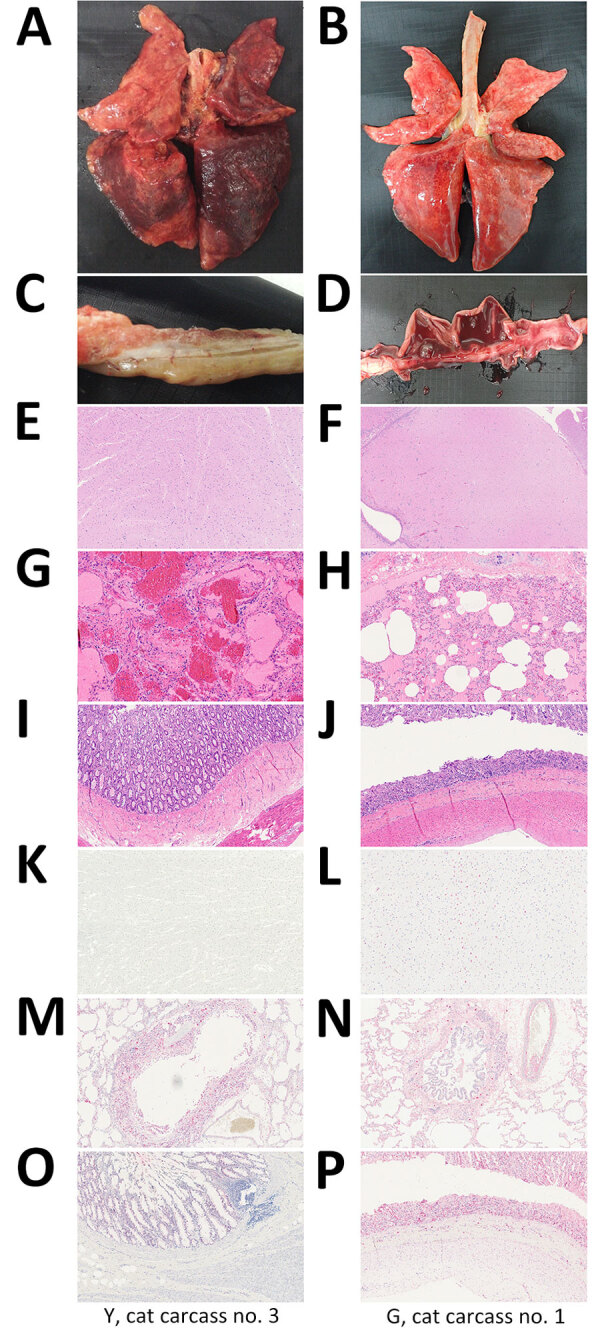
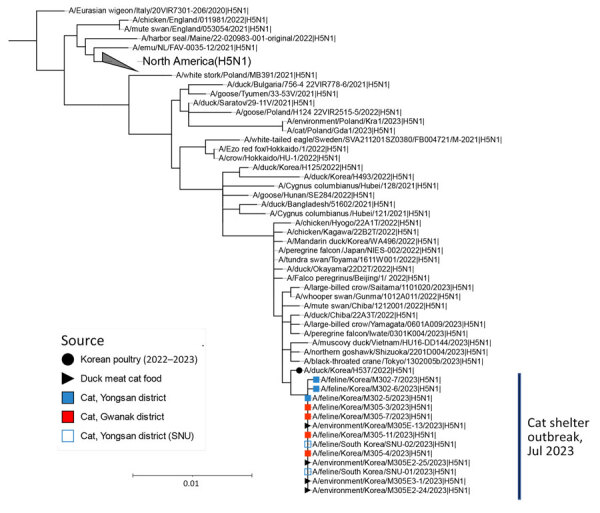
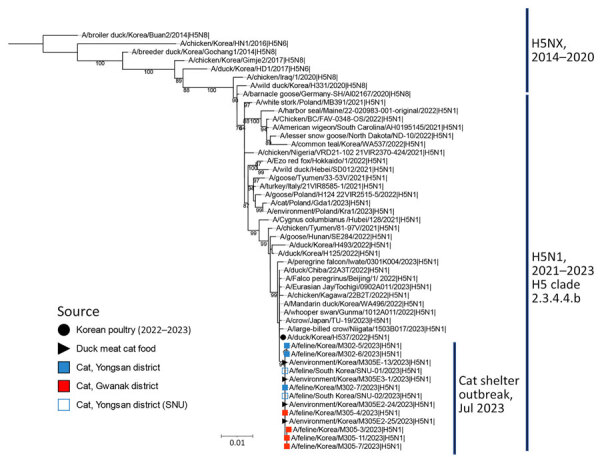
In July 2023, cases of highly pathogenic avian influenza (HPAI) were reported at 2 shelters for stray cats in Seoul, South Korea. The cause of infection was suspected to be improperly sterilized raw food made from domestic duck meat, which was manufactured in South Korea. All viruses isolated from cats at the shelters and from the raw food belonged to HPAI A(H5N1) clade 2.3.4.4b. The gene constellation of all viruses was most similar to that of viruses isolated in Korea in November 2022. Of note, the viruses isolated from infected cats harbored mutations E627K or D701N in polymerase basic 2, which are indicative of adaptation to mammals. Postmortem examination revealed systemic pathologic lesions and the presence of widespread virus in different tissues. Thus, consumption of raw duck meat contaminated with HPAI virus likely caused systemic symptoms and death in cats, indicating the introduction of mammal-adapted mutations of the virus.
2023 年 7 月,韩国首尔的两家流浪猫收容所报告了高致病性禽流感(HPAI)病例。感染原因疑似是来自韩国的未经过适当消毒的、用国产鸭肉制成的生食。从收容所的猫和生食中分离出的所有病毒均属于 HPAI A(H5N1) 分支 2.3.4.4b。所有病毒的基因组合与 2022 年 11 月在韩国分离的病毒最为相似。值得注意的是,从感染猫中分离出的病毒在聚合酶碱性 2 中具有 E627K 或 D701N 突变,这表明其对哺乳动物的适应性。尸检显示存在全身性病理损伤和广泛的病毒在不同组织中的存在。因此,食用被 HPAI 病毒污染的生鸭肉可能导致猫出现全身症状和死亡,表明病毒引入了适应哺乳动物的突变。