Department of Radiology, Shandong Provincial Hospital Affiliated to Shandong First Medical University, Jinan, China.
Russell H. Morgan Department of Radiology and Radiological Science, The Johns Hopkins University School of Medicine, Baltimore, Maryland, USA.
Hum Brain Mapp. 2024 Nov;45(16):e70067. doi: 10.1002/hbm.70067.
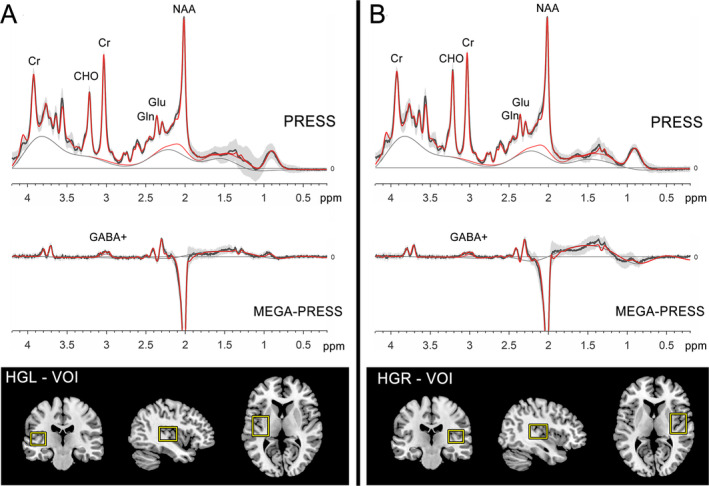
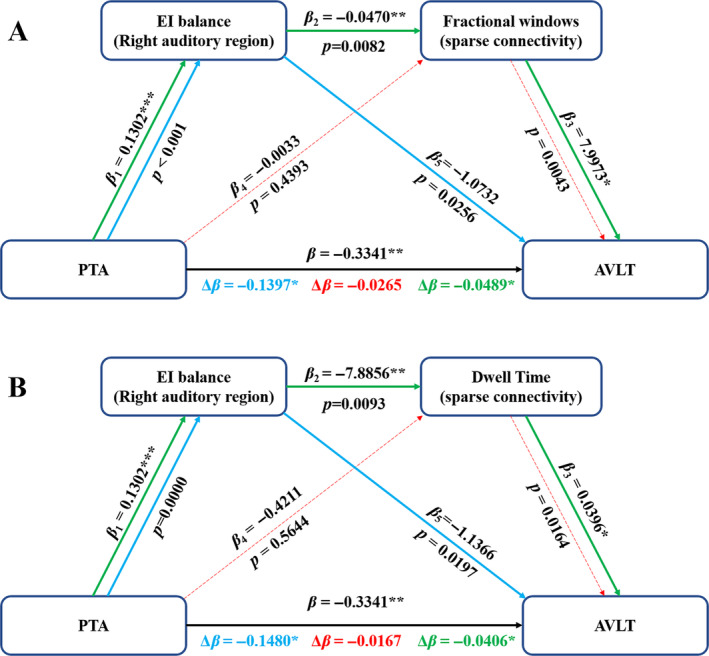
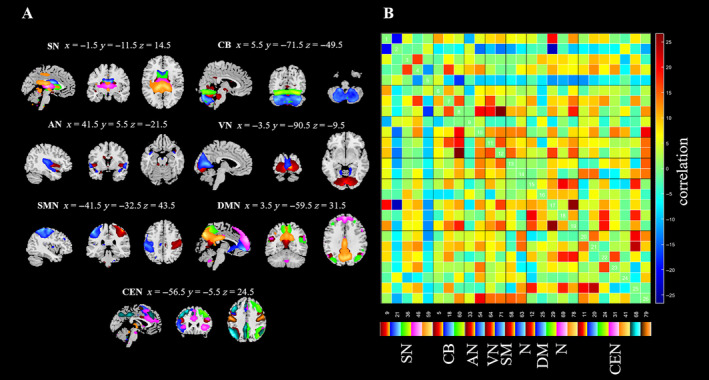
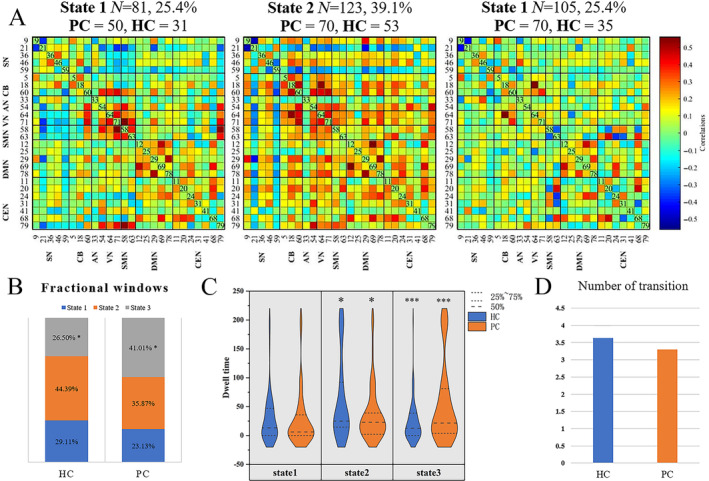
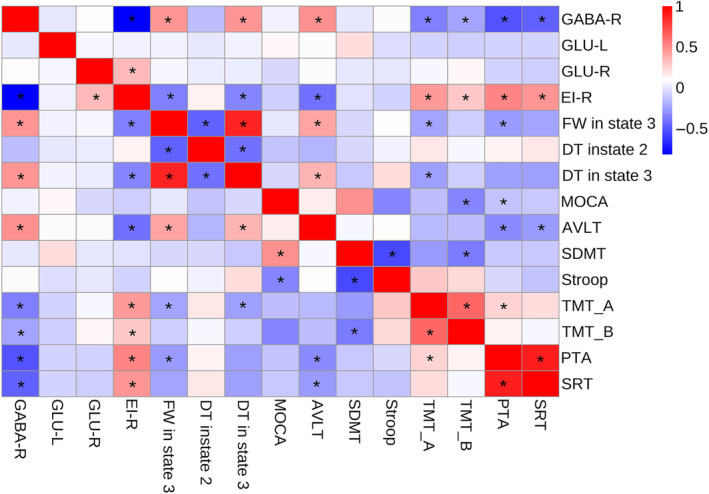
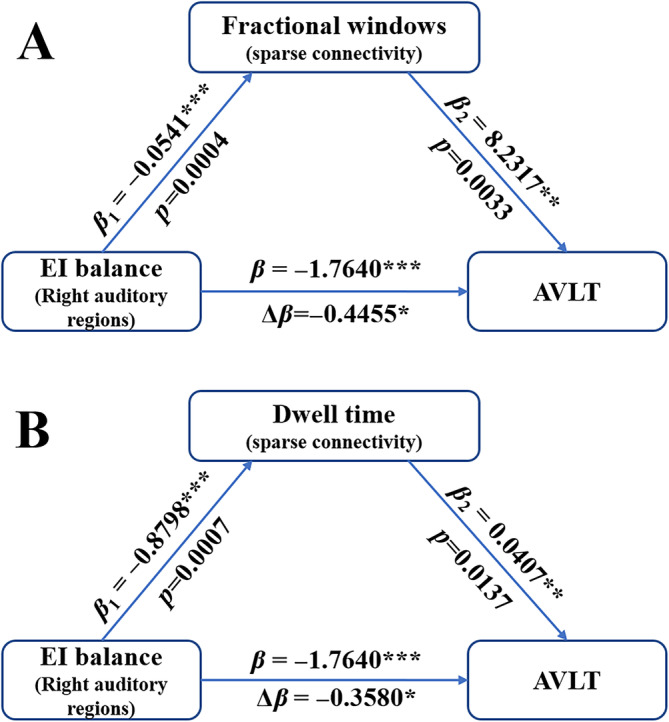
Sensory deprivation theory is an important hypothesis involving potential pathways between hearing loss and cognitive impairment in patients with presbycusis. The theory suggests that prolonged auditory deprivation in presbycusis, including neural deafferentation, cortical reallocation, and atrophy, causes long-lasting changes and reorganization in brain structure and function. However, neurophysiological changes underlying the cognition-ear link have not been explored. In this study, we recruited 98 presbycusis patients and 60 healthy controls and examined the differences between the two groups in gamma-aminobutyric acid (GABA) and glutamate (Glu) levels in bilateral auditory cortex, excitation-inhibition (E/I) balance (Glu/GABA ratio), dynamic functional network connectivity (dFNC), hearing ability and cognitive performance. Then, correlations with each other were investigated and variables with statistical significance were further analyzed using the PROCESS Macro in SPSS. GABA levels in right auditory cortex and Glu levels in bilateral auditory cortex were lower but E/I balance in right auditory cortex were higher in presbycusis patients compared to healthy controls. Hearing assessments and cognitive performance were worse in presbycusis patients. Three recurring connectivity states were identified after dFNC analysis: State 1 (least frequent, middle-high dFNC strength with negative functional connectivity), State 2 (high dFNC strength), and State 3 (most frequent, low dFNC strength). The occurrence and dwell time of State 3 were higher, on the other hand, the dwell time of State 2 decreased in patients with presbycusis compared to healthy controls. In patients with presbycusis, worse hearing assessments and cognition were correlated with decreased GABA levels, increased E/I balance, and aberrant dFNC, decreased GABA levels and increased E/I balance were correlated with decreased occurrence and dwell time in State 3. In the mediation model, the fractional windows, as well as dwell time in State 3, mediated the relationship between the E/I balance in right auditory cortex and episodic memory (Auditory Verbal Learning Test, AVLT) in presbycusis. Moreover, in patients with presbycusis, we found that worse hearing loss contribute to lower GABA levels, higher E/I balance, and further impact aberrant dFNC, which caused lower AVLT scores. Overall, the results suggest that a shift in E/I balance in right auditory cortex plays an important role in cognition-ear link reorganization and provide evidence for sensory deprivation theory, enhancing our understanding the connection between neurophysiological changes and cognitive impairment in presbycusis. In presbycusis patients, E/I balance may serve as a potential neuroimaging marker for exploring and predicting cognitive impairment.
感觉剥夺理论是一个重要的假说,涉及到老年性聋患者听力损失和认知障碍之间的潜在途径。该理论认为,老年性聋中长期的听觉剥夺,包括神经去传入、皮质再分配和萎缩,会导致大脑结构和功能的持久变化和重组。然而,认知与听觉之间联系的神经生理学变化尚未得到探索。在这项研究中,我们招募了 98 名老年性聋患者和 60 名健康对照者,并检查了两组双侧听觉皮层中γ-氨基丁酸(GABA)和谷氨酸(Glu)水平、兴奋抑制平衡(Glu/GABA 比)、动态功能网络连接(dFNC)、听力能力和认知表现的差异。然后,我们研究了彼此之间的相关性,并使用 SPSS 中的 PROCESS Macro 对具有统计学意义的变量进行了进一步分析。与健康对照组相比,老年性聋患者的右侧听觉皮层中的 GABA 水平较低,双侧听觉皮层中的 Glu 水平较低,但右侧听觉皮层中的兴奋抑制平衡较高。老年性聋患者的听力评估和认知表现更差。通过 dFNC 分析,确定了三种重复出现的连接状态:状态 1(最不频繁,具有负功能连接的中高 dFNC 强度)、状态 2(高 dFNC 强度)和状态 3(最频繁,低 dFNC 强度)。与健康对照组相比,老年性聋患者状态 3的出现和停留时间更高,而状态 2的停留时间减少。在老年性聋患者中,较差的听力评估和认知与 GABA 水平降低、兴奋抑制平衡增加和异常 dFNC 有关,GABA 水平降低和兴奋抑制平衡增加与状态 3的出现和停留时间减少有关。在中介模型中,分数窗口以及状态 3 的停留时间,介导了右侧听觉皮层兴奋抑制平衡与老年性聋患者情景记忆(听觉词语学习测试,AVLT)之间的关系。此外,在老年性聋患者中,我们发现听力损失越严重,GABA 水平越低,兴奋抑制平衡越高,进一步导致异常 dFNC,从而导致 AVLT 分数越低。总的来说,结果表明右侧听觉皮层兴奋抑制平衡的转变在认知与听觉联系的重组中起着重要作用,并为感觉剥夺理论提供了证据,增强了我们对老年性聋中神经生理学变化与认知障碍之间联系的理解。在老年性聋患者中,兴奋抑制平衡可能是探索和预测认知障碍的潜在神经影像学标志物。