Zhang Yixiao, Kang Wanying, Marshall John
Department of Earth, Atmospheric and Planetary Sciences, Massachusetts Institute of Technology, Cambridge, MA 02139, USA.
Sci Adv. 2024 Nov 8;10(45):eadn6857. doi: 10.1126/sciadv.adn6857. Epub 2024 Nov 6.
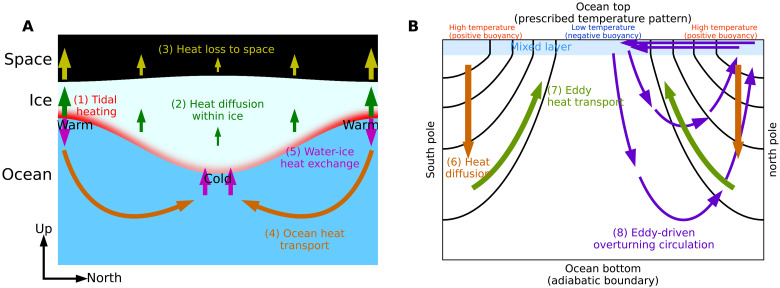
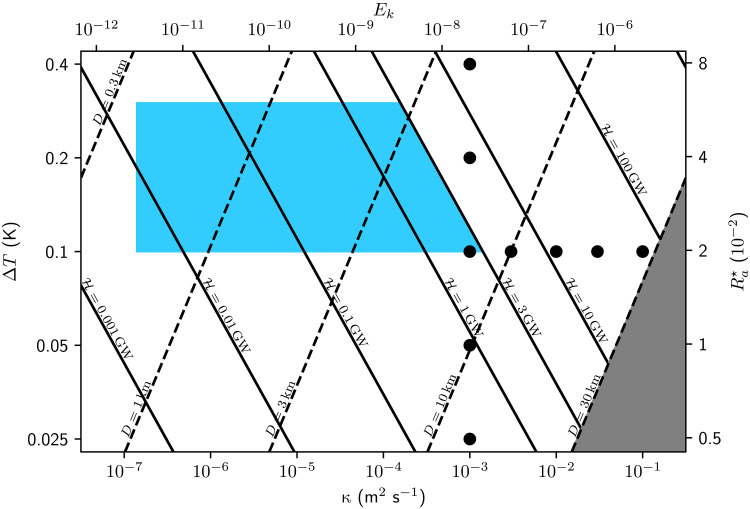
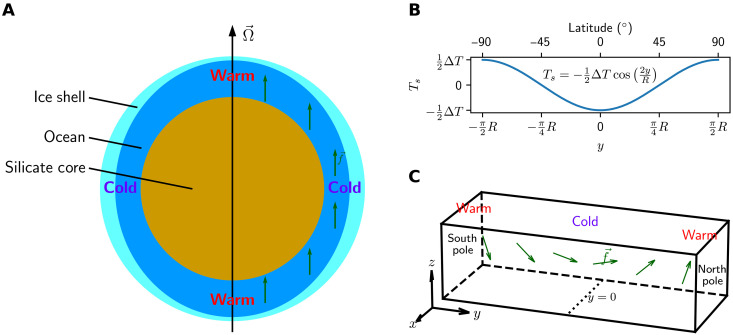
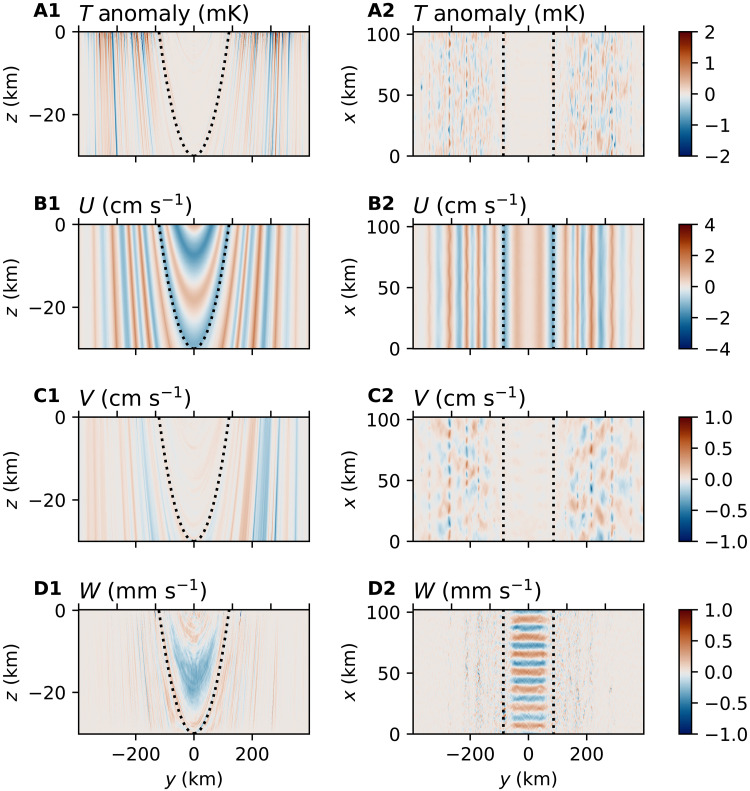
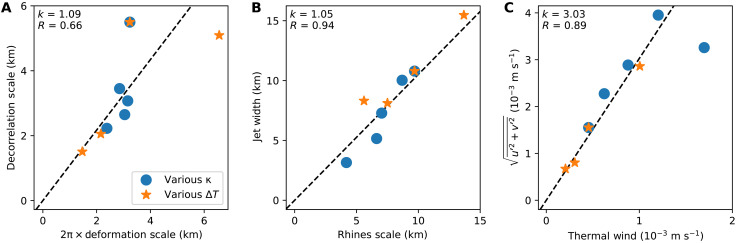
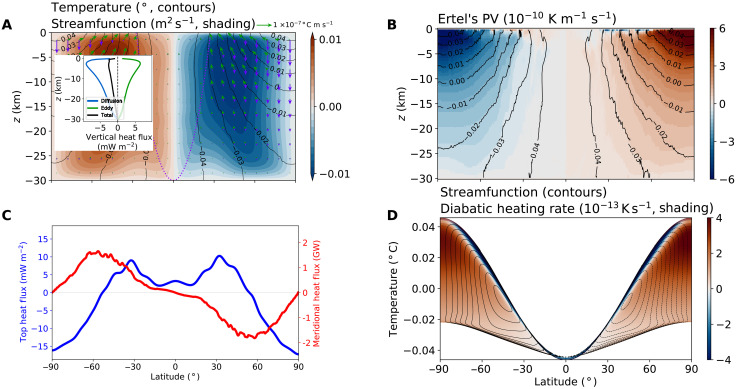
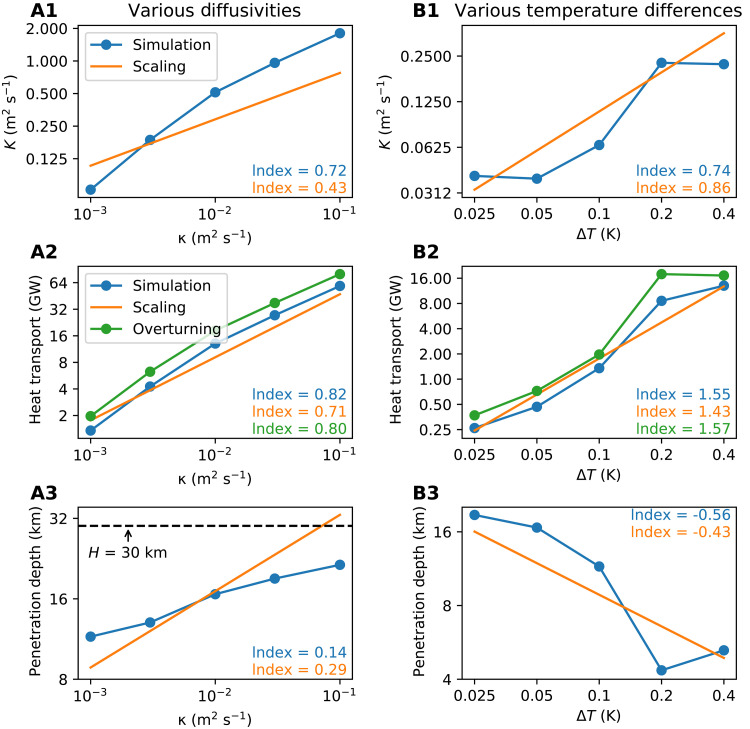
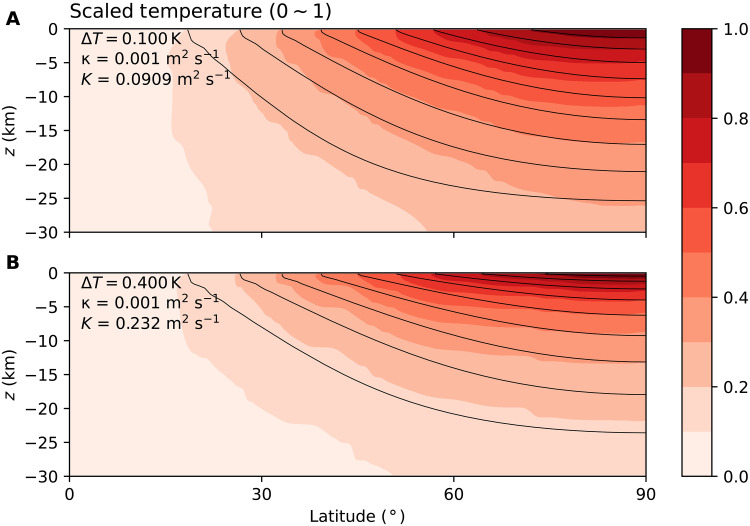
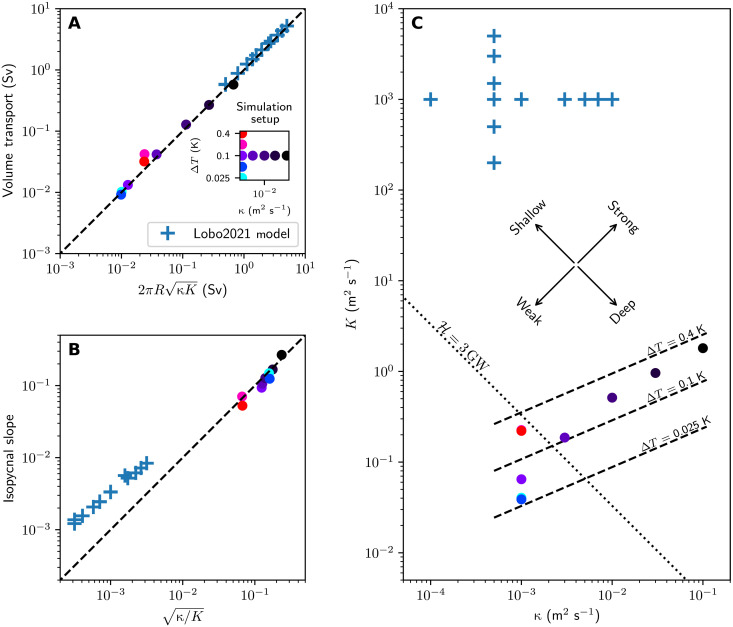
We explore ocean circulation on a rotating icy moon driven by temperature gradients imposed at its upper surface due to the suppression of the freezing point of water with pressure, as might be induced by ice thickness variations on Enceladus. Using high-resolution simulations, we find that eddies dominate the circulation and arise from baroclinic instability, analogous to Earth's weather systems. Multiple alternating jets, resembling those of Jupiter's atmosphere, are sustained by these baroclinic eddies. We establish a theoretical model of the stratification and circulation and present scaling laws for the magnitude of the meridional heat transport. These are tested against numerical simulations. Through identification of key nondimensional numbers, our simplified model is applied to other icy moons. We conclude that baroclinic instability is central to the general circulation of icy moons.
我们研究了一个自转的冰卫星上的海洋环流,该环流由其表面因压力导致水的冰点降低(如土卫二上冰厚度变化可能引发的情况)而形成的温度梯度驱动。通过高分辨率模拟,我们发现涡旋主导着环流,并且它们源于斜压不稳定,类似于地球的天气系统。类似于木星大气中的多个交替喷流,由这些斜压涡旋维持。我们建立了分层和环流的理论模型,并给出了经向热传输量的标度律。通过数值模拟对这些进行了检验。通过识别关键的无量纲数,我们将简化模型应用于其他冰卫星。我们得出结论,斜压不稳定是冰卫星总体环流的核心。