Quiver Bioscience, Cambridge, MA, USA.
Q-State Biosciences, Cambridge, MA, USA.
Commun Biol. 2024 Nov 6;7(1):1447. doi: 10.1038/s42003-024-07120-6.
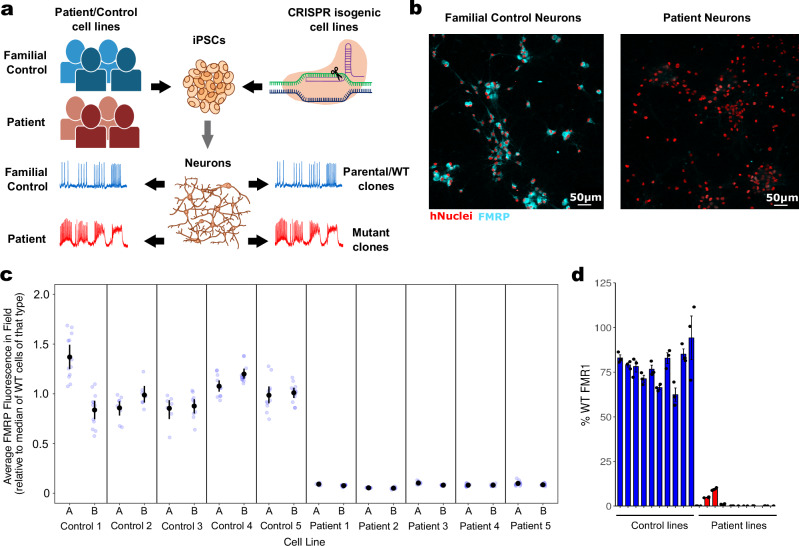
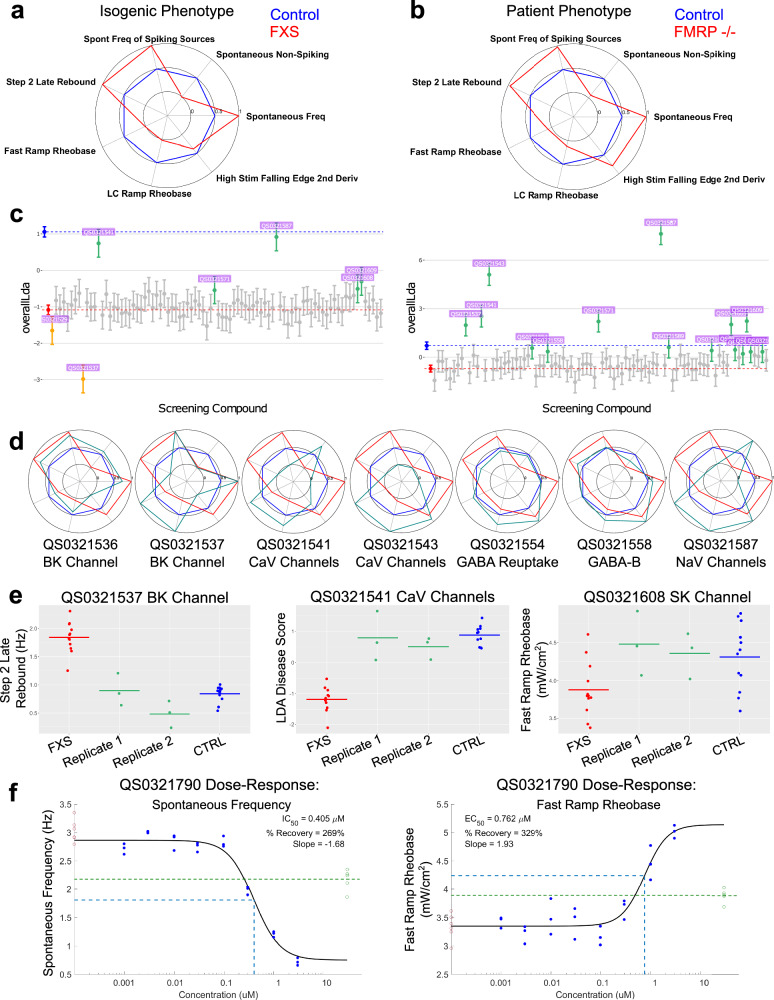
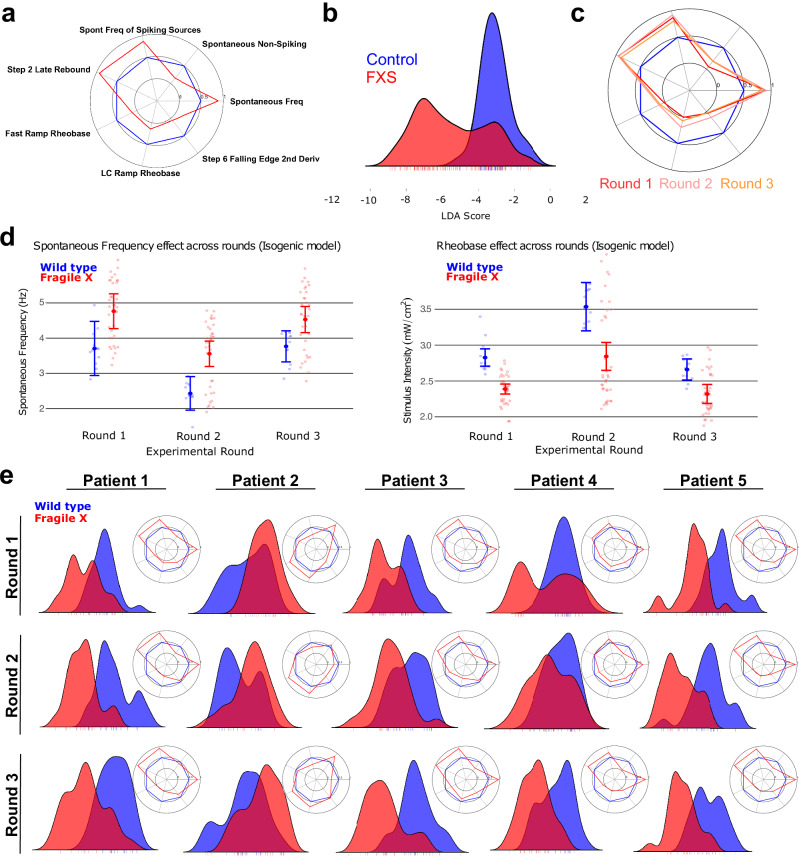
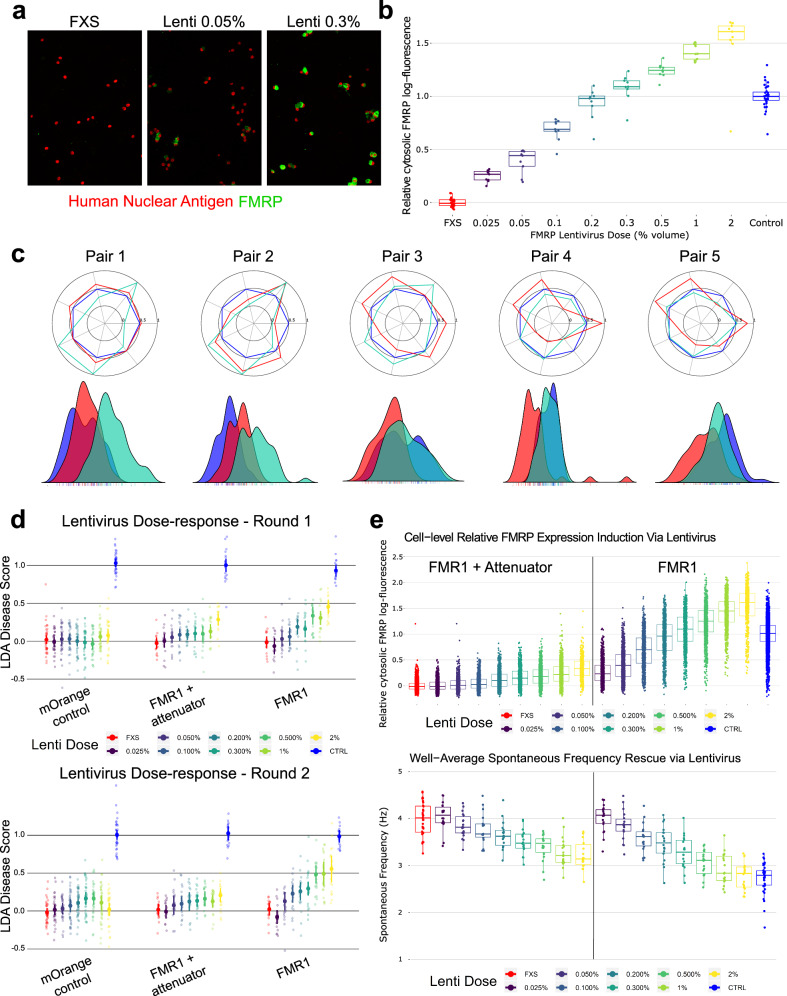
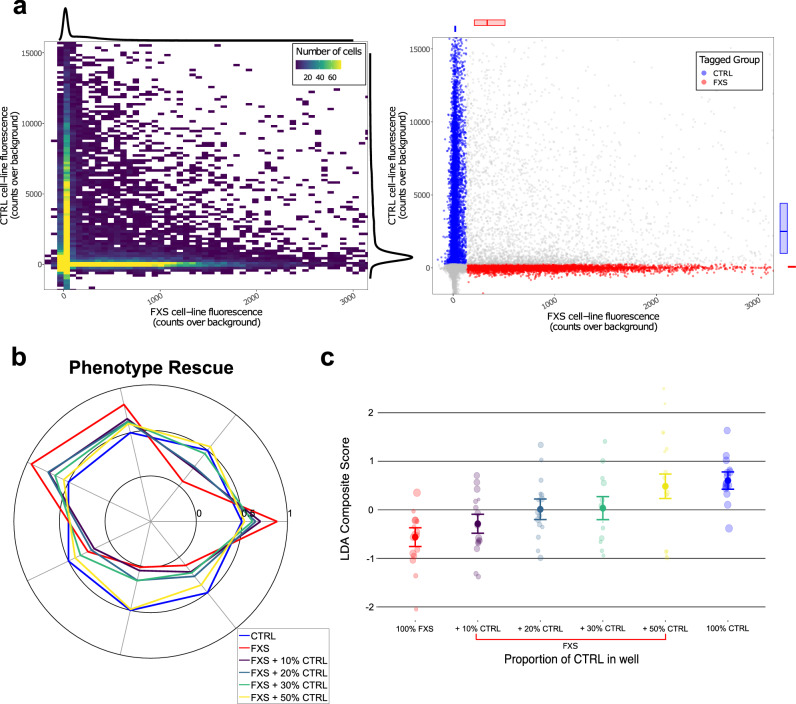
Fragile X syndrome (FXS) is a neurodevelopmental disorder caused by hypermethylation of expanded CGG repeats (>200) in the FMR1 gene leading to gene silencing and loss of Fragile X Messenger Ribonucleoprotein (FMRP) expression. FMRP plays important roles in neuronal function, and loss of FMRP in mouse and human FXS cell models leads to aberrant synaptic signaling and hyperexcitability. Multiple drug candidates have advanced into clinical trials for FXS, but no efficacious treatment has been identified to date, possibly as a consequence of poor translation from pre-clinical animal models to human. Here, we use a high resolution all-optical electrophysiology platform applied to multiple FXS patient-derived and CRISPR/Cas9-generated isogenic neuronal cell lines to develop a multi-parametric FXS disease phenotype. This neurophysiological phenotype was optimized and validated into a high throughput assay based on the amount of FMRP re-expression and the number of healthy neurons in a mosaic network necessary for functional rescue. The resulting highly sensitive and multiparameter functional assay can now be applied as a discovery platform to explore new therapeutic approaches for the treatment of FXS.
脆性 X 综合征(FXS)是一种神经发育障碍,由 FMR1 基因中扩展的 CGG 重复(>200)的过度甲基化引起,导致基因沉默和脆性 X 信使核糖核蛋白(FMRP)表达缺失。FMRP 在神经元功能中发挥重要作用,而在小鼠和人类 FXS 细胞模型中缺失 FMRP 会导致异常的突触信号传递和过度兴奋。多种药物候选物已进入 FXS 的临床试验阶段,但迄今为止尚未确定有效的治疗方法,这可能是由于从临床前动物模型到人类的转化效果不佳。在这里,我们使用高分辨率全光学电生理学平台,应用于多个 FXS 患者来源和 CRISPR/Cas9 生成的同基因神经元细胞系,开发出多参数 FXS 疾病表型。该神经生理学表型经过优化和验证,可转化为高通量测定法,基于在功能恢复所需的马赛克网络中 FMRP 重新表达的数量和健康神经元的数量。由此产生的高灵敏度和多参数功能测定法现在可作为发现平台,用于探索治疗 FXS 的新治疗方法。