Department of Pediatric Cardiology and Pediatric Cardiac Surgery, Nantes Université, CHU Nantes, FHU PRECICARE, Nantes, F-44000, France.
Nantes Université, CHU Nantes, INSERM, CIC FEA 1413, Nantes, F-44000, France.
BMC Med Educ. 2024 Nov 6;24(1):1268. doi: 10.1186/s12909-024-06260-x.
Effective physician-patient communication is crucial to compassionate healthcare, particularly when conveying life-altering diagnoses such as those associated with congenital heart diseases. Despite its importance, medical practitioners often face challenges in communicating effectively. Because of these gaps, we aim to introduce a simulation-based training protocol to improve pediatric cardiology trainee's communication skills. This study will be conducted in collaboration with associations supporting caregivers of children with congenital heart disease. It strives to demonstrate how specific training programs can efficiently foster humanistic, patient-centered care in standard medical practice.
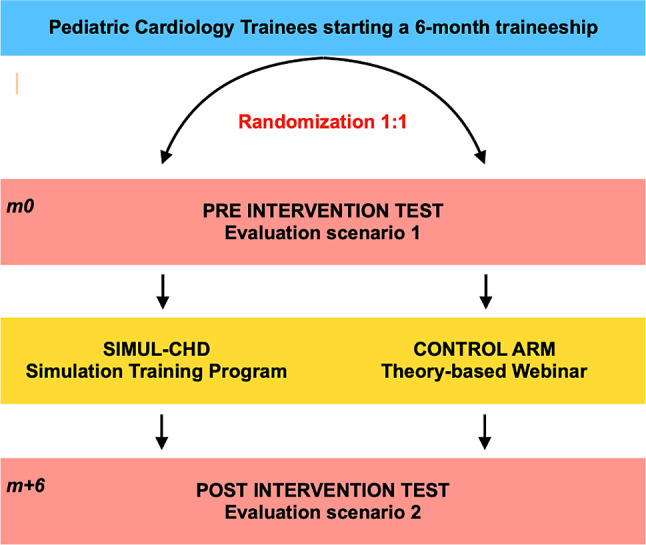
This multicenter, open-label randomized controlled trial will be conducted in pediatric cardiac units and simulation centers of across 10 universities in France. The study population comprises pediatric cardiologists in training (including pediatric cardiac fellows or specialist assistants). The SIMUL-CHD intervention will consist of simulation-based training with standardized patients, focusing on improving communication skills for pediatric cardiology trainees during diagnostic counselling. Patients and caregivers have been recruited from a National Patient Association named "Petit Cœur de Beurre". The primary outcome is the quality of physicians' communication skills. The evaluation committee, which will review video recordings of the sessions, will be blinded to which participants received simulation-based training (group of interest) and which received theory-based training (control group). Secondary outcomes are the effect of SIMUL-CHD on empathy and anxiety levels in young pediatric cardiologists. Baseline scores pre and post-intervention will be compared, and skill improvement resulting from the intervention measured.
Simulation-based training has proven efficacy in teaching technical skills in various scenarios however its application to communication skills in pediatric cardiology remains unexplored. The involvement of experienced parents provides a unique perspective, incorporating their profound understanding of the emotional challenges and specific hurdles faced by families dealing with congenital heart disease.
This trial is registered with the OSF registry (registered https://osf.io/ed78q ).
有效的医患沟通对于富有同情心的医疗保健至关重要,特别是在传达改变生活的诊断时,例如与先天性心脏病相关的诊断。尽管这很重要,但医疗从业者在有效沟通方面常常面临挑战。由于这些差距,我们旨在引入基于模拟的培训方案,以提高儿科心脏病学学员的沟通技巧。这项研究将与支持先天性心脏病患儿照顾者的协会合作进行。它旨在展示特定的培训计划如何在标准医疗实践中有效地培养人文关怀和以患者为中心的护理。
这是一项多中心、开放标签、随机对照试验,将在法国 10 所大学的儿科心脏病房和模拟中心进行。研究人群包括儿科心脏病学受训者(包括儿科心脏病研究员或专科助理)。SIMUL-CHD 干预措施将包括使用标准化患者进行基于模拟的培训,重点是提高儿科心脏病学受训者在诊断咨询期间的沟通技巧。患者和照顾者是从一个名为“Petit Cœur de Beurre”的全国患者协会招募的。主要结局是医生沟通技巧的质量。将审查会议录像的评估委员会将对接受基于模拟的培训(感兴趣组)的参与者和接受基于理论的培训(对照组)的参与者进行盲法评估。次要结局是 SIMUL-CHD 对年轻儿科心脏病学家同理心和焦虑水平的影响。将比较干预前后的基线评分,并测量干预措施带来的技能提高。
基于模拟的培训已被证明在教授各种场景中的技术技能方面是有效的,但其在儿科心脏病学中的沟通技巧应用仍有待探索。有经验的父母的参与提供了独特的视角,他们深刻理解了处理先天性心脏病的家庭所面临的情感挑战和具体障碍。
该试验在 OSF 注册处注册(注册网址:https://osf.io/ed78q )。