Department of Emergency Medicine, Northwestern University Feinberg School of Medicine, 211 East Ontario, Suite 200, Chicago, IL, 60611, USA.
Division of General Internal Medicine and Geriatrics, Northwestern University, Philadelphia, PA, USA.
BMC Med Educ. 2020 Feb 19;20(1):49. doi: 10.1186/s12909-020-1926-y.
Diagnostic uncertainty occurs frequently in emergency medical care, with more than one-third of patients leaving the emergency department (ED) without a clear diagnosis. Despite this frequency, ED providers are not adequately trained on how to discuss diagnostic uncertainty with these patients, who often leave the ED confused and concerned. To address this training need, we developed the Uncertainty Communication Education Module (UCEM) to teach physicians how to discuss diagnostic uncertainty. The purpose of the study is to evaluate the effectiveness of the UCEM in improving physician communications.
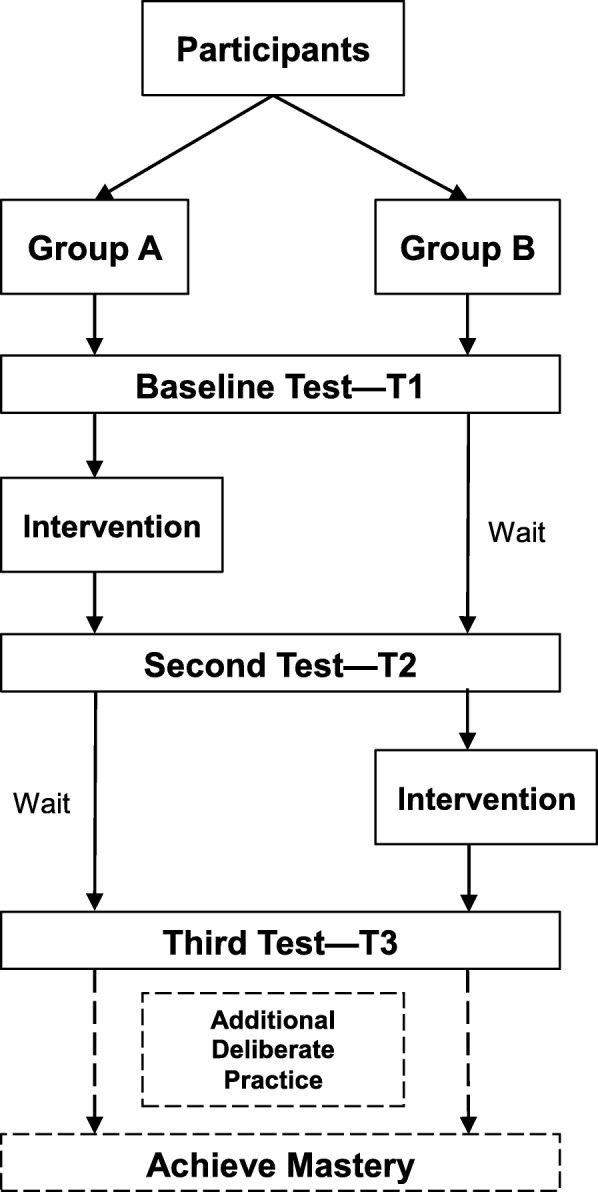
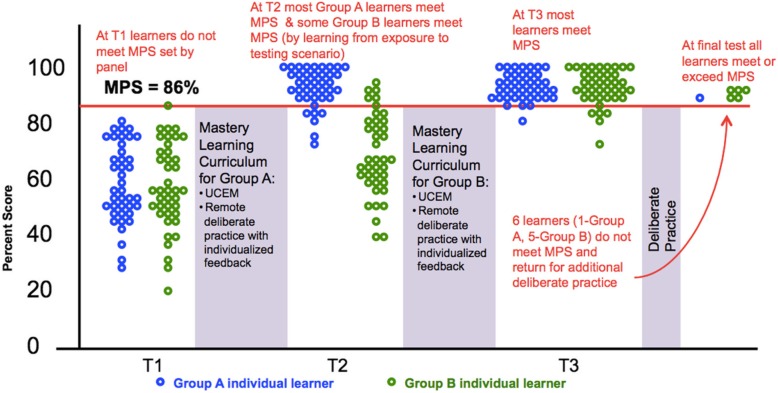
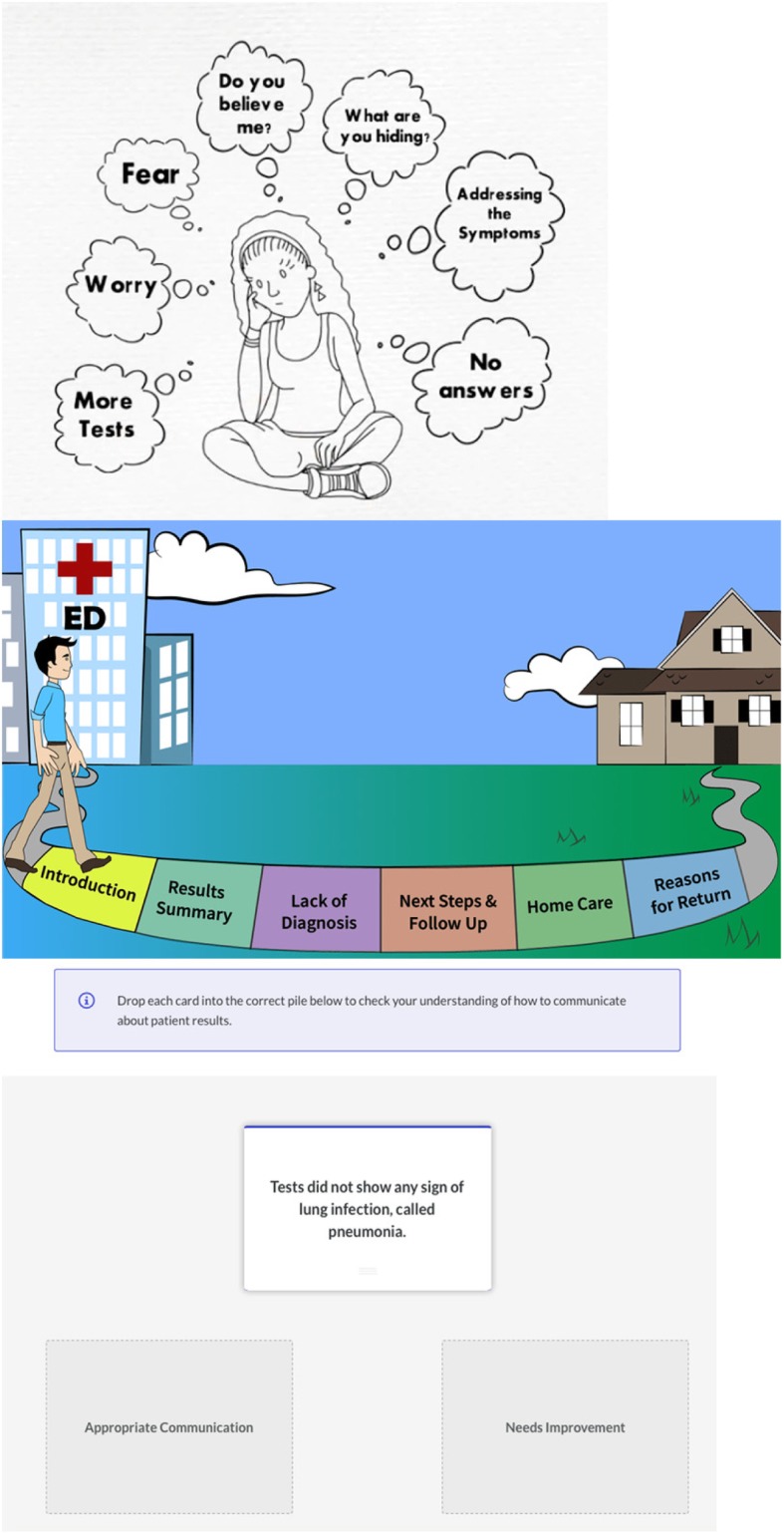
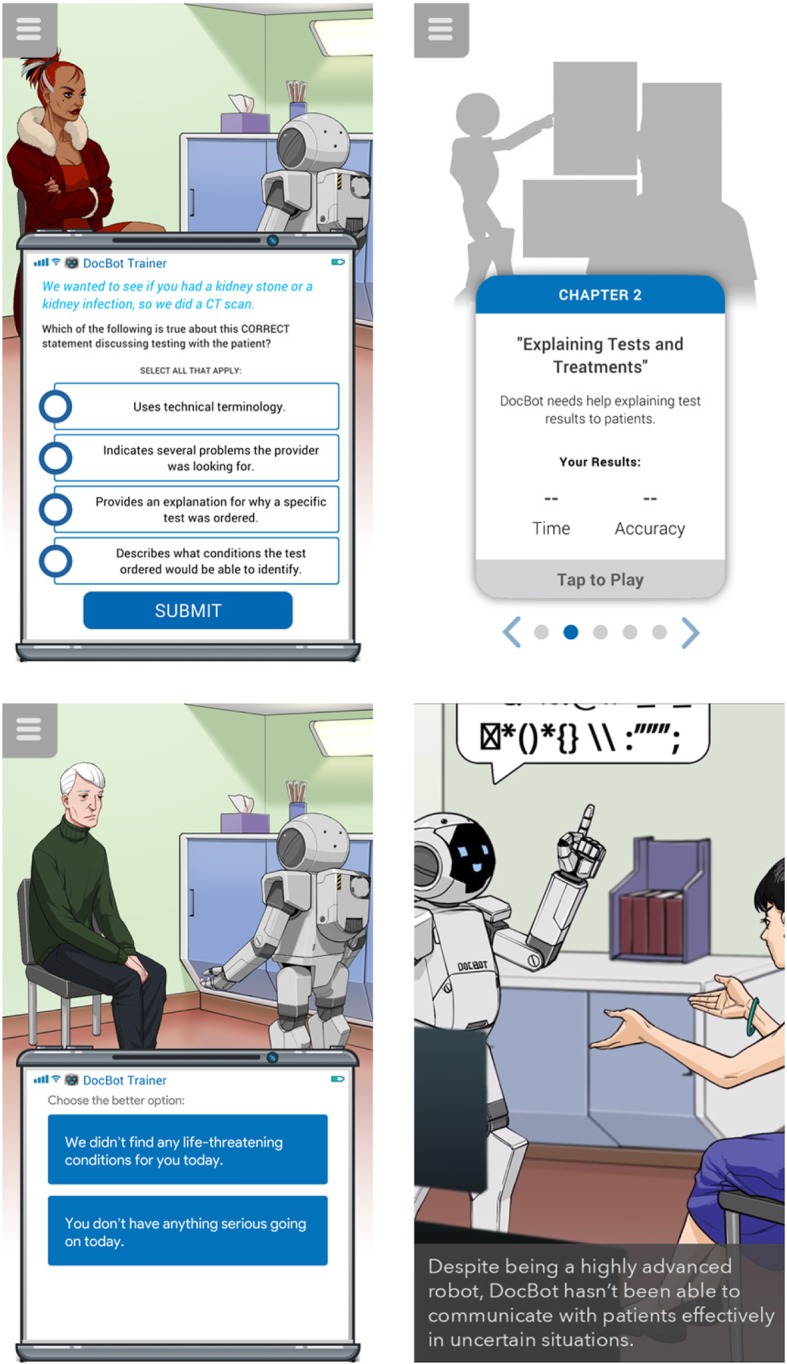
The trial is a multicenter, two-arm randomized controlled trial designed to teach communication skills using simulation-based mastery learning (SBML). Resident emergency physicians from two training programs will be randomly assigned to immediate or delayed receipt of the two-part UCEM intervention after completing a baseline standardized patient encounter. The two UCEM components are: 1) a web-based interactive module, and 2) a smart-phone-based game. Both formats teach and reinforce communication skills for patient cases involving diagnostic uncertainty. Following baseline testing, participants in the immediate intervention arm will complete a remote deliberate practice session via a video platform and subsequently return for a second study visit to assess if they have achieved mastery. Participants in the delayed intervention arm will receive access to UCEM and remote deliberate practice after the second study visit. The primary outcome of interest is the proportion of residents in the immediate intervention arm who achieve mastery at the second study visit.
Patients' understanding of the care they received has implications for care quality, safety, and patient satisfaction, especially when they are discharged without a definitive diagnosis. Developing a patient-centered diagnostic uncertainty communication strategy will improve safety of acute care discharges. Although use of SBML is a resource intensive educational approach, this trial has been deliberately designed to have a low-resource, scalable intervention that would allow for widespread dissemination and uptake.
The trial was registered at clinicaltrials.gov (NCT04021771). Registration date: July 16, 2019.
在急诊医疗中,诊断不确定性经常发生,超过三分之一的患者离开急诊部(ED)时仍未明确诊断。尽管这种情况很常见,但 ED 医护人员并未接受过如何与这些患者讨论诊断不确定性的充分培训,这些患者离开 ED 时往往感到困惑和担忧。为了解决这一培训需求,我们开发了不确定性沟通教育模块(UCEM),以教授医生如何讨论诊断不确定性。本研究的目的是评估 UCEM 在提高医生沟通能力方面的有效性。
该试验是一项多中心、双臂随机对照试验,旨在通过基于模拟的掌握学习(SBML)教授沟通技巧。来自两个培训项目的住院医师急诊医生将在完成基线标准化患者就诊后,随机分配到立即或延迟接受两部分 UCEM 干预。UCEM 的两个组成部分是:1)基于网络的互动模块,和 2)基于智能手机的游戏。这两种形式都教授并强化了涉及诊断不确定性的患者病例的沟通技巧。在基线测试后,立即干预组的参与者将通过视频平台完成远程刻意练习课程,然后返回进行第二次研究访问,以评估他们是否已经掌握。延迟干预组的参与者将在第二次研究访问后获得 UCEM 和远程刻意练习的访问权限。主要研究结果是立即干预组的居民在第二次研究访问中达到掌握程度的比例。
患者对其接受的护理的理解对护理质量、安全性和患者满意度有影响,尤其是当他们在未明确诊断的情况下出院时。制定以患者为中心的诊断不确定性沟通策略将提高急性护理出院的安全性。虽然使用 SBML 是一种资源密集型教育方法,但本试验是专门设计的,具有低资源、可扩展的干预措施,可实现广泛传播和采用。
该试验在 clinicaltrials.gov 上注册(NCT04021771)。注册日期:2019 年 7 月 16 日。