Department of Pharmacy, College of Medicine and Health Sciences, Adigrat University, P.O. Box 50, Adigrat, Tigrai, Ethiopia.
Antimicrob Resist Infect Control. 2024 Nov 6;13(1):133. doi: 10.1186/s13756-024-01490-6.
The World Health Organization (WHO) defines rational use of drug as a state in which medications are received by patients appropriately according to their clinical needs and individual requirement, for adequate period and at the right cost. More than 50% of all medicines are prescribed, dispensed, or sold inappropriately worldwide. This study aimed to evaluate the prescribing patterns in Adigrat general hospital, Tigrai, Ethiopia.
A retrospective cross-sectional study was done to evaluate prescription patterns. A systematic random sampling technique was used to select 600 prescriptions and the prescriptions were reviewed using WHO/International Network of Rational Use of Drugs prescribing indicators. Data was collected from prescriptions dispensed from 01 March 2023 to 30 March 2024 at outpatient pharmacy of Adigrat general hospital. Data was analyzed using SPSS version 21 and a p-value < 0.05 was declared statistically significant.
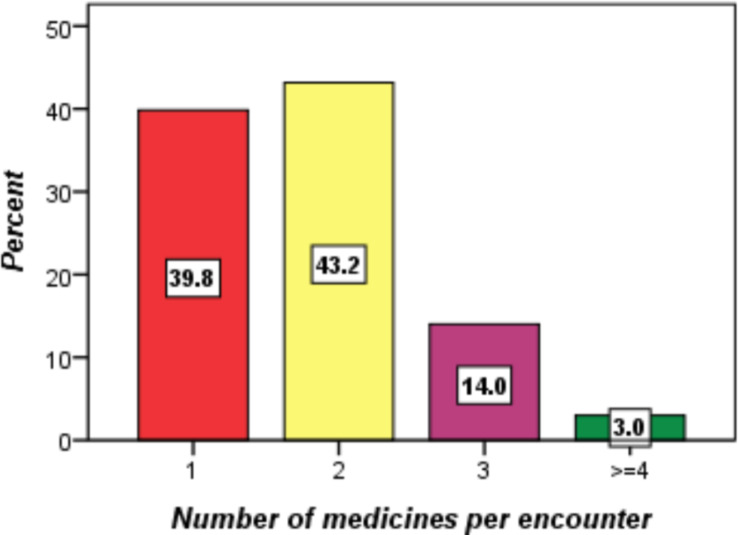
A total of 1088 medicines were prescribed in 600 prescription encounters, giving an average number of 1.8 (± 0.83) medicines per encounter. The percentage of medicines prescribed by generic name was 91.5% while 98.7% of the medicines were prescribed from essential medicine list (EML). Besides, the percentages of encounters containing at least one antibiotic and one injection were 44.5% and 7.2%, respectively. A total of 340 antibiotics were prescribed in 267 encounters. Penicillins (34.4%), macrolides (23.8%) and fluoroquinolones (17.1%) were the most prevalent antibiotics classes. The "Access" and "Watch" groups covered 54.4% and 45.6% of the total antibiotics prescribed, respectively. Being under 18 years old [Adjusted Odds Ratio (AOR): 9.830, CI: 4.062-23.786], being prescribed with three medicines (AOR: 3.247, CI: 1.571-6.708) and certain diagnosis like diseases of the respiratory system (AOR: 3.750, CI: 2.136-6.584) were significantly associated with antibiotic prescribing.
This study showed deviations of prescribing patterns from WHO standards. The percentage of prescriptions with antibiotic was far from WHO optimal value. The use of antibiotics from "Access" group was below WHO standard. The percentage of medicines prescribed by generic name and the percentage of encounters with injection also deviated from WHO standard. Antibiotics prescribing showed significantly association with age, number of medicines and certain diseases.
世界卫生组织(WHO)将合理用药定义为根据患者的临床需求和个体需求,在适当的时间以适当的费用为患者提供药物的状态。全球有超过 50%的药物被不当开具、配药或销售。本研究旨在评估埃塞俄比亚提格雷州阿迪格拉特综合医院的处方模式。
采用回顾性横断面研究评估处方模式。采用系统随机抽样技术抽取 600 份处方,使用世界卫生组织/国际合理用药网络(INRUD)处方指标对处方进行评估。数据来自 2023 年 3 月 1 日至 2024 年 3 月 30 日在阿迪格拉特综合医院门诊药房配药的处方。使用 SPSS 版本 21 进行数据分析,p 值<0.05 被认为具有统计学意义。
在 600 次就诊中开具了 1088 种药物,每次就诊平均开具 1.8(±0.83)种药物。以通用名开处方的比例为 91.5%,而 98.7%的药物来自基本药物清单(EML)。此外,至少含有一种抗生素和一种注射剂的就诊比例分别为 44.5%和 7.2%。在 267 次就诊中开具了 340 种抗生素。青霉素(34.4%)、大环内酯类(23.8%)和氟喹诺酮类(17.1%)是最常见的抗生素类别。“可获得”和“关注”组分别覆盖了总抗生素处方的 54.4%和 45.6%。年龄在 18 岁以下(调整后的优势比[OR]:9.830,95%置信区间[CI]:4.062-23.786)、开具三种药物(OR:3.247,95%CI:1.571-6.708)和某些诊断(如呼吸系统疾病,OR:3.750,95%CI:2.136-6.584)与抗生素处方显著相关。
本研究显示处方模式与世卫组织标准存在偏差。抗生素处方的比例远低于世卫组织的最佳值。来自“可获得”类别的抗生素使用低于世卫组织标准。以通用名开处方的比例和注射剂处方的比例也不符合世卫组织标准。抗生素处方与年龄、开具药物的数量和某些疾病显著相关。