Department of Pharmacy, Faculty of Medicine, Mbarara University of Science and Technology, Mbarara, Uganda.
Mubende Regional Referral Hospital, Mubende, Uganda.
BMC Pulm Med. 2021 Nov 15;21(1):374. doi: 10.1186/s12890-021-01739-5.
Respiratory tract infections (RTI) are the second most frequent diagnosis after Malaria amongst Outpatients in Uganda. Majority are Non pneumonia cough and flu which are self-limiting and often do not require antibacterials. However, antibiotics are continuously prescribed for these conditions and are a major contributor to antimicrobial resistance and wastage of health resources. Little is known about this problem in Uganda hence the impetus for the study.
To determine the antibacterial prescribing rate and associated factors among RTI outpatients in Mbarara municipality METHODOLOGY: This was a retrospective cross-sectional study on records of RTI outpatients from 1st April 2019 to 31st March 2020 (prior to the novel corona virus disease pandemic) in four selected public health facilities within Mbarara municipality. A pretested data caption tool was used to capture prescribing patterns using WHO/INRUD prescribing indicators. We used logistic regression to determine factors associated to antibacterial prescribing.
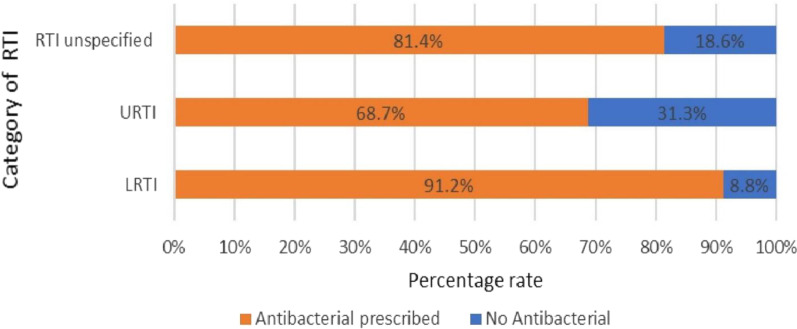
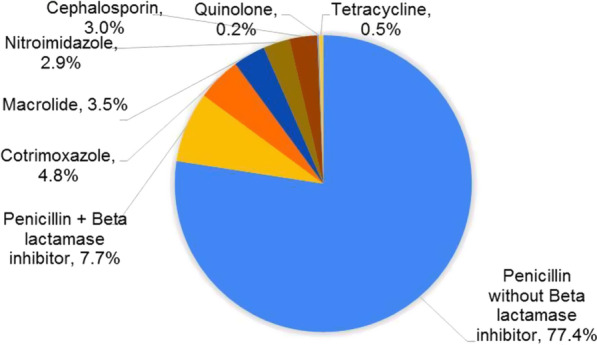
A total of 780 encounters were studied with adults (18-59 years) forming the largest proportion of age categories at (337, 43.15%) and more females (444, 56.85%) than men (337, 43.15%). The antibacterial prescribing rate was 77.6% (606) with Amoxicillin the most prescribed 80.4% (503). The prescribing pattern showed an average of 2.47 (sd 0.72) drugs per encounter and the percentage of encounters with injection at 1.5% (24). Drugs prescribed by generic (1557, 79%) and drugs prescribed from essential medicine list (1650, 84%) both not conforming to WHO/INRUD standard; an indicator of possible irrational prescribing. Female gender (adjusted odds ratio [aOR] = 1.51, 95% confidence interval [CI]: (1.06-2.16); 18-59 years age group (aOR = 1.66, 95% CI: 1.09-2.33) and Individuals prescribed at least three drugs were significantly more likely to have an antibacterial prescribed (aOR= 2.72, 95% CI: 1.86-3.98).
The study found a high antibacterial prescribing rate especially among patients with URTI, polypharmacy and non-conformity to both essential medicine list and generic name prescribing. This prescribing pattern does not comply with rational drug use policy and needs to be addressed through antimicrobial stewardship interventions, prescriber education on rational drug use and carrying out more research to determine the appropriateness of antibacterial prescribed.
呼吸道感染(RTI)是乌干达门诊患者除疟疾外第二常见的诊断。大多数是非肺炎咳嗽和流感,这些疾病是自限性的,通常不需要使用抗生素。然而,这些疾病仍在持续开具抗生素,这是导致抗生素耐药性和卫生资源浪费的主要原因。乌干达对这一问题知之甚少,因此该研究应运而生。
确定 Mbarara 市 RTI 门诊患者的抗生素处方率及相关因素。
这是一项回顾性横断面研究,对 2019 年 4 月 1 日至 2020 年 3 月 31 日(在新型冠状病毒疾病大流行之前)在 Mbarara 市四个选定的公共卫生机构就诊的 RTI 门诊患者的记录进行了研究。使用世卫组织/INRUD 处方指标,使用经过预测试的数据标题工具来捕捉处方模式。我们使用逻辑回归来确定与抗生素处方相关的因素。
共研究了 780 次就诊,18-59 岁的成年人是年龄类别中最大的比例(337,43.15%),女性(444,56.85%)多于男性(337,43.15%)。抗生素处方率为 77.6%(606),阿莫西林的处方率最高,为 80.4%(503)。处方模式显示平均每次就诊处方 2.47 种药物(标准差 0.72),注射处方比例为 1.5%(24)。处方中使用的药物均为通用名(1557,79%)和基本药物清单(1650,84%),均不符合世卫组织/INRUD 标准;这表明可能存在不合理的处方。女性(调整后的优势比[aOR] = 1.51,95%置信区间[CI]:(1.06-2.16);18-59 岁年龄组(aOR = 1.66,95%CI:1.09-2.33)和至少开三种药物的患者更有可能开抗生素处方(aOR = 2.72,95%CI:1.86-3.98)。
该研究发现,特别是在患有 URTI、多种药物治疗和不符合基本药物清单和通用名处方的患者中,抗生素处方率很高。这种处方模式不符合合理用药政策,需要通过抗菌药物管理干预、合理用药培训和开展更多研究来确定抗生素处方的适宜性来加以解决。