Centro de Investigação Interdisciplinar Em Sanidade Animal, Faculdade de Medicina Veterinária, Universidade de Lisboa, Av. da Universidade Técnica, Lisbon, 1300-477, Portugal.
Associate Laboratory for Animal and Veterinary Sciences, Av. da Universidade Técnica, Lisbon, 1300-477, Portugal.
BMC Vet Res. 2024 Nov 6;20(1):505. doi: 10.1186/s12917-024-04339-7.
Studying the effect of dietary Spirulina and lysozyme supplementation on the metabolome and proteome of liver tissue contributes to understanding potential hepatic adaptations of piglets to these novel diets. This study aimed to understand the influence of including 10% Spirulina on the metabolome and proteome of piglet liver tissue. Three groups of 10 post-weaned piglets, housed in pairs, were fed for 28 days with one of three experimental diets: a cereal and soybean meal-based diet (Control), a base diet with 10% Spirulina (SP), and an SP diet supplemented with 0.01% lysozyme (SP + L). At the end of the trial, animals were sacrificed and liver tissue was collected. Metabolomics analysis (n = 10) was performed using NMR data analysed with PCA and PLS-DA. Proteomics analysis (n = 5) was conducted using a filter aided sample preparation (FASP) protocol and Tandem Mass Tag (TMT)-based quantitative approach with an Orbitrap mass spectrometer.
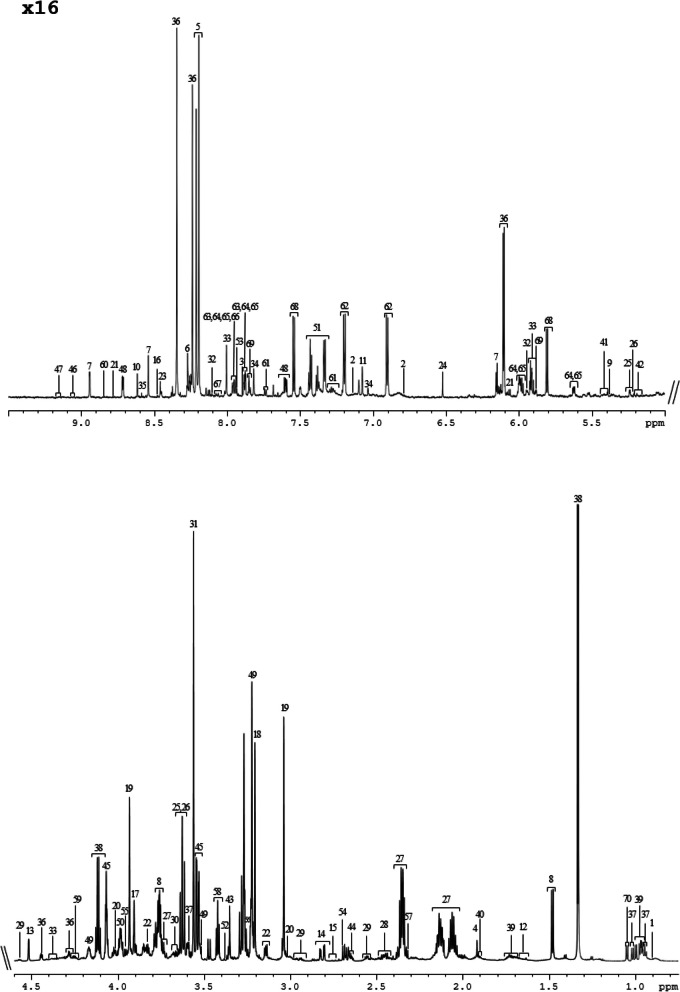
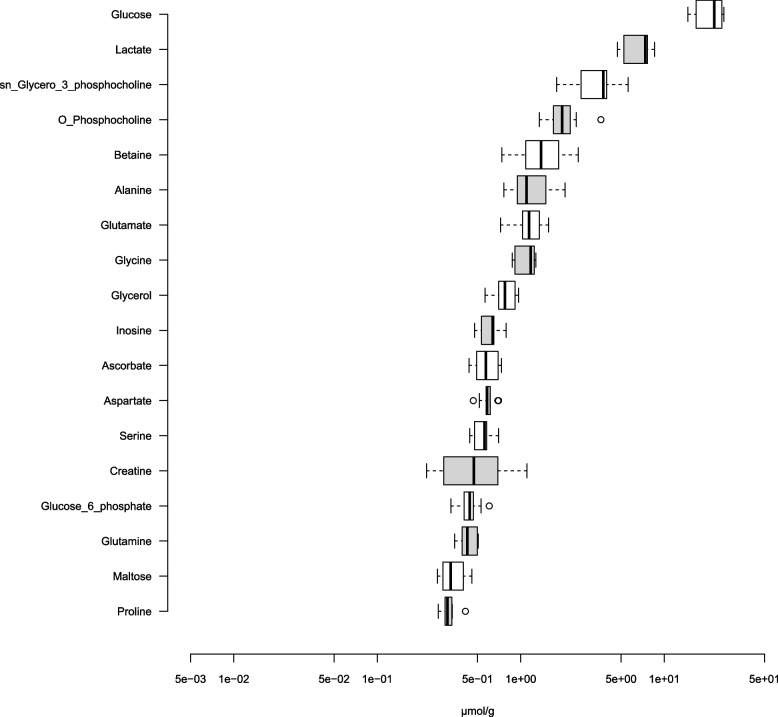
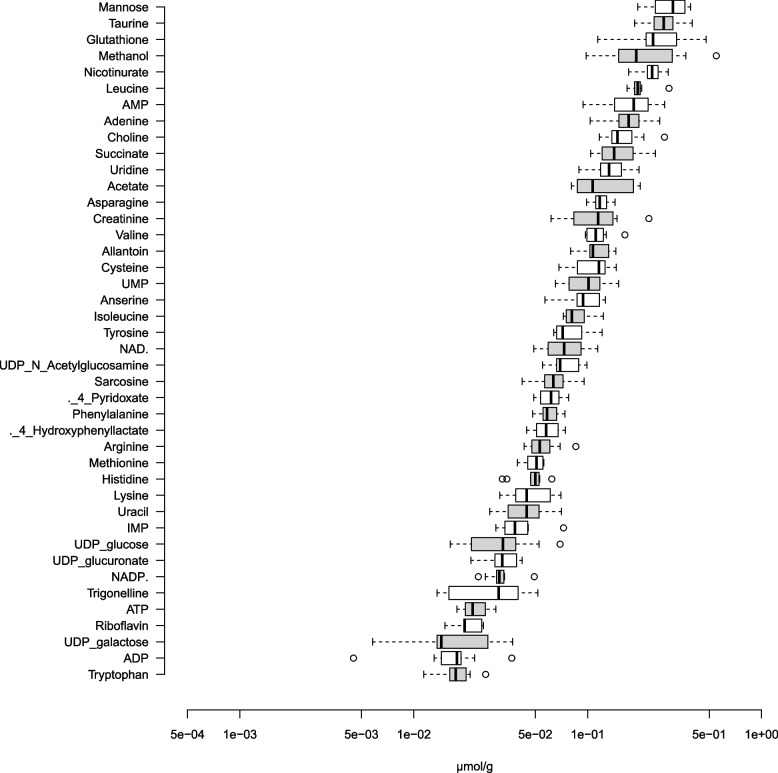
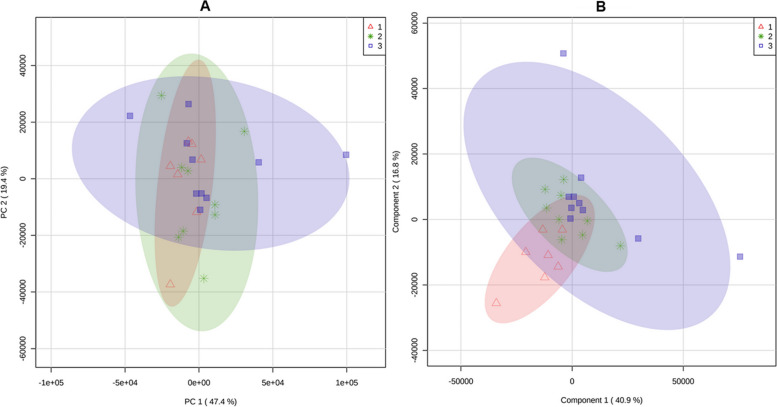
Growth performance showed an average daily gain reduction of 9.5% and a feed conversion ratio increase of 10.6% in groups fed Spirulina compared to the control group. Metabolomic analysis revealed no significant differences among the groups and identified 60 metabolites in the liver tissue. Proteomics analysis identified 2,560 proteins, with 132, 11, and 52 differentially expressed in the Control vs. SP, Control vs. SP + L and SP vs. SP + L comparisons, respectively. This study demonstrated that Spirulina enhances liver energy conversion efficiency, detoxification and cellular secretion. It improves hepatic metabolic efficiency through alterations in fatty acid oxidation (e.g., upregulation of enzymes like fatty acid synthase and increased acetyl-CoA levels), carbohydrate catabolism (e.g., increased glucose and glucose-6-phosphate), pyruvate metabolism (e.g., higher levels of pyruvate and phosphoenolpyruvate carboxykinase), and cellular defence mechanisms (e.g., upregulation of glutathione and metallothionein). Lysozyme supplementation mitigates some adverse effects of Spirulina, bringing physiological responses closer to control levels. This includes fewer differentially expressed proteins and improved dry matter, organic matter and energy digestibility. Lysozyme also enhances coenzyme availability, skeletal myofibril assembly, actin-mediated cell contraction, tissue regeneration and development through mesenchymal migration and nucleic acid synthesis pathways.
While Spirulina inclusion had some adverse effects on growth performance, it also enhanced hepatic metabolic efficiency by improving fatty acid oxidation, carbohydrate catabolism and cellular defence mechanisms. The addition of lysozyme further improved these benefits by reducing some of the negative impacts on growth and enhancing nutrient digestibility, tissue regeneration, and overall metabolic balance. Together, Spirulina and lysozyme demonstrate potential as functional dietary components, but further optimization is needed to fully realize their benefits without compromising growth performance.
研究螺旋藻和溶菌酶添加对肝组织代谢组和蛋白质组的影响,有助于了解仔猪对这些新型饲料的潜在肝脏适应。本研究旨在了解添加 10%螺旋藻对仔猪肝组织代谢组和蛋白质组的影响。将 30 头断奶后仔猪分为 3 组,每组 10 头,每组 2 头,分别用 3 种实验日粮饲养 28 天:以谷物和豆粕为基础的日粮(对照)、含 10%螺旋藻的基础日粮(SP)和含 0.01%溶菌酶的 SP 日粮(SP+L)。试验结束时,处死动物并采集肝脏组织。采用 NMR 数据分析,主成分分析(PCA)和偏最小二乘判别分析(PLS-DA)进行代谢组学分析(n=10)。采用过滤辅助样品制备(FASP)方案和串联质量标签(TMT)定量方法,使用轨道阱质谱仪进行蛋白质组学分析(n=5)。
与对照组相比,饲喂螺旋藻组的仔猪生长性能平均日增重降低 9.5%,饲料转化率提高 10.6%。代谢组学分析表明各组间无显著差异,鉴定出肝组织中 60 种代谢物。蛋白质组学分析鉴定出 2560 种蛋白质,对照组与 SP 组、对照组与 SP+L 组和 SP 组与 SP+L 组分别有 132、11 和 52 种差异表达蛋白。本研究表明,螺旋藻增强了肝脏能量转换效率、解毒和细胞分泌功能。它通过改变脂肪酸氧化(例如,脂肪酸合酶的上调和乙酰辅酶 A 水平的增加)、碳水化合物分解代谢(例如,葡萄糖和葡萄糖-6-磷酸的增加)、丙酮酸代谢(例如,丙酮酸和磷酸烯醇丙酮酸羧激酶水平升高)和细胞防御机制(例如,谷胱甘肽和金属硫蛋白的上调)来提高肝代谢效率。溶菌酶的添加减轻了螺旋藻的一些不利影响,使生理反应更接近对照水平。这包括较少的差异表达蛋白和改善干物质、有机物和能量消化率。溶菌酶还通过增强辅酶可用性、骨骼肌肌原纤维组装、肌动蛋白介导的细胞收缩、组织再生和发育(通过间充质迁移和核酸合成途径)来提高。
虽然螺旋藻的添加对生长性能有一些不利影响,但通过改善脂肪酸氧化、碳水化合物分解代谢和细胞防御机制,提高了肝代谢效率。添加溶菌酶进一步通过减少对生长的一些负面影响并提高营养物质消化率、组织再生和整体代谢平衡来提高这些益处。螺旋藻和溶菌酶都具有作为功能性膳食成分的潜力,但需要进一步优化,以在不影响生长性能的情况下充分发挥其益处。