Wang Ni, Parsons Tammee M, Ren Yingxue, Pan Yining, Kurti Aishe, Starling Skylar C, Muolokwu Chinenye, Singh Jagdish, Kanekiyo Takahisa
Department of Neuroscience, Mayo Clinic, Jacksonville, FL, 32224, USA.
Division of Clinical Trials and Biostatistics, Department of Quantitative Health Sciences, Mayo Clinic, Jacksonville, FL, 32224, USA.
Heliyon. 2024 Oct 18;10(20):e39607. doi: 10.1016/j.heliyon.2024.e39607. eCollection 2024 Oct 30.
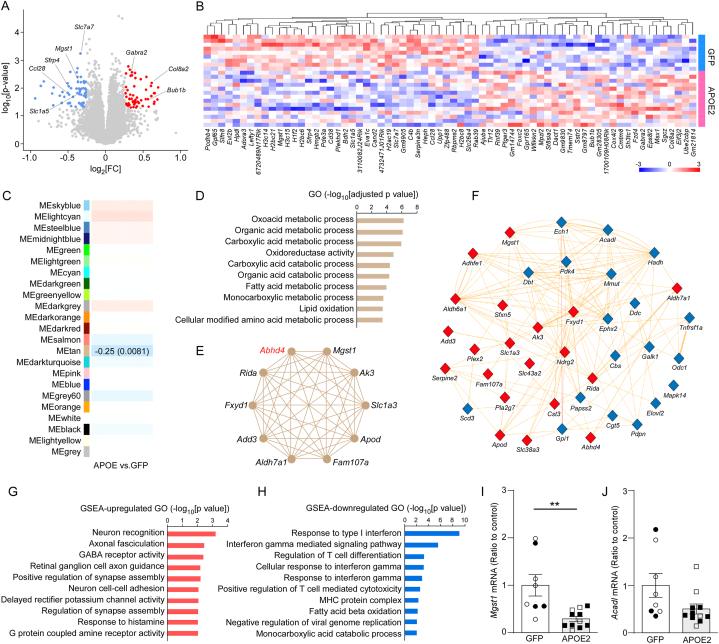
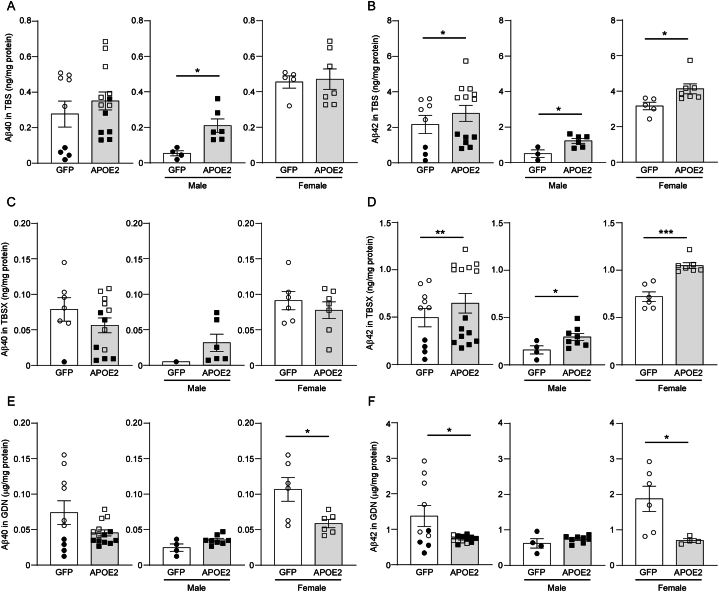
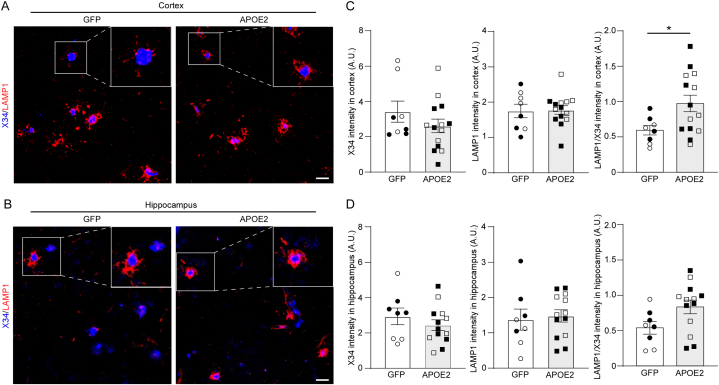
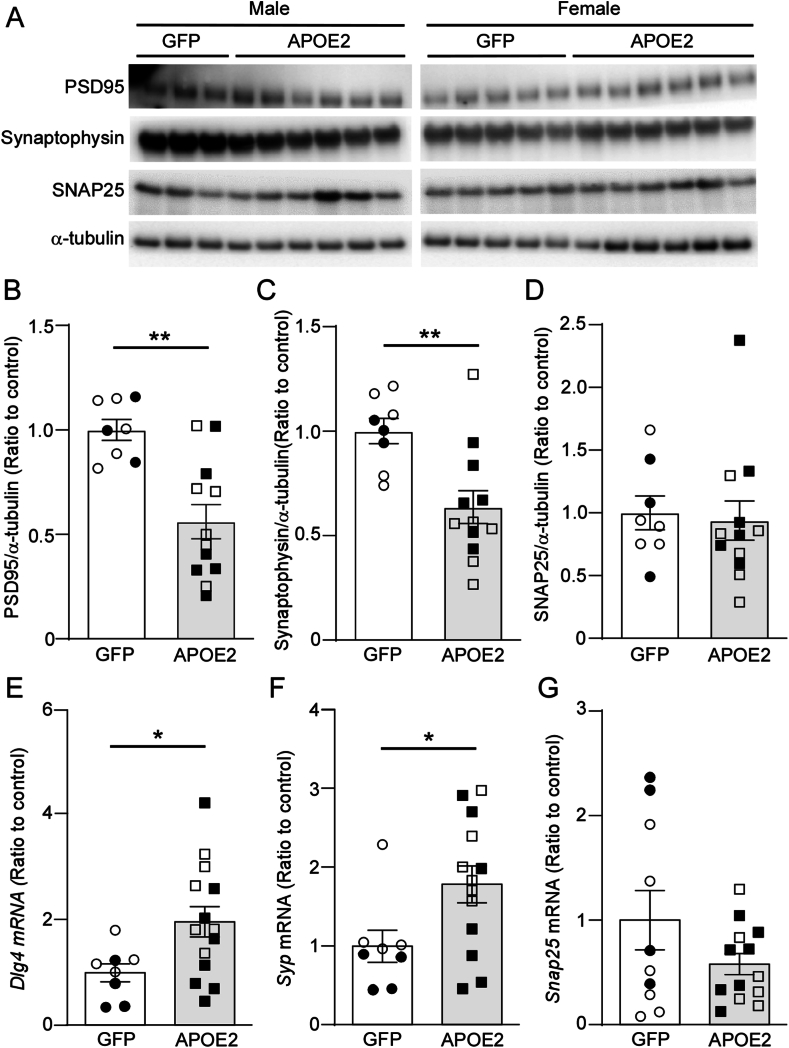
Alzheimer's disease (AD) is the most common cause of late-life dementia characterized by progressive neurodegeneration and brain deposition of amyloid-β (Aβ) and phosphorylated tau. The ε2 encoding apolipoprotein E () is a protective allele against AD among the three genotypes ( ε2, ε3, ε4), while is the strongest genetic factor substantially increasing AD risk. APOE regulates brain lipid homeostasis and maintaining synaptic plasticity and neuronal function, where has a superior function compared to and . Gene therapy that increases levels in the brain is, therefore, a promising therapeutic strategy for AD treatment. We previously reported that PEGylated liposomes conjugated with transferrin and a cell-penetrating peptide Penetratin sufficiently deliver chitosan-APOE2 cDNA plasmid complex into the brain of wild-type mice. Here, we investigated how brain-targeting liposome-based gene delivery influences Aβ-related pathologies in amyloid model knockin mice at 12-month-old. We found a trend of reductions of insoluble Aβ levels in the mouse cortices 1 month after gene therapy. Furthermore, in the knockin mice that received the gene therapy, brain transcriptome analysis through RNA-sequencing identified the upregulation of genes/pathways related to neuronal development. This was supported by increases of and mRNAs coding synaptic proteins in the experimental group. On the other hand, we found that gene delivery increased soluble Aβ levels, including oligomers, as well as exacerbated neurite dystrophy and decreased synaptophysin. Together, our results suggest that brain-targeting liposome-based gene therapy is potentially beneficial for synaptic formation at the transcriptional level. Forced expressions, however, may exacerbate Aβ toxicity by increasing the dissociation of Aβ oligomers from aggregates in the presence of considerable amyloid burden.
阿尔茨海默病(AD)是导致晚年痴呆的最常见原因,其特征为进行性神经退行性变以及淀粉样β蛋白(Aβ)和磷酸化tau蛋白在脑内沉积。编码载脂蛋白E(APOE)的ε2等位基因是三种基因型(ε2、ε3、ε4)中对抗AD的保护性等位基因,而ε4是大幅增加AD风险的最强遗传因素。APOE调节脑脂质稳态并维持突触可塑性和神经元功能,其中ε4相比ε2和ε3具有更优功能。因此,增加脑内APOEε2水平的基因治疗是一种有前景的AD治疗策略。我们之前报道,与转铁蛋白和细胞穿透肽穿膜肽偶联的聚乙二醇化脂质体可将壳聚糖 - APOE2 cDNA质粒复合物充分递送至野生型小鼠脑内。在此,我们研究了基于脑靶向脂质体的APOEε2基因递送如何影响12月龄淀粉样模型APP/PS1敲入小鼠中与Aβ相关的病理变化。我们发现基因治疗1个月后,小鼠皮质中不溶性Aβ水平有降低趋势。此外,在接受APOEε2基因治疗的APP/PS1敲入小鼠中,通过RNA测序进行的脑转录组分析确定了与神经元发育相关的基因/途径上调。实验组中编码突触蛋白的SNAP25和SYN1 mRNA增加支持了这一点。另一方面,我们发现APOEε2基因递送增加了可溶性Aβ水平,包括寡聚体,同时加剧了神经突营养不良并降低了突触素。总之,我们的结果表明基于脑靶向脂质体的APOEε2基因治疗在转录水平上对突触形成可能有益。然而,在存在大量淀粉样蛋白负荷的情况下,强制表达APOEε2可能通过增加Aβ寡聚体从聚集体中的解离而加剧Aβ毒性。