Massand Amit B, Rai Ashwin R, Blossom Vandana, Pai Mangala M, Jiji P J, Rai Rajalakshmi
Department of Anatomy, Smt. B. K. Shah Medical Institute and Research Centre, Sumandeep Vidhyapeeth, Pipariya, Vadodara, Gujarat, India.
Department of Anatomy, Kasturba Medical College Mangalore, Manipal Academy of Higher Education, Manipal, Karnataka, India.
Vet World. 2024 Sep;17(9):2088-2095. doi: 10.14202/vetworld.2024.2088-2095. Epub 2024 Sep 15.
Aluminum (Al)-induced neurotoxicity is known to play a pivotal role in the development of various neurodegenerative diseases, and this is alleged to occur through neuroinflammation and oxidative stress in the brain. This study aimed to determine the effect of a (FR) leaf extract on oxidative stress and neuroinflammation induced by Al exposure in the rat brain by estimating malondialdehyde (MDA), interleukin-6 (IL6), and total antioxidant (TAO) levels along with the degree of neurodegeneration in the brain of AlCl-administered and F leaf extract-treated rats.
Two- to three-month-old male albino rats weighing 250-280 g were used in the present study. The animals were randomly divided into seven groups, with 12 rats in each group. The groups were categorized as control, Al-intoxicated, FR treatment groups of two dosages, FR control rats of two dosages, and FR pre-treatment group.
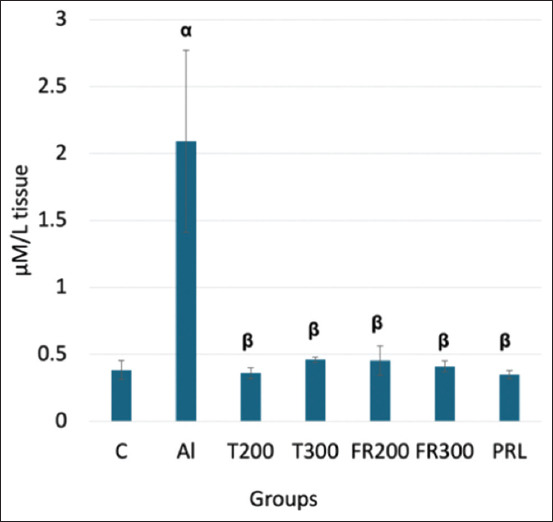
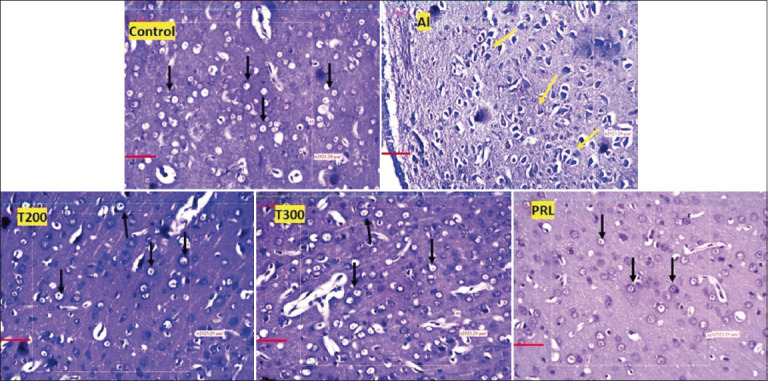
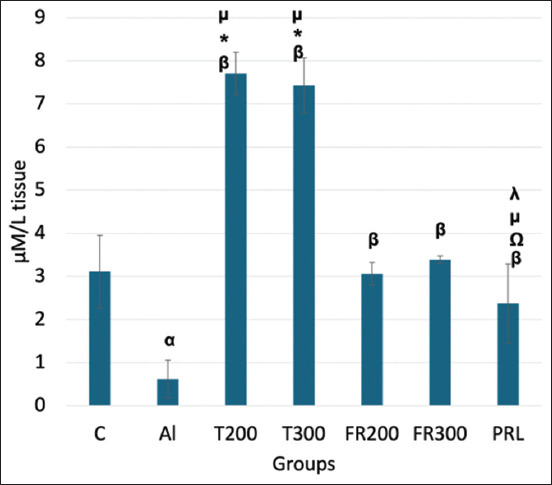
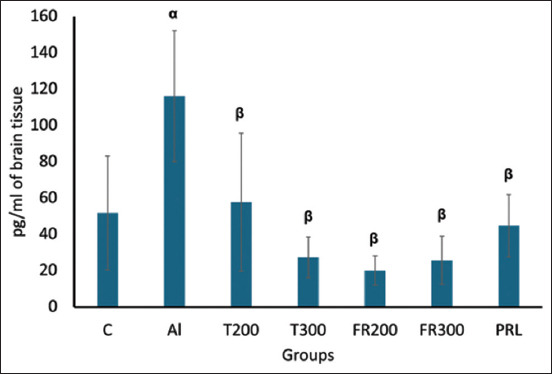
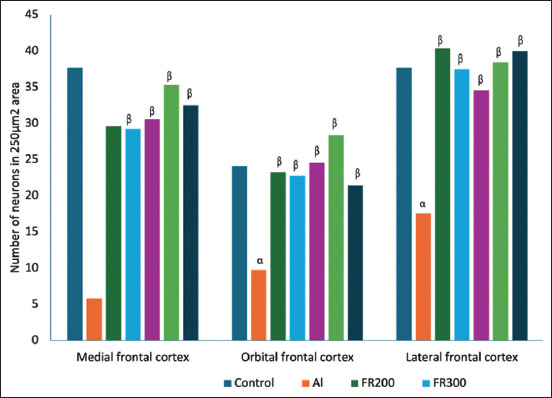
We observed a substantial increase in the levels of MDA and IL6 along with a decline in the TAO level in Al-intoxicated rats, suggesting increased lipid peroxidation (LPO), neuroinflammation, and oxidative stress, respectively. In the FR-treated animals, MDA as well as IL6 levels was decreased, and TAO was enhanced in addition to improved neuronal architecture, demonstrating the ameliorative effect of FR.
The present study observed a decline in LPO and neuroinflammation in FR-treated rats, demonstrating the protective effect of FR leaves against Al-induced neurotoxicity. The level of TAO also improved along with improvement in neuronal mass in FR-treated rats, adding to its ameliorative effect. However, further elaborate research is needed to confirm its therapeutic potential against inflammation-driven neurodegenerative diseases.
铝诱导的神经毒性在多种神经退行性疾病的发展中起着关键作用,据称这是通过大脑中的神经炎症和氧化应激发生的。本研究旨在通过估计丙二醛(MDA)、白细胞介素-6(IL6)和总抗氧化剂(TAO)水平以及给予氯化铝和F叶提取物处理的大鼠大脑中的神经退行性变程度,来确定F叶提取物对铝暴露诱导的大鼠大脑氧化应激和神经炎症的影响。
本研究使用2至3个月大、体重250 - 280克的雄性白化大鼠。将动物随机分为七组,每组12只。这些组分为对照组、铝中毒组、两个剂量的F处理组、两个剂量的F对照大鼠组和F预处理组。
我们观察到铝中毒大鼠的MDA和IL6水平大幅升高,同时TAO水平下降,分别表明脂质过氧化(LPO)增加、神经炎症和氧化应激增加。在接受F处理的动物中,MDA以及IL6水平降低,TAO增强,此外神经元结构得到改善,证明了F的改善作用。
本研究观察到接受F处理的大鼠LPO和神经炎症下降,证明了F叶对铝诱导的神经毒性的保护作用。接受F处理的大鼠TAO水平也有所改善,同时神经元数量增加,进一步增强了其改善作用。然而,需要进一步深入研究以证实其对炎症驱动的神经退行性疾病的治疗潜力。