Department of Translational Neuroscience, University Medical Center Utrecht Brain Center, University Medical Center Utrecht, Utrecht University, 3584 CG, Utrecht, The Netherlands.
Princess Máxima Center for Pediatric Oncology, Heidelberglaan 25, 3584 CS, Utrecht, The Netherlands.
Acta Neuropathol. 2024 Nov 7;148(1):61. doi: 10.1007/s00401-024-02817-8.
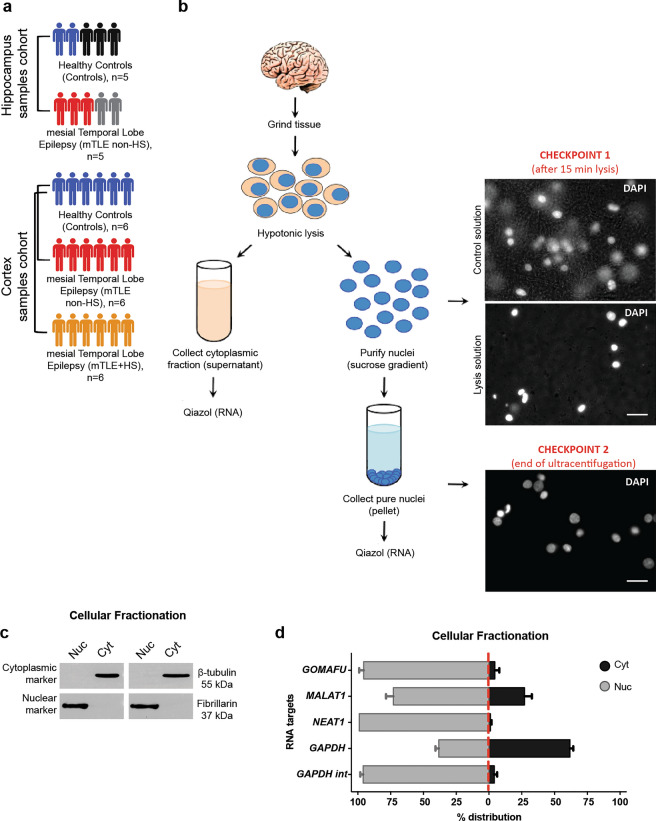
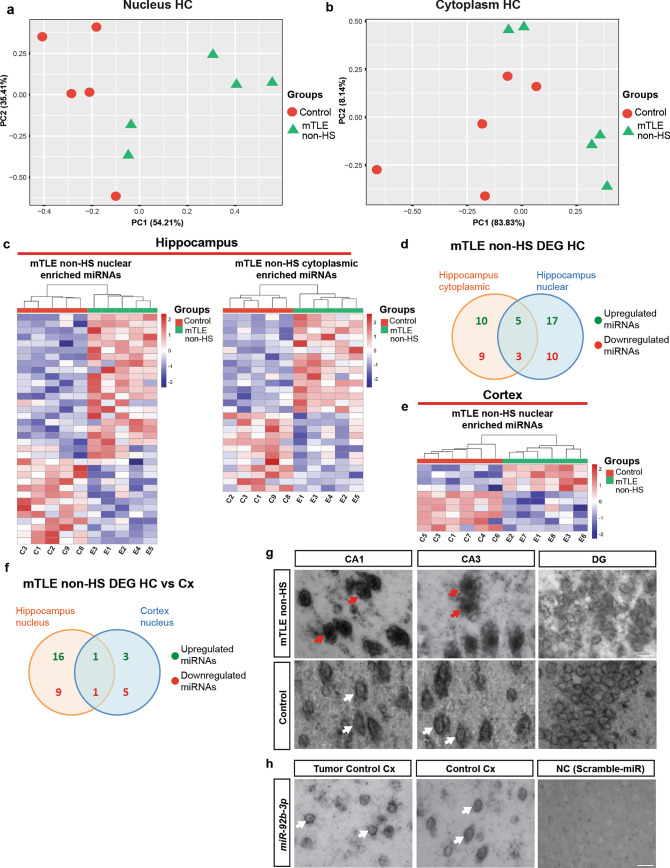
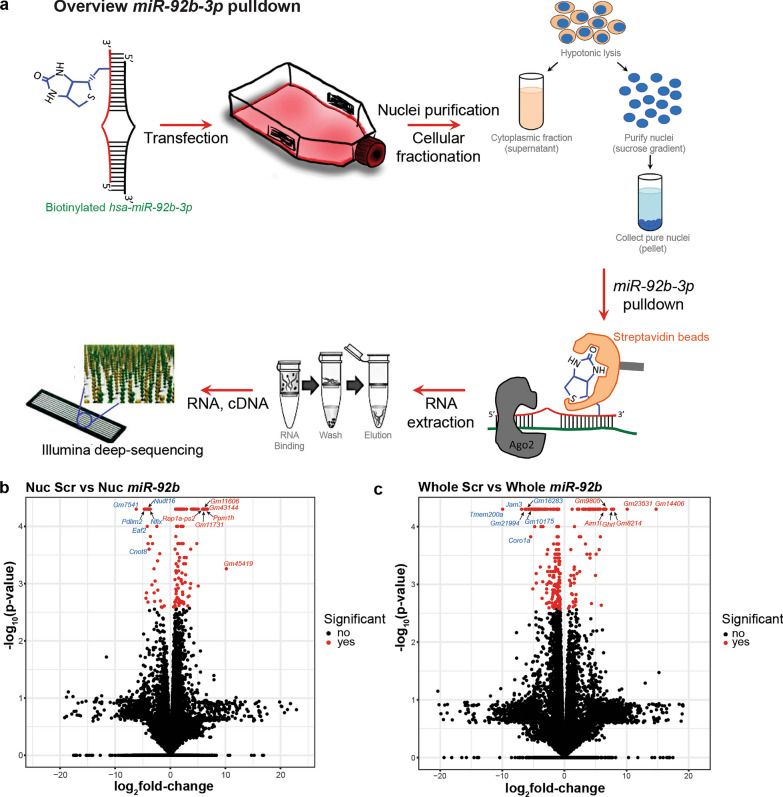
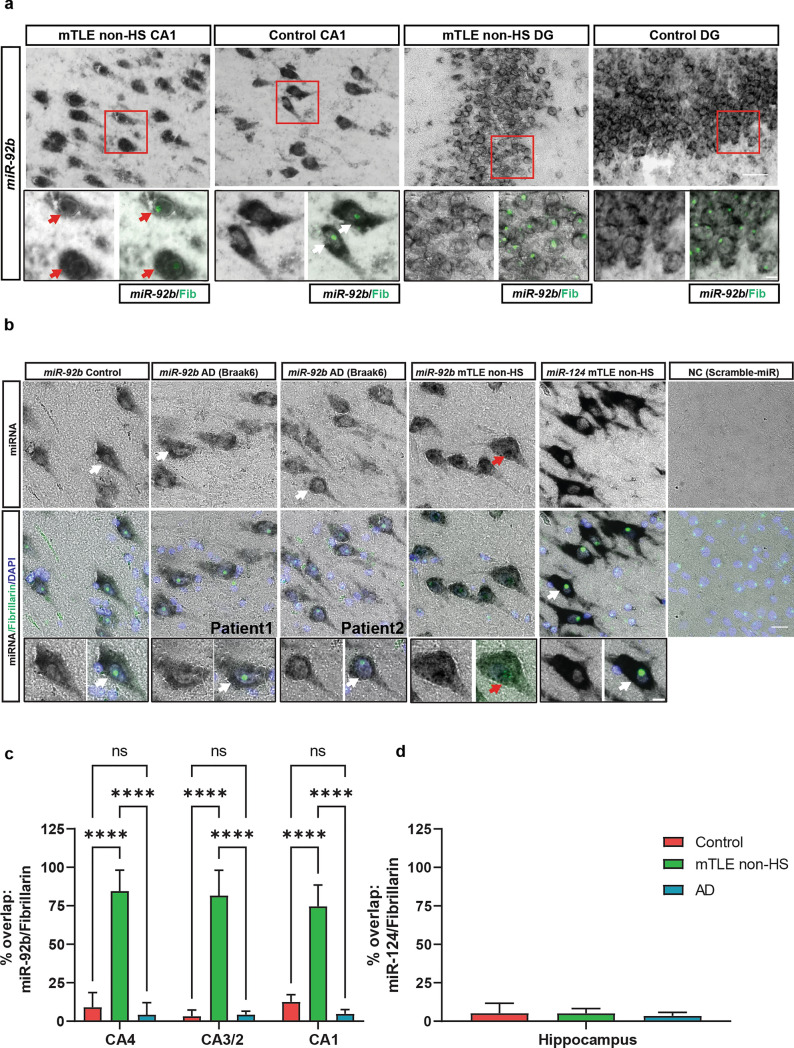
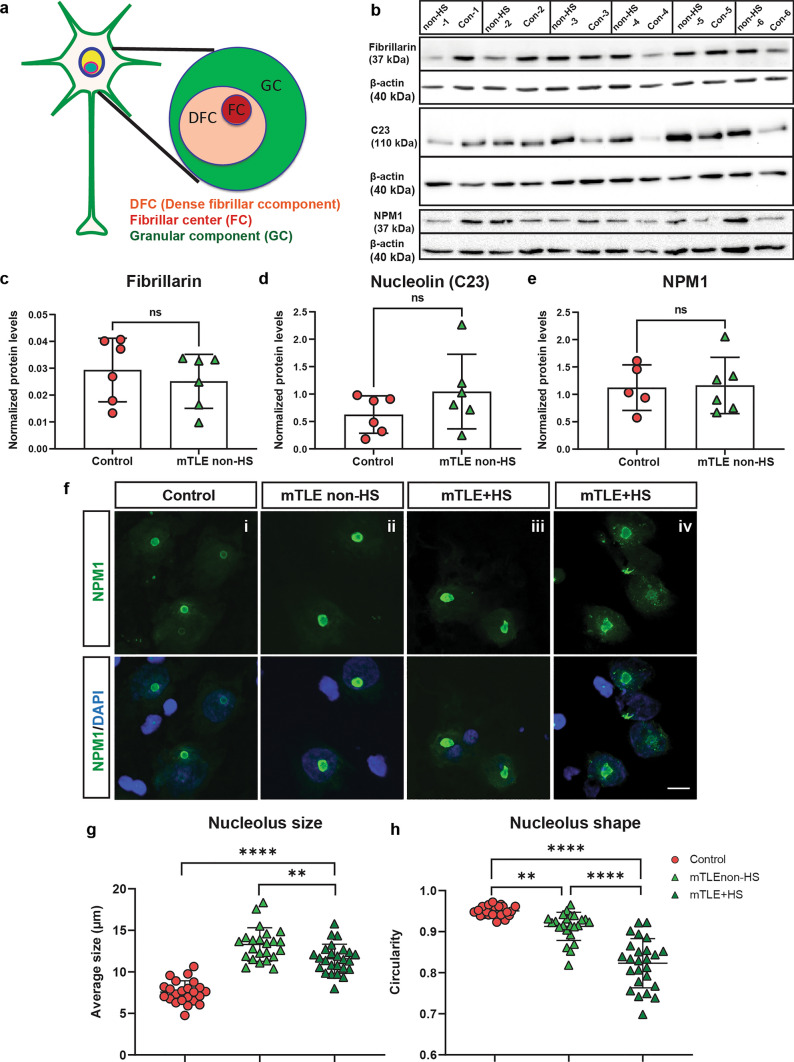
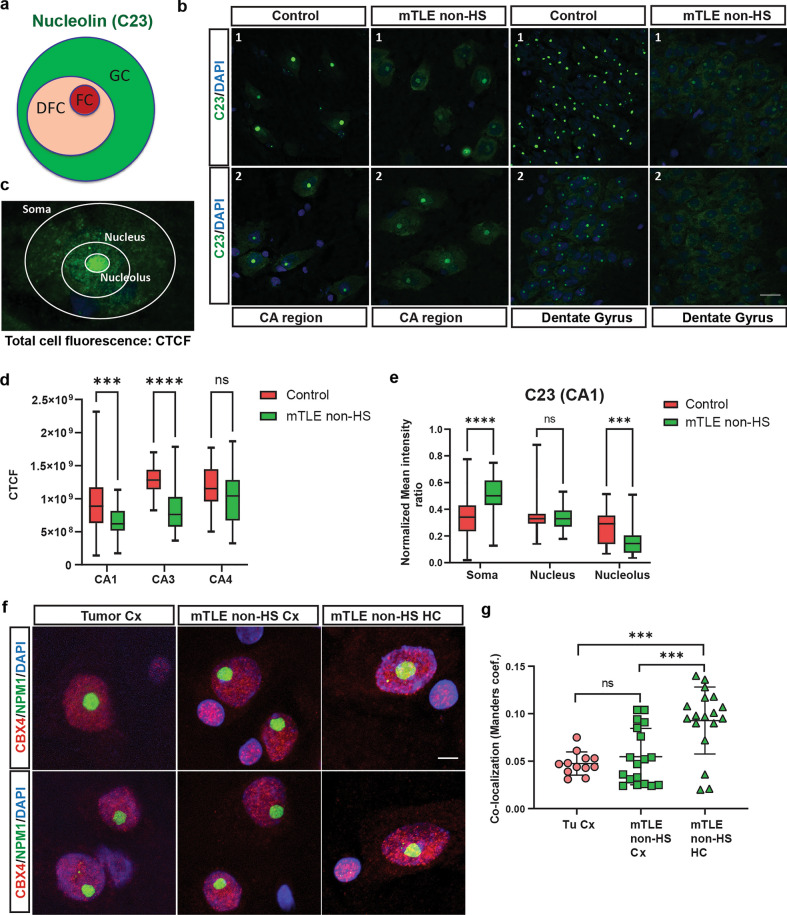
Mesial temporal lobe epilepsy (mTLE) is a debilitating disease characterized by recurrent seizures originating from temporal lobe structures such as the hippocampus. The pathogenic mechanisms underlying mTLE are incompletely understood but include changes in the expression of non-coding RNAs in affected brain regions. Previous work indicates that some of these changes may be selective to specific sub-cellular compartments, but the full extent of these changes and how these sub-cellular compartments themselves are affected remains largely unknown. Here, we performed small RNA sequencing (RNA-seq) of sub-cellular fractions of hippocampal tissue from mTLE patients and controls to determine nuclear and cytoplasmic expression levels of microRNAs (miRNAs). This showed differential expression of miRNAs and isomiRs, several of which displayed enriched nuclear expression in mTLE. Subsequent analysis of miR-92b, the most strongly deregulated miRNA in the nucleus, showed accumulation of this miRNA in the nucleolus in mTLE and association with snoRNAs. This prompted us to further study the nucleolus in human mTLE which uncovered several defects, such as altered nucleolar size or shape, mis-localization of nucleolar proteins, and deregulation of snoRNAs, indicative of nucleolar stress. In a rat model of epilepsy, nucleolar phenotypes were detected in the latency period before the onset of spontaneous seizures, suggesting that nucleolar changes may contribute to the development of seizures and mTLE. Overall, these data for the first time implicate nucleolar defects in the pathogenesis of mTLE and provide a valuable framework for further defining the functional consequences of altered sub-cellular RNA profiles in this disease.
内侧颞叶癫痫(mTLE)是一种使人衰弱的疾病,其特征是反复发作的癫痫,起源于颞叶结构,如海马体。mTLE 的发病机制尚不完全清楚,但包括受影响脑区中非编码 RNA 表达的变化。先前的工作表明,其中一些变化可能是特定于特定亚细胞隔室的,但这些变化的全部程度以及这些亚细胞隔室本身如何受到影响在很大程度上仍然未知。在这里,我们对 mTLE 患者和对照者的海马组织的亚细胞部分进行了小 RNA 测序(RNA-seq),以确定 microRNAs (miRNAs) 的核和细胞质表达水平。这显示了 miRNA 和 isomiRs 的差异表达,其中一些在 mTLE 中表现出核富集表达。随后对 miR-92b 的分析,这是核中最强烈失调的 miRNA,显示这种 miRNA 在 mTLE 中在核仁中积累,并与 snoRNAs 相关。这促使我们进一步研究人类 mTLE 的核仁,发现了几个缺陷,例如核仁大小或形状的改变、核仁蛋白的错误定位以及 snoRNAs 的失调,表明核仁应激。在癫痫大鼠模型中,在自发性癫痫发作前的潜伏期检测到核仁表型,这表明核仁变化可能有助于癫痫发作和 mTLE 的发展。总体而言,这些数据首次表明核仁缺陷与 mTLE 的发病机制有关,并为进一步定义这种疾病中改变的亚细胞 RNA 谱的功能后果提供了有价值的框架。