Turmel-Couture Sarah, Martel Pier-Olivier, Beaulieu Lucie, Lechasseur Xavier, Fotso Dzuna Lloyd Venceslas, Narbonne Patrick
Département de Biologie Médicale, Université du Québec à Trois-Rivières, Trois-Rivières, Quebec, Canada.
Département de Biologie Médicale, Université du Québec à Trois-Rivières, Trois-Rivières, Quebec, Canada.
J Biol Chem. 2024 Dec;300(12):107963. doi: 10.1016/j.jbc.2024.107963. Epub 2024 Nov 5.
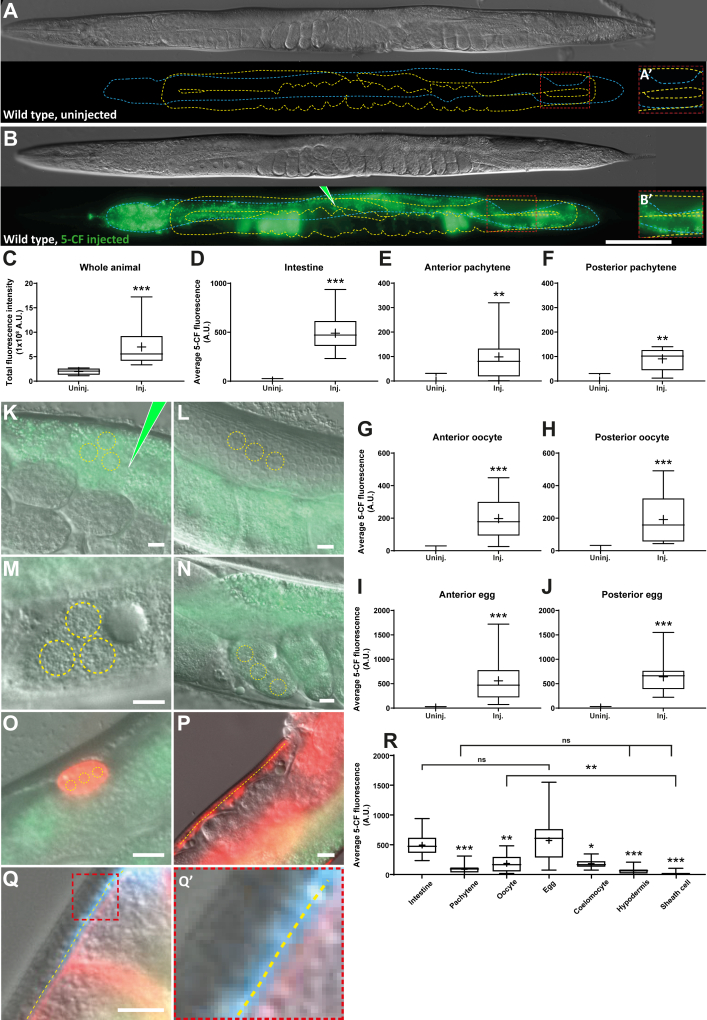
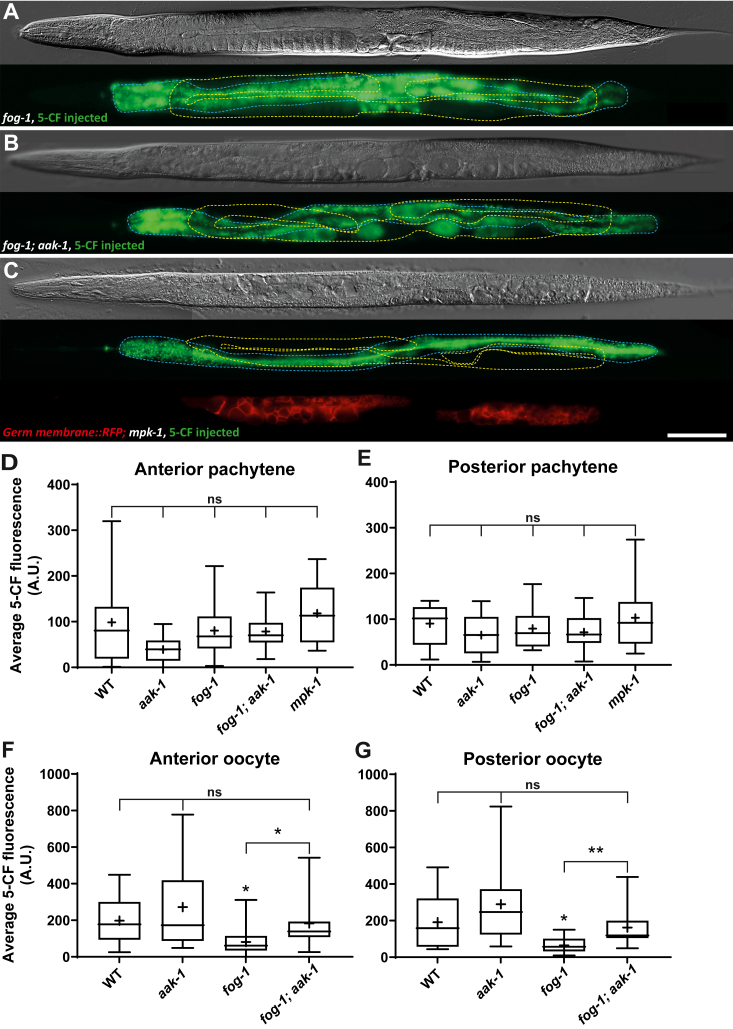
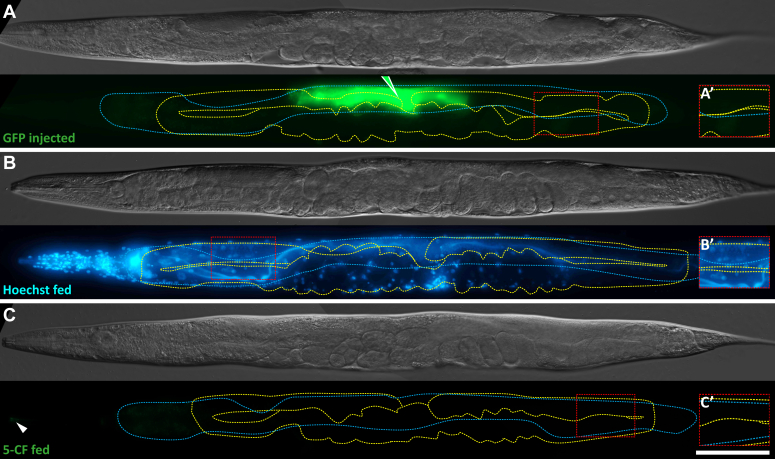
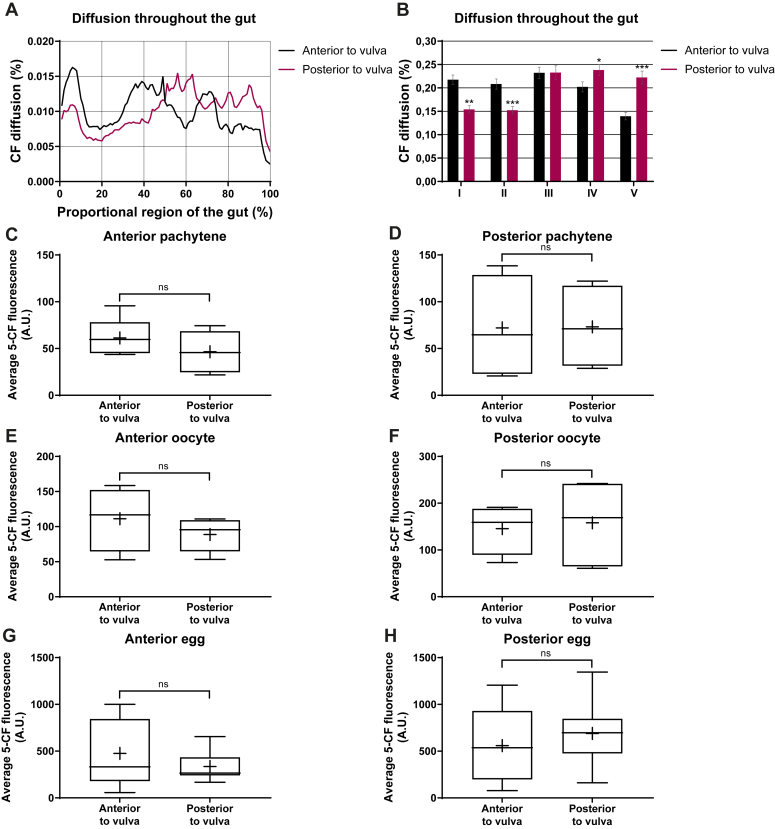
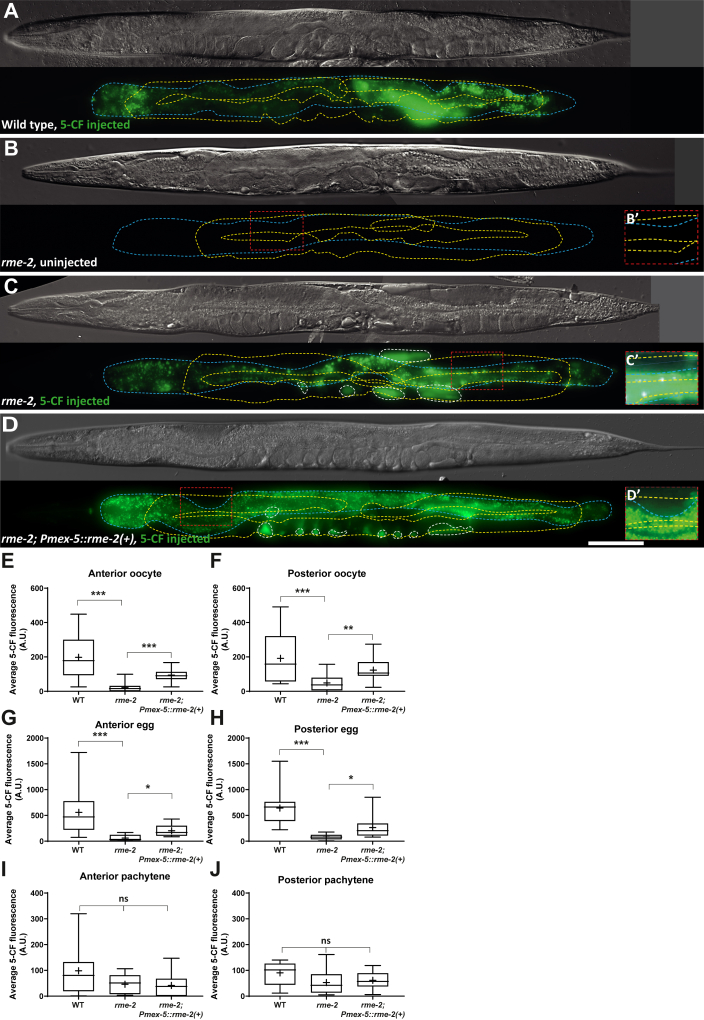
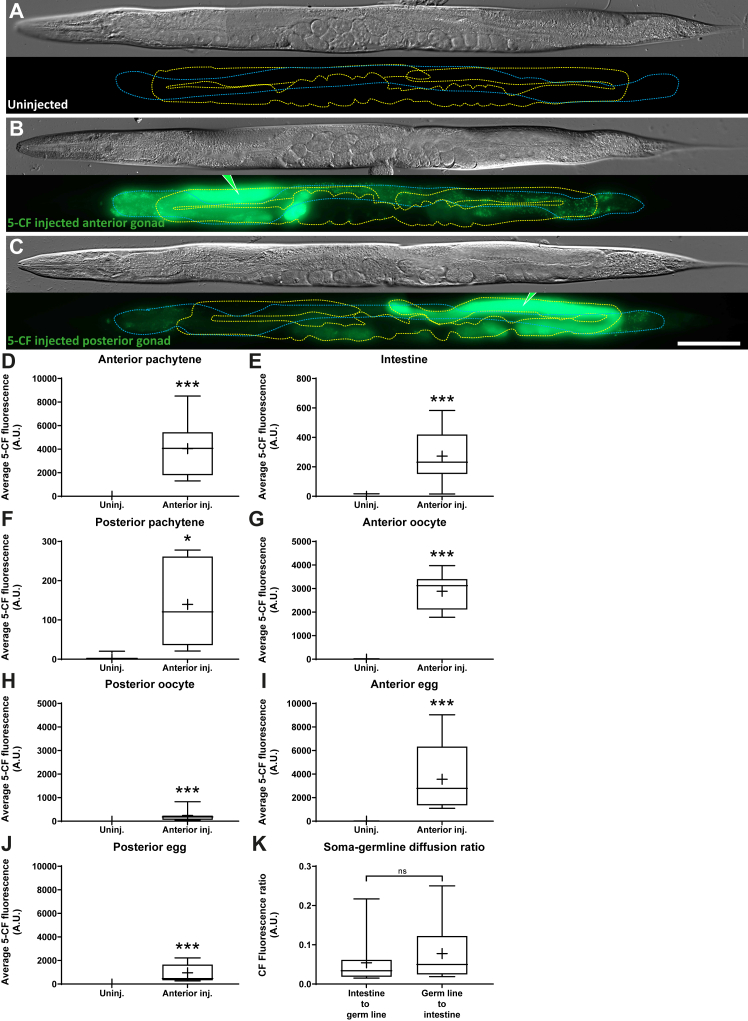
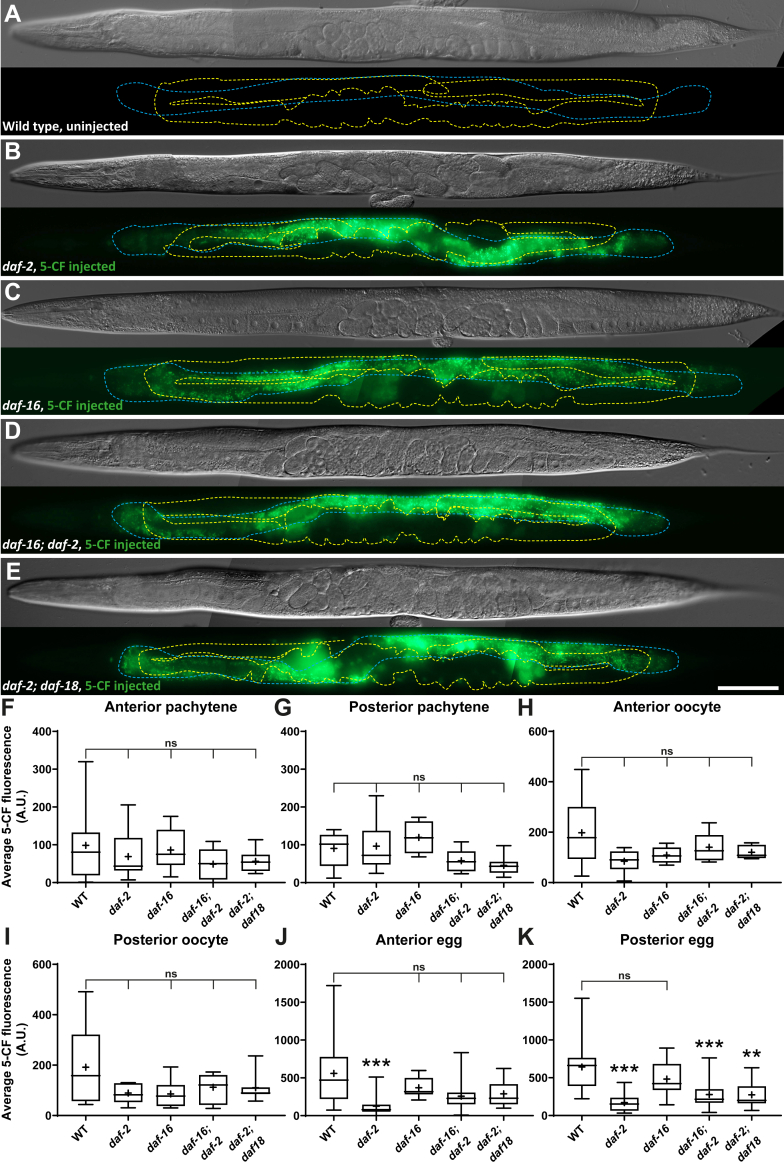
The extracellular signal-regulated kinase/mitogen-activated protein kinase (ERK/MAPK) is a positive regulator of cell proliferation often upregulated in cancer. Its Caenorhabditis elegans ortholog MPK-1 stimulates germline stem cell (GSC) proliferation nonautonomously from the intestine or somatic gonad. How MPK-1 can perform this task from either of these two tissues however remains unclear. We reasoned that somatic MPK-1 activity could lead to the generation of proproliferative small molecules that could transfer from the intestine and/or somatic gonad to the germline. Here, in support of this hypothesis, we demonstrate that a significant fraction of the small membrane-impermeable fluorescent molecule, 5-carboxyfluorescein, transfers to the germline after its microinjection in the animal's intestine. The larger part of this transfer targets oocytes and requires the germline receptor mediated endocytosis 2 (RME-2) yolk receptor. A minor quantity of the dye is however distributed independently from RME-2 and more widely in the animal, including the distal germline, gonadal sheath, coelomocytes, and hypodermis. We further show that the intestine-to-germline transfer efficiency of this RME-2 independent fraction does not vary together with GSC proliferation rates or MPK-1 activity. Therefore, if germline proliferation was influenced by small membrane-impermeable molecules generated in the intestine, it is unlikely that proliferation would be regulated at the level of molecule transfer rate. Finally, we show that conversely, a similar fraction of germline injected 5-carboxyfluorescein transfers to the intestine, demonstrating transfer bidirectionality. Altogether, our results establish the possibility of an intestine-to-germline signaling axis mediated by small membrane-impermeable molecules that could promote GSC proliferation cell nonautonomously downstream of MPK-1 activity.
细胞外信号调节激酶/丝裂原活化蛋白激酶(ERK/MAPK)是细胞增殖的正调节因子,在癌症中常被上调。其秀丽隐杆线虫的直系同源物MPK-1可从肠道或体细胞性腺非自主地刺激生殖系干细胞(GSC)增殖。然而,MPK-1如何从这两个组织中的任何一个执行此任务仍不清楚。我们推测体细胞MPK-1活性可能导致促增殖小分子的产生,这些小分子可以从肠道和/或体细胞性腺转移到生殖系。在此,为支持这一假设,我们证明,在动物肠道中显微注射小分子膜不可渗透荧光分子5-羧基荧光素后,很大一部分会转移到生殖系。这种转移的大部分靶向卵母细胞,并且需要生殖系受体介导的内吞作用2(RME-2)卵黄受体。然而,少量染料的分布独立于RME-2,更广泛地分布在动物体内,包括远端生殖系、性腺鞘、体腔细胞和皮下组织。我们进一步表明,这种独立于RME-2的部分从肠道到生殖系的转移效率不会随GSC增殖率或MPK-1活性而变化。因此,如果生殖系增殖受肠道中产生的小分子膜不可渗透分子影响,那么增殖不太可能在分子转移速率水平上受到调节。最后,我们相反地表明,类似比例的注射到生殖系中的5-羧基荧光素会转移到肠道,证明了转移的双向性。总之,我们的结果确立了由小分子膜不可渗透分子介导的肠道到生殖系信号轴的可能性,该信号轴可在MPK-1活性下游非自主地促进GSC增殖。